Choose a compact Bluetooth keyboard if you make revision cards in different places or switch between compatible devices. For longer sessions at a desk, consider an ergonomic layout alongside your workstation setup; a device-specific keyboard makes more sense when most of your work stays on one Apple or Windows device.
Who each keyboard suits
Mobile revision-card makers
If you move between home, the library and campus, or make cards on several devices, start with a keyboard that is practical to carry. Logitech UK lists switching between three compatible devices for its Pebble Keys 2 K380s; check that any model you consider offers the connections you need.
Long-session desk revisers
If you spend extended sessions typing cards at one desk, keyboard shape and hand support may matter more than bag space. The Health and Safety Executive also advises placing the keyboard centrally and just below elbow height, so assess the desk setup as well as the keyboard.
Single-device study users
If most of your cards are made on an Apple device or a Windows PC, you may prefer a layout and shortcuts suited to that main device. Check the exact connection and software requirements rather than assuming that every keyboard in a product family works with your setup.
What matters when choosing
Start with where you type and which devices you use. Then decide whether carrying space, sustained desk comfort or a familiar layout is your main priority.
| Concern |
What to check |
Who this matters to |
| Portability and switching |
Check carrying size, Bluetooth compatibility and how many devices the exact model can pair with. |
When I move between a phone, tablet and laptop, I want fewer pairing interruptions and a keyboard I can carry. Around 40% of consumers put portability and device switching first. |
| Comfort at a desk |
Assess the key arrangement and palm support, and whether the keyboard fits centrally at a suitable height. |
For longer card-making sessions, I want a typing arrangement that fits my hands and workspace without relying on the keyboard alone to address discomfort. Desk comfort comes first for around 40% of consumers. |
| Familiar layout and device fit |
Confirm the physical UK layout, connection method and device requirements; decide whether a number pad would help. |
If I make most cards on one computer, familiar keys or a number pad may matter more than a smaller travel layout. Around 20% of consumers prioritise familiar layout and main-device fit. |
Mistakes to avoid
-
Assuming the keyboard has a UK layout
Key positions and symbols can differ between regional versions of the same product family, which matters when you type and edit cards regularly.
Check the exact British-English or UK variant in the product description, images and variant selector before ordering.
-
Expecting an ergonomic shape to solve workstation discomfort
Keyboard shape is only part of a desk setup. The Health and Safety Executive advises positioning the keyboard centrally and just below elbow height.
Check screen and keyboard placement together, and take breaks during prolonged screen work. If you use a laptop for long sessions, a separate keyboard can allow the screen to be raised.
-
Assuming every wireless model switches between your devices
Wireless connection, operating-system compatibility and multi-device switching are different features. A keyboard that connects to one device will not necessarily switch conveniently between several.
List the devices you use, then check the exact model’s pairing method, supported systems and device capacity.
A device without the required Bluetooth support may also need a compatible adapter.
Brands to consider
These brands offer different keyboard formats relevant to revision-card work; choose by the particular model and your devices, not the brand name alone.
Logitech
Logitech offers compact multi-device keyboards as well as desk-focused ergonomic shapes.
- Logitech UK lists Pebble Keys 2 K380s as compatible with Windows, macOS, iPadOS, iOS and Android, with switching between three devices.
- Wave Keys and ERGO K860 use different ergonomic layouts; check their footprint and key arrangement rather than treating the design as a promise of relief from discomfort.
Apple
Apple’s standard Magic Keyboard is a compact option for a primarily Mac, iPad or iPhone workflow.
- Apple lists a British-English version that is wireless and rechargeable through USB-C.
- Check Apple’s requirements for your device and software version; the standard compact model has no numeric keypad.
Microsoft
The Surface Keyboard (2nd Edition) is a full-size option for a Windows-centred desk.
- Microsoft Store UK lists a built-in number pad and dedicated shortcut keys for this model.
- Its full-size format is less convenient to carry than a compact keyboard; check the physical layout and device compatibility before choosing it.
Joybuy keyboards for revision cards
These keyboards offer compact-format, full-size and split-layout choices for preparing revision cards. Compare their physical layouts and your device requirements before deciding which fits your study routine.
 No image available
ASUS ROG Strix Scope II 96 Wireless Gaming Keyboard, White, UK layout
Consider this for a desk where you want a 96% keyboard layout for making cards. Check the key positions you rely on and compatibility with each device you plan to use.
View on Joybuy
 No image available
Targus EcoSmart Full Size Wireless Keyboard, UK layout
A full-size layout may suit a fixed desk if you prefer familiar key spacing while preparing cards. Check whether its footprint fits your workspace and whether its connection method suits your devices.
View on Joybuy
 No image available
Hyper® HyperSpace Next Bluetooth Wireless Keyboard, White, UK layout
Consider this Bluetooth model if you make cards mainly at a desk but also need to check connections with other study devices. Confirm compatibility and the space available for its key layout.
View on Joybuy
 No image available
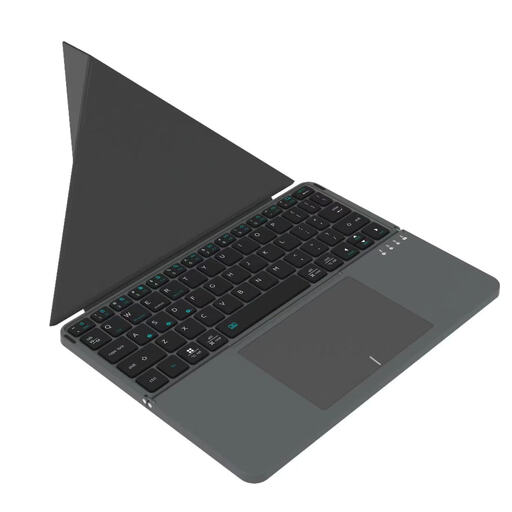
VoxorAI BOX1 Black Bluetooth Keyboard
If you want a keyboard to carry between study locations, check whether the BOX1’s carrying size and key arrangement suit the way you make cards. Confirm the physical layout and how pairing works with each device you intend to use.
View on Joybuy
 No image available
HP 960 Ergonomic Split Layout Wireless Keyboard with Padded Wrist Rest
The split layout and padded wrist rest make this a desk-focused option to consider for longer card-writing sessions, not a substitute for suitable workstation positioning. Check that the key arrangement, physical layout and device compatibility meet your needs.
View on Joybuy
Questions about revision-card keyboards
Do I need an ergonomic keyboard to make revision cards?
Not necessarily: consider one if you type for long periods at a desk and prefer its key arrangement, but check the whole workstation too. The Health and Safety Executive advises keeping the keyboard central and just below elbow height; for prolonged laptop use, a separate keyboard can allow the screen to be raised.
Can one Bluetooth keyboard work with my laptop, tablet and phone?
It can if the exact model supports each device and the connection method you need. Logitech UK lists Pebble Keys 2 K380s as supporting Windows, macOS, iPadOS, iOS and Android and switching between three devices; other keyboards may have different requirements.
Is a compact keyboard or a number pad more useful for revision cards?
Choose a compact layout if carrying space or a small desk is your priority; consider a keyboard with a number pad if you regularly enter numerical content or strongly prefer a full-size arrangement. Check the exact key layout, since a keyboard’s overall size alone will not tell you where every key sits.


