For ordinary search-filter testing, choose a keyboard that works with your computer before paying attention to specialist controls. In a shared student room, quiet keys may matter most; a compact Bluetooth model suits a small desk or changing study locations, while a wired programmable keyboard makes more sense if you will actually use remapped keys or macros. Check the exact connection, device compatibility and UK layout of the variant you intend to buy.
Who needs which keyboard?
Search-filter testing does not, by itself, call for a specialist keyboard. The useful differences emerge from where you type, which devices you use and whether repeated actions would benefit from custom shortcuts.
Quiet shared-room typists
If you type near a roommate, key sound may matter more than mechanical feedback. CHERRY describes the STREAM KEYBOARD as quiet, while Logitech makes a quiet-key claim for the Pebble Keys 2 K380s; neither description tells you how the two will sound in your room.
Small-desk and mobile students
A keyboard that fits a narrow desk or travels between study locations may be more useful than a permanent full-size setup. Logitech positions the compact Pebble Keys 2 K380s for portable use and switching among compatible devices.
Shortcut and test-workflow customisers
If repeated checks would genuinely benefit from remapped keys or macros, a programmable keyboard is worth considering. Keychron says the wired UK ISO C3 Pro supports per-key QMK/VIA programming; that capability is optional for ordinary typing.
What matters when choosing?
Start with the need that would most affect your daily use in the student room, then check the exact model rather than assuming that every keyboard of the same type shares its features.
Quiet wired scissor keyboard
Consider it when: The keyboard will stay at one desk and typing near someone else is your main concern.
Trade-off: A cable uses a port, and a full-size model may take up more desk space. CHERRY's quiet-key description applies to its STREAM KEYBOARD, not every wired keyboard.
Compact Bluetooth keyboard
Consider it when: You need room on your desk, carry the keyboard or move between compatible devices.
Trade-off: Check Bluetooth support and the key layout on each device; a compact arrangement may not provide the number pad you need.
Wired programmable keyboard
Consider it when: You expect to configure shortcuts or macros for repeated test actions.
Trade-off: You give up wireless placement, and customisation adds little if your work consists mainly of normal typing.
| Concern |
What to check |
Who this matters to |
| Shared-room noise |
Check the exact key mechanism and model-specific quiet-key description; consider the return terms if sound is decisive. |
When I type beside a roommate, I want to keep disturbance down without assuming that a quiet label is a noise measurement. Around 31% of consumers put reduced key noise first. |
| Desk space and carrying |
Compare dimensions and weight, and check whether the layout includes a number pad. |
If the keyboard has to fit a narrow desk or go into a bag, its footprint matters more to me than a full-size layout. Roughly 31% of consumers prioritise space and portability. |
| Connection and layout |
Confirm the connection, supported operating systems, available ports and exact UK layout designation. |
I need the keyboard to connect to my study devices and have the keys I expect before its other features matter. Around 23% of consumers place compatibility and layout first. |
| Programmable controls |
Check whether the exact model supports the remapping you intend to use and how it is configured. |
Repeated filter checks would be easier for me if I could assign useful shortcuts, provided I am willing to set them up. About 15% of consumers make configurable controls their primary concern. |
Buying mistakes to avoid
-
Treating “quiet” as a measured rating
Logitech and CHERRY describe quiet keys on particular models, but those descriptions are not comparable noise measurements. A keyboard may still sound distracting in your shared room.
Check the key mechanism and reviews of the exact variant, and read the retailer's return terms before relying on a quiet-key description.
-
Assuming a compact layout has a number pad
A tenkeyless design omits the number pad. That saves space but can make regular numeric entry less convenient.
Think about the keys you use for coursework and testing before choosing a compact or tenkeyless layout.
If you later need a separate number pad, it becomes another accessory to accommodate on the desk or carry.
-
Choosing the wrong connection or regional layout
Wireless, wired and UK-layout variants are not interchangeable. The keyboard still needs to work with your intended device and provide the keys you expect.
Check the specific variant's connection method, operating-system support, available ports and UK ISO or other layout wording before buying.
-
Discarding a replaced keyboard without checking recycling options
An old keyboard is electrical waste, so putting it aside for an appropriate collection route is more useful than treating it as ordinary rubbish.
Ask the seller what same-type take-back route applies to your purchase, or check an available electrical-recycling service. GOV.UK provides guidance on retailer take-back for electrical equipment.
Brands to consider
These brands illustrate different keyboard approaches for this task; the features below belong to the named models or ranges, not every keyboard bearing the brand.
Logitech
The Pebble Keys 2 K380s is a compact Bluetooth option for a small desk or use across compatible devices.
- Logitech says the K380s has quiet low-profile keys and can switch among three devices.
- Check the selected layout and connection against the laptop, tablet or phone you intend to use.
CHERRY
The STREAM range includes full-size and tenkeyless productivity keyboards; choose by the space and number-pad arrangement you need.
- CHERRY describes quiet keystrokes and an SX scissor mechanism on its wired STREAM KEYBOARD.
- A full-size layout takes more room than a tenkeyless one; confirm the features and layout of the specific STREAM variant.
Keychron
The UK ISO C3 Pro is a wired tenkeyless option for users who intend to configure their keys.
- Keychron identifies per-key QMK/VIA programming and Mac, Windows and Linux compatibility for the cited UK ISO variant.
- Programming is unnecessary for basic text entry; check the current availability of the exact variant before planning around it.
Keyboards on Joybuy
These keyboards offer different approaches to student-room typing: UK-labelled desk keyboards, a foldable Bluetooth option and a compact US-layout model. Compare their exact keys and connections against your test device; a compact shape or sound-dampening description alone does not establish quiet typing.
 No image available
ASUS ROG Strix Scope II 96 Wireless Keyboard, Black, UK Layout
Consider this if you want a UK-layout keyboard for a desk where number-pad access and space both matter. The model name specifies a 96 layout and wireless operation; check its dimensions, installed switches and sound before choosing it for a shared room.
View on Joybuy
 No image available
HyperX Alloy Rise 75 Wireless Keyboard UK
The 75 layout makes this worth considering when desk space takes priority over a full-size arrangement. Check its dimensions, device compatibility and key sound if it will be used beside a roommate.
View on Joybuy
 No image available
Hyper® HyperSpace Next Bluetooth Wireless Keyboard, White (UK)
Consider this UK-labelled Bluetooth keyboard if wireless connection matters and you want to assess a full-size option. Measure the available desk space and check its device compatibility and sound for your room.
View on Joybuy
 No image available
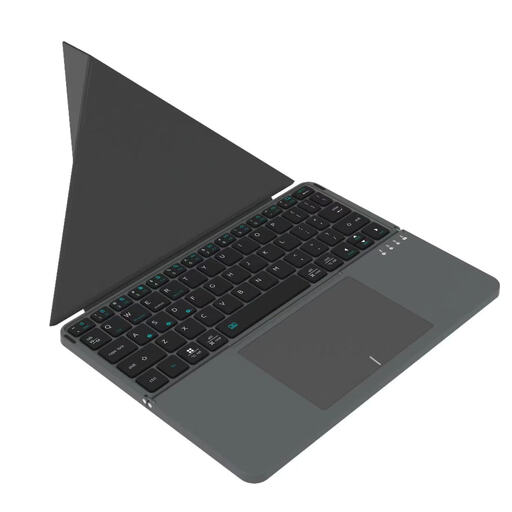
VoxorAI BOX1 Bluetooth Wireless Keyboard, Black
This is a portable option to consider if the keyboard needs to travel between study locations. Check the key arrangement and UK legends against the shortcuts required for your work, as well as compatibility with your specific device.
View on Joybuy
 No image available
AULA F75 75% Tri-Mode Wireless Keyboard, QWERTY US Layout
The 75% layout may appeal if desk space matters and you want a choice of wired, Bluetooth and 2.4G connections. Its stated layout is US, not UK; check that the keys, device compatibility and typing sound suit your setup before choosing it.
View on Joybuy
Common questions
Do I need a specialist keyboard to test a website search filter?
Usually not: start with a keyboard that works with the test device and has the keys and shortcuts your checks require. A programmable model becomes relevant if you will repeatedly use remapped keys or macros; Keychron identifies per-key QMK/VIA programming on its UK ISO C3 Pro.
Is a compact keyboard more useful than a full-size one in a student room?
A compact or tenkeyless layout makes sense when desk width or carrying the keyboard matters more than a dedicated number pad. If you enter numbers frequently, compare the exact key arrangement before giving up the full-size layout.
Will a Bluetooth keyboard work with both my laptop and tablet?
It will only work across both devices if the specific keyboard supports their operating systems and connection methods. Logitech lists Windows, macOS, iPadOS, iOS and Android for the Pebble Keys 2 K380s and says it can switch among three devices; check the instructions for your exact devices and chosen keyboard.
What should I do with an old keyboard when replacing it?
Check an electrical-waste collection route rather than treating the keyboard as ordinary rubbish. GOV.UK describes same-type retailer take-back arrangements for electrical equipment; ask the seller which service applies to your purchase and location.


