For frequent entry of shift times, dates and staffing numbers, start with a full-size UK-layout keyboard with a number pad, provided it leaves room for the mouse. A compact or multi-device keyboard makes more sense when desk space or switching between approved devices matters more; a wired USB model avoids Bluetooth pairing at a fixed desk but needs cable space. For regular display screen equipment (DSE) work, the Health and Safety Executive advises considering the whole workstation, not just the keyboard.
Who is this for?
Frequent spreadsheet rota planners
If you repeatedly enter shift times, dates, hours and headcounts, a dedicated number pad is a useful starting point. Check that a full-size keyboard still leaves space for the mouse; the Health and Safety Executive advises keeping both input devices in workable positions.
Hot-desk rota coordinators
If different staff or approved devices use the same desk, prioritise a familiar key layout and a connection method that suits each handover. Logitech documents device switching on some of its keyboards, but Bluetooth pairing is useful here only if workplace rules allow it.
Regular laptop-based DSE users
If you plan rotas for sustained periods at a laptop desk, choose the keyboard as part of the workstation setup. The Health and Safety Executive advises a separate keyboard and mouse when the laptop screen is raised.
What matters when choosing?
Decide how often the rota calls for number entry, then consider device handovers and the space needed to position the keyboard and mouse. The Health and Safety Executive advises assessing the whole workstation for regular DSE use.
| Concern |
What to check |
Who this matters to |
| Numeric rota entry |
Check for a dedicated number pad and a UK layout; make sure a full-size board leaves room for the mouse. |
If I enter hours and staffing numbers repeatedly, I want those keys readily available without crowding the desk. Around 42% of consumers put numeric entry first. |
| Shared-desk handovers |
Check the approved connection method and compatibility with the desk devices; decide whether switching between devices is actually needed. |
When colleagues take over the desk or work moves between approved devices, I want a straightforward handover. Roughly 33% of consumers make that their primary concern. |
| Regular-use setup |
Check keyboard height and central placement, mouse reach and whether a raised laptop screen calls for separate input devices. |
For sustained rota work, I need the keyboard to fit a workable desk arrangement, not merely to look comfortable. About 25% of consumers prioritise the DSE setup. |
Buying pitfalls
-
Choosing a compact keyboard before checking number entry
A smaller board may save desk space but leave frequent time and staffing-number entry without a dedicated number pad.
Review the rota workflow first. If numeric entry is frequent, compare keyboards with a number pad against the space available for the mouse.
-
Treating the keyboard as the entire DSE solution
The Health and Safety Executive advises considering the screen, furniture, work conditions and individual needs alongside keyboard and mouse placement.
Assess the full desk arrangement, including screen position and mouse reach, and raise any pain or discomfort for assessment.
-
Assuming wireless will simplify every handover
Switching between devices helps only when those devices are compatible and the workplace permits the connection method. A fixed workstation may not need multi-device pairing.
Confirm the desk devices and IT rules before choosing Bluetooth; consider wired USB if pairing is unnecessary.
-
Relying on a photograph to identify the key layout
Staff accustomed to UK key placement may find a different layout awkward when taking over the desk.
Check the specific variant for a UK, GB or UK-ISO layout rather than relying on the product family name.
Relevant brands to consider
Logitech
Logitech has multi-device keyboards relevant to desks that switch between approved devices. According to Logitech, the K480 pairs with up to three Bluetooth devices, while MX Keys S switches across up to three devices.
- Device switching is worth considering when the desk genuinely uses more than one compatible device.
- Confirm workplace pairing rules and allow for battery or charging needs before choosing a wireless model.
Keychron
Keychron offers UK-ISO options in different sizes. Its B6 Pro is described as full-size, and the K10 UK-ISO has a number pad.
- A UK-layout full-size option gives number-heavy rota work a dedicated numeric cluster.
- Check the exact layout and connection mode rather than choosing mechanical or custom features the desk does not need.
CHERRY
CHERRY lists the KC 1000 as a corded USB keyboard with cursor keys and a number pad, making it relevant to a fixed shared workstation.
- A wired connection avoids Bluetooth pairing at a desk that uses one computer.
- Plan the cable route; this model does not offer Bluetooth device switching.
Joybuy keyboards for this desk
These choices cover a wired keyboard-and-mouse set for a fixed desk, a wireless split-layout keyboard and a compact UK-layout keyboard. Check each listing against your rota workflow, desk devices and connection rules before choosing.
 No image available
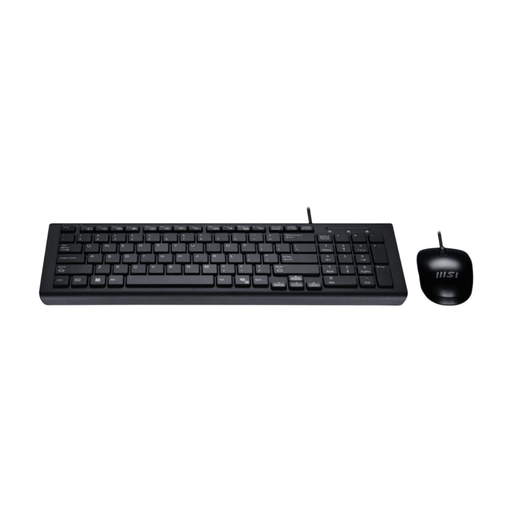
MSI GK-701 Office Keyboard and Mouse Set, USB, UK Layout, CoPilot Key, Black
Consider this set for a fixed shared desk where a wired keyboard and mouse suit the setup.
The named variant has USB connectivity, a UK layout and a CoPilot key. Check the available desk space and cable routing, particularly if number-pad access is important to your rota work.
View on Joybuy
 No image available
HP 960 Ergonomic Split Layout Wireless Keyboard with Padded Wrist Rest
Consider this wireless option if its connection method works with the approved shared-desk devices.
Its named configuration has a split layout and padded wrist rest. Confirm the key layout, device compatibility and workplace wireless rules; the design alone cannot establish whether it suits an individual workstation.
View on Joybuy
 No image available
ASUS ROG Falchion Ace HFX 65 Analog Gaming Keyboard, UK Layout
Consider this model when a smaller keyboard footprint and UK key layout matter more than choosing a full-size rota keyboard.
Check whether its key arrangement gives staff the number-entry access they need, and confirm that the intended desk connections and cables work for handovers.
View on Joybuy
Frequently asked questions
Do DSE considerations still matter at a shared rota-planning desk?
Yes, where regular work falls within the applicable DSE rules, sharing the desk does not remove the need to consider its setup. The Health and Safety Executive includes hot-desking in its DSE guidance and advises assessing the whole workstation and work conditions.
Should I use a separate keyboard with a laptop?
For prolonged laptop work with the screen raised, use a separate keyboard and mouse. The Health and Safety Executive advises this arrangement so the screen and input devices can be positioned separately.
Can one keyboard switch between several shared-desk devices?
Some keyboards can switch between compatible devices: according to Logitech, the K480 pairs with up to three Bluetooth devices and MX Keys S switches across up to three devices. Check the exact devices, operating systems and workplace IT rules before relying on that feature.
Where should the keyboard sit on a shared desk?
Position it centrally and just below elbow height, with the mouse in line with the elbow, in line with Health and Safety Executive posture guidance. Check that the chosen keyboard leaves enough room to maintain that arrangement when different staff use the desk.


