What matters when choosing?
Start with a keyboard position your standing desk can accommodate, then decide which physical layout fits your typing. Judge programmable controls and connection options against the commands and devices you use, rather than treating either as essential for every editor.
| Concern |
What to check |
Who this matters to |
| Standing-workstation fit |
At your standing height, can the keyboard sit just below elbow height, with the screen and keyboard central? Check mouse reach as part of the same setup, following Health and Safety Executive guidance. |
If I edit for long periods while standing, I need the desk and keyboard position to let me type without raising my shoulders or twisting towards the screen. Around 36% of consumers put workstation fit first. |
| Shortcuts and remapping |
Identify your repeated commands, then check the keyboard’s configuration method, operating-system compatibility and shortcut behaviour in your editing application. |
When I move repeatedly between subtitle text and timeline commands, I want frequently used controls within easy reach without creating conflicts. Shortcut access is the first priority for around 29% of consumers. |
| Layout and text entry |
Check the physical UK ISO or US ANSI variant, the computer’s input source and whether you need the keys of a full-size layout. |
If I type punctuation or characters for several languages, unfamiliar key positions can interrupt text entry and proofreading. Around 21% of consumers put layout and character access first. |
| Connections and desk travel |
Choose among the connection methods offered by the specific model, and check device switching, available ports and cable slack across the desk’s height range. |
If I switch computers or raise and lower the desk during work, I need a connection that fits both my devices and cable routing. Connection flexibility leads the choice for around 14% of consumers. |
Joybuy product choices
These keyboards offer compact wireless, configurable mechanical or fuller-layout options for subtitle text entry. Compare their key layouts and shortcut controls with your editing software, and check that the chosen keyboard can sit correctly at your standing desk.
 No image available
HyperX Alloy Rise 75 Wireless Keyboard UK
Consider its 75% layout if you want a more compact keyboard for subtitle text and editing commands. Check the physical key positions behind the UK designation and whether the key assignments you intend to use work with your operating system and editor.
View on Joybuy
 No image available
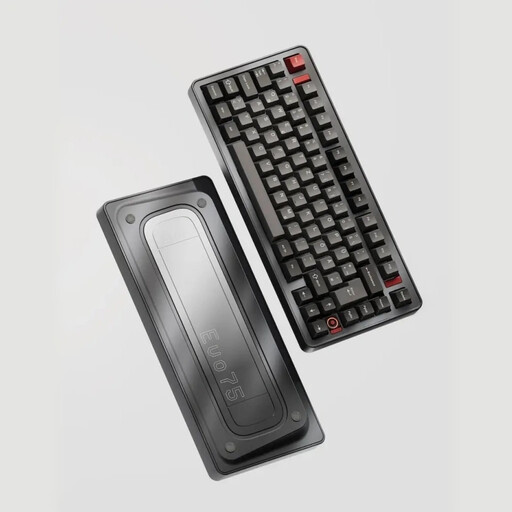
Ticktype EVO75, US Layout, Creamy Rye, Anodized Basalt Grey
This 75% mechanical keyboard is an option if VIA-compatible key configuration matters more to you than UK ISO key geometry. The named variant has a US Layout, Creamy Rye switches and an Anodized Basalt Grey finish; check character entry and your actual editor shortcuts before relying on a remapped setup.
View on Joybuy
 No image available
ASUS ROG Strix Scope II 96 Wireless, White, UK Layout
Consider this UK Layout, 96% wireless keyboard if key coverage matters to your text-entry workflow. Check the printed keys and whether your editing software and the keyboard’s controls support the particular shortcuts you want to use; a wrist rest does not replace correct keyboard height.
View on Joybuy
 No image available
ET Silent Wireless Keyboard and Mouse Combo, US Layout
This full-size keyboard and mouse set is a conventional option for text entry and standard editing commands. Its title specifies US Layout, so check the physical keys and your computer’s input source if you normally type on UK ISO; confirm shortcut controls separately if you need custom commands.
View on Joybuy
Common questions
Do I need an ergonomic keyboard for a standing desk?
No special keyboard shape is required simply because you stand. The Health and Safety Executive advises placing the keyboard just below elbow height and keeping the screen and keyboard central; consider a wave or split shape if you prefer its key position after adjusting the whole workstation.
Does subtitle-editing work require a DSE workstation assessment?
For workers who use display screen equipment daily as part of normal work, continuously for an hour or more, the Health and Safety Executive says employers must carry out a workstation assessment. That assessment covers the workstation and work undertaken, not just the keyboard; the condition should be checked against your working arrangement.
Should I choose UK ISO or US ANSI for translated subtitles?
Choose the physical layout that fits your typing habits and the input source you will use for your languages. Logitech describes UK ISO and US ANSI as having different Enter and left Shift key shapes; check the actual variant and printed keys rather than relying on an English-language product title.
Are macro keys necessary for subtitle editing?
No; they are useful only when you have repeated commands that your software and keyboard can assign as intended. Adobe documents customisable application-wide and panel-specific shortcuts in Premiere, so test your most-used commands in the relevant panels before building a larger macro setup.
What should I check when using a wireless keyboard at an adjustable desk?
Check the chosen model’s connection and charging arrangements, the ports or receiver you need, and cable slack throughout the desk’s height range. If you switch devices, confirm that pairing and any shortcut configuration work on each device you intend to use.


