Quiet small-desk survey planners
Students drafting questions, consent text and recruitment messages in a bedroom or shared room, where keyboard space and typing noise both affect the choice.


A compact keyboard is a sensible choice when desk space and typing noise matter most, but check the particular model’s noise description rather than assuming every small keyboard is quiet. If planning the survey will involve entering figures repeatedly, consider a full-size keyboard with a number pad and allow for its larger footprint. Check the printed key layout and connection against your devices either way.
Students drafting questions, consent text and recruitment messages in a bedroom or shared room, where keyboard space and typing noise both affect the choice.
Students entering response counts, contact lists or budget figures often enough to value a dedicated number pad.
Students moving between a laptop, tablet or phone to draft questions, review forms and communicate, who need to check how the keyboard connects to each device.
Decide whether your work is mainly writing, entering figures or moving between devices. Then check the exact layout and connection method: a keyboard’s size alone does not settle either question.
Choose when: Survey writing takes priority and a small desk or shared room makes footprint and key noise important.
Trade-off: Check for a dedicated number pad before relying on it for repeated figures; Bluetooth also requires a compatible device and pairing.
Choose when: Response totals, contact records or budgets mean you will enter numbers frequently.
Trade-off: A full-size layout occupies more desk space, and a receiver-based model needs a suitable port or adapter.
Choose when: You intend to configure shortcuts for repeated survey-planning actions.
Trade-off: Configuration takes effort and does not replace a dedicated number pad; mechanical switches are not, by themselves, evidence of quiet typing.
| Concern | What to check | Who this matters to |
|---|---|---|
| Desk space and noise | Compare keyboard width and the maker’s description of the keys; confirm that a reduced layout retains the keys you use. | If I draft questions beside notes in a shared room, I want room to work without unnecessary key clatter. Around 36% of consumers put quiet, small-desk writing first. |
| Numerical entry | Look for a dedicated number pad, then measure the usable desk area; HP lists its full-size 230 keyboard as 440 mm wide. | Repeated response counts and budget entries make a separate number pad more useful to me than a smaller footprint. For around 29% of consumers, entering figures is the primary concern. |
| Device connections | Check Bluetooth support, receiver and port requirements, stated operating-system compatibility and any device-switching feature. | When I review a form on a tablet but write on a laptop, I need a connection that works with both. Moving between devices comes first for around 21% of consumers. |
| Custom shortcuts | Confirm that the exact keyboard supports remapping on your operating system and that its printed layout suits you. | If I repeatedly enter the same survey wording or switch applications, I may be willing to configure shortcuts. Around 14% of consumers prioritise that workflow. |
A 75% or mini layout may omit the dedicated number pad that makes response tallies and budget sheets easier to enter.
List the numerical tasks you expect to do. If they are frequent, compare a full-size layout or consider whether a separate number pad would suit your desk.
Bluetooth, a 2.4 GHz USB receiver and a wired connection have different requirements at the device you use.
Check the exact connection modes against your laptop or tablet’s Bluetooth support and available ports before ordering.
A keyboard family can have different regional variants. Keychron, for example, lists UK-ISO alongside other ISO layouts for the K3 Max.
Confirm the selected variant’s printed layout rather than relying on a photograph of another variant.
The availability of an exact layout and variant can change independently of its product description.
Check the selected variant’s availability and the retailer’s applicable purchase terms immediately before ordering.
Its Pebble Keys 2 K380s and MX Keys Mini are relevant to compact survey-writing setups.
The HP 230 offers a full-size route for survey work involving frequent figures.
The K3 Max UK-ISO variant is relevant to buyers considering a compact layout with remappable keys.
These compact keyboards offer different layouts and connection methods for drafting survey materials on a small desk. Check the printed keys and your device compatibility before choosing.
 No image available
Consider this compact layout for drafting when desk space matters; check whether its keys are quiet enough for your room.
The title specifies 78 keys, Bluetooth 5.0/4.0, 2.4 GHz wireless connectivity and support for four devices. Its printed layout is US QWERTY, so check that arrangement before buying.
 No image available
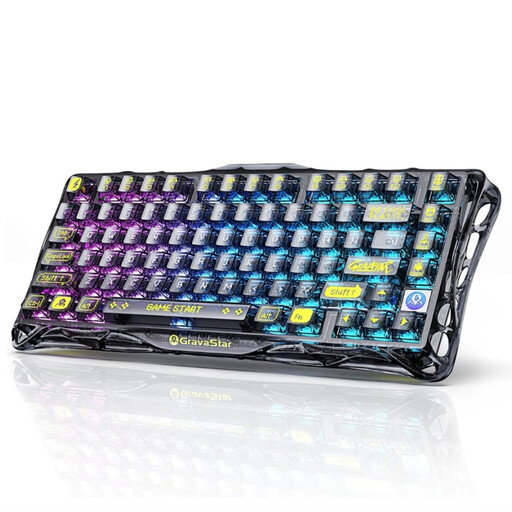
The 75% layout is an option for survey drafting where a smaller keyboard is useful; do not assume its mechanical switches will be quiet in a shared room.
The title specifies Bluetooth, 2.4 GHz wireless and wired connections, PBT keycaps and a US QWERTY layout. Check the printed arrangement against your typing needs.
 No image available
Consider its compact layout if you want a choice of connection methods for survey writing; check the exact version before ordering.
The title identifies Bluetooth 5.0, 2.4 GHz wireless and USB-C wired modes, plus a US QWERTY layout. Confirm that its printed keys and Chinese retail version suit your intended use.
 No image available
Its 65% layout suits consideration for a desk where keyboard space is limited; check typing noise if the room is shared.
The title specifies 68 keys, Bluetooth 5.1 and a wired mode, with a US QWERTY layout. If you need to switch between devices, confirm how that works for this model.
 No image available
Consider this Bluetooth option if you plan to type survey material on a compatible computer or mobile device.
The title lists compatibility with computers, laptops, iPads and smartphones. Check its printed key layout and typing noise before choosing it for sustained work in a shared room.
A dedicated number pad is worth considering if you will repeatedly enter response totals, contact records or budget figures. If your work is mostly drafting questions and messages, a compact layout may leave more usable desk space.
Put the keyboard into pairing mode, open the device’s Bluetooth settings and select the keyboard, confirming a code if prompted. Logitech says its Easy-Switch models require you to hold the relevant Easy-Switch key until its light blinks before pairing.
Match its connection method to your device: Bluetooth needs Bluetooth support, while a 2.4 GHz receiver needs a suitable USB port or adapter. Also check the stated operating-system compatibility, printed key layout and whether you need a dedicated number pad.
That depends on the model’s power arrangement. HP specifies two AAA batteries for the HP 230 and states battery life of up to 16 months; check the exact keyboard’s battery or charging requirements before buying.