Frequent number-entry tax filers
If you regularly enter amounts, dates, invoice references or spreadsheet figures, check for a dedicated number pad and the UK key layout you expect.


For frequent entry of figures and references, start with a UK-layout keyboard with a dedicated number pad. Choose illuminated keys if you struggle to see the legends as daylight changes, but do not expect them to fix reflections on the monitor. A wired model avoids battery management at a fixed desk; wireless or mechanical options make more sense when device switching or switch feel matters to you.
If you regularly enter amounts, dates, invoice references or spreadsheet figures, check for a dedicated number pad and the UK key layout you expect.
If changing daylight makes keys difficult to read, illumination may help at the keyboard. The Health and Safety Executive also advises arranging screens and lighting to avoid reflections and glare.
If you spend sustained periods reconciling records, make room to position the keyboard centrally and just below elbow height, in line with Health and Safety Executive guidance.
For tax-record work beside a bright window, settle the number-entry layout first, then consider whether key visibility, working position or connection matters most to your setup.
| Concern | What to check | Who this matters to |
|---|---|---|
| Number entry | Look for a dedicated number pad and confirm the exact English-UK QWERTY or UK-ISO layout. | If I enter figures and invoice references repeatedly, I want a separate number-entry cluster rather than relying on the top row; around 36% of consumers would put number entry first. |
| Changing light | Check illumination on the selected variant and position the monitor to avoid window reflections. | When daylight shifts, I need to read the keys without confusing keyboard lighting with a fix for screen glare; changing-light visibility would come first for around 29% of consumers. |
| Working position | Check that the keyboard can sit centrally at a comfortable height, with enough usable desk space. | During longer reconciliation sessions, I need a layout I can position without twisting towards the screen; around 21% of consumers would prioritise working position. |
| Connection | Confirm the required port or wireless connection and whether you need to switch devices. | If I use one fixed desk or move between computers, I want a connection I can manage easily; connection and desk management would lead the choice for around 14% of consumers. |
Illuminated keys affect the keyboard, not reflections on the display beside a bright window.
Arrange the screen and lighting to avoid glare, as the Health and Safety Executive advises. Then decide whether adjustable key lighting would help you see the legends.
A compact keyboard may save desk space but can leave you using the top number row for repeated figures.
If numeric entry is frequent, check for a full-size or compact-with-numpad layout. If desk width is tight, compare the keyboard dimensions before deciding.
Layout, switch and keycap variants can change key positions and whether illuminated legends are visible.
Confirm the selected English-UK QWERTY or UK-ISO variant, number pad and connection. For a mechanical keyboard, check its exact switches and keycaps too.
A keyboard choice cannot compensate for a screen or input position that makes you twist or work around glare.
The Health and Safety Executive advises keeping the keyboard central and just below elbow height. Review the screen position and lighting alongside it.
Its MX keyboard range includes productivity-focused full-size options for number entry and changing desk light.
The K10 UK-ISO is a full-size mechanical option for consumers who want a number pad and a choice of connections.
The HP 400 Backlit Wired Keyboard is a fixed-desk option with illuminated keys and a full number pad.
The English-UK KB216 is a wired office keyboard for a fixed desk where a number pad matters.
The KW 3000 is a full-size wireless office option for consumers who want a number pad and a USB-receiver connection.
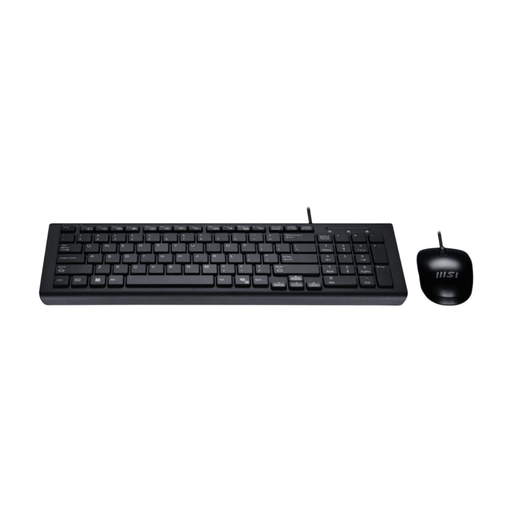
This UK-layout keyboard-and-mouse set is a wired option for a fixed tax-record desk. Check the selected keyboard’s number pad and key visibility against the way you work.
 No image available
For a fixed desk used to prepare tax records, consider this UK-layout set if you want a separate keyboard and mouse. Its product name specifies USB and a CoPilot key; confirm the connection fits your device, and check the number pad and illumination on the selected keyboard before buying.
Choose a dedicated number pad if you frequently enter figures, dates and references; occasional number entry may not justify the extra keyboard width. Check the exact layout rather than assuming every keyboard in a product range includes one.
No: backlighting affects key visibility, not reflections on your monitor. The Health and Safety Executive advises arranging screens and lighting to avoid glare, so address the display position separately.
Keep the keyboard central and just below elbow height, as the Health and Safety Executive advises. If you raise a laptop screen, a separate keyboard and mouse let you position the display and input devices independently.
A wired keyboard suits a fixed desk if your device has a compatible port and you want to avoid battery management. Consider wireless if placement or switching devices matters more, and check the connection requirements of the exact model.
The Health and Safety Executive says employers must assess workstations for workers who use display screen equipment daily as part of their normal work for continuous periods of an hour or more; this can include home working. Preparing personal tax records occasionally does not, by itself, place someone in that employer-assessment category.