Shared-room quiet typists
If you make vocabulary cards while someone nearby is sleeping or studying, typing sound may matter more to you than switch feel. Check quiet-typing claims for the exact keyboard and switch you are considering.


For vocabulary-card work in a shared student room, start with a compact keyboard whose layout lets you reach the commands you use; prioritise quiet typing if others study or sleep nearby. Programmable keys are worth considering when you repeatedly format or tag cards, but check their software requirements before choosing them over a simpler board. For longer sessions, assess the keyboard alongside your screen and desk arrangement rather than expecting a keyboard feature alone to make the setup comfortable.
If you make vocabulary cards while someone nearby is sleeping or studying, typing sound may matter more to you than switch feel. Check quiet-typing claims for the exact keyboard and switch you are considering.
When your desk must hold a laptop, mouse and study materials, a compact keyboard can be easier to place. Check which keys its smaller layout moves or omits before giving up desk width.
If you repeatedly use tags, formatting, screenshots or templates, configurable keys may reduce the commands you enter by hand. Check that your card-making software and computer can use the shortcuts and configuration tools you need.
Start with the space and key access your desk allows, then weigh noise, repeatable commands and the position of your screen for longer sessions.
| Concern | What to check | Who this matters to |
|---|---|---|
| Desk space and layout | Compare dimensions and key maps; check access to any number or navigation keys you use. | I need room for a laptop, mouse and physical cards, but I still want my usual commands within reach. Around 33% of consumers would put desk space and usable layout first. |
| Shared-room noise | Look for quiet-typing information about the exact model and switch variant, rather than relying on its keyboard type. | When someone nearby is resting or studying, I want to type cards without disturbing them. For around 27% of consumers, quieter typing would be the primary concern. |
| Repeated actions | Identify the commands you repeat, then check key remapping and configuration-tool compatibility. | I keep applying the same tags or formatting and would rather assign those actions to keys. Shortcuts would come first for around 20% of consumers. |
| Long-session setup | Check whether the keyboard can sit centrally just below elbow height, with the screen positioned appropriately. | If I spend extended periods making cards, I need a workable position for the keyboard and screen. Around 20% of consumers would prioritise this setup. |
Mini and 75% layouts can free desk space while changing access to navigation, number or function commands. That trade-off matters if your card-making routine uses those keys frequently.
Inspect the exact key map and work through your usual commands before choosing a layout by its size label.
Typing sound depends on the particular board and switches. Logitech describes the Pebble Keys 2 K380s as quiet; Razer makes quiet-oriented claims for the Pro Type Ultra. Neither description establishes how another model will sound.
If sound is decisive, check the exact variant’s typing sound and the applicable retailer return terms before purchase.
A keyboard feature cannot, on its own, resolve an awkward screen or keyboard position. The Health and Safety Executive advises considering keyboard and screen placement together.
Check whether the keyboard can sit centrally just below elbow height. For prolonged laptop use, consider a separate keyboard and mouse so the screen can be raised.
UK government guidance says electrical products marked with a crossed-out wheelie-bin symbol should go to an appropriate recycling collection point.
Check your local household waste recycling centre for an appropriate collection route.
Its Pebble Keys 2 K380s and MX Keys Mini illustrate different compact-keyboard choices for card-making on a limited desk.
The K3 Max and K3 Version 3 are relevant if you want a compact mechanical layout and configurable commands.
Pro Type Ultra is a larger mechanical-keyboard option for students who value its stated wrist rest and connection choices more than minimum desk footprint.
These keyboards offer compact and full-size ways to type vocabulary cards at a student-room desk. Compare each layout with the space you have and the keys you use; a compact format or quiet-typing description alone cannot settle shared-room suitability.
 No image available
Consider this 75% keyboard if you want a smaller board for a desk shared with card-making materials. Check the exact key map against your essential commands, and assess typing sound for your chosen variant if you share the room.
 No image available
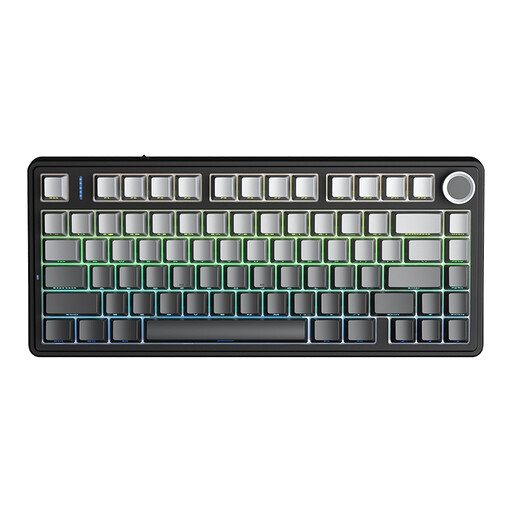
This compact board is an option when desk width matters. Its title specifies wired, Bluetooth and 2.4G modes, RGB backlighting and a QWERTY US layout; check the key map if you normally use UK keys, and assess its typing sound if noise matters.
 No image available
Choose this variant to consider a compact board with the hot-swappable switches stated in its title. It also lists wired, Bluetooth and 2.4G modes; check whether its QWERTY US key arrangement and typing sound suit your room and card-making commands.
 No image available
The 68-key format is worth considering when you need to leave more of the desk clear for cards. The title lists Bluetooth 5.1, wired connectivity and white backlighting; inspect the US key map and assess typing sound before choosing it for a shared room.
 No image available
A full-size board may suit you if keeping dedicated keys matters more than minimising desk width. Check that it fits alongside your mouse and study materials; if others share the room, assess the exact keyboard’s typing sound rather than relying on a quiet-key description.
Choose a mini or 75% layout if the desk space you recover is worth any change to dedicated-key access; choose full-size if those keys matter more and the board fits. Check the exact key map against the navigation, number and function commands you use.
It can make a more workable arrangement possible, but the keyboard alone is not an ergonomic fix. For prolonged laptop use, the Health and Safety Executive advises a separate keyboard and mouse so the screen can be raised, with the keyboard positioned centrally just below elbow height.
Not if you mainly enter text and use a few ordinary shortcuts. If you repeatedly apply tags, formatting or other commands, check whether the exact keyboard can assign them and whether its configuration tool works with your computer; Keychron says K3 Version 3 Launcher configuration requires a wired connection.
Take an unwanted keyboard marked with the crossed-out wheelie-bin symbol to an appropriate electrical-waste collection point rather than putting it in household rubbish. UK government guidance identifies collection for recycling; check your local household waste recycling centre for a suitable route.