What matters when choosing
Wearing headphones does not change the keyboard decision: start with the space your mouse needs, then decide which keys and movement settings you will use.
60% keyboard
Choose it when: freeing space beside the keyboard matters most and you are comfortable using layers for omitted keys.
Trade-off: navigation and function keys are not available as dedicated rows.
TKL keyboard
Choose it when: you want a reduced-width layout while keeping dedicated arrow and navigation keys.
Trade-off: it occupies more width than a 60% board.
Conventional mechanical keyboard
Choose it when: fixed switch behaviour suits you and you do not need configurable actuation or Rapid Trigger.
Trade-off: it does not offer the adjustable press point and dynamic reset available on keyboards with those features.
| Concern | What to check | Who this matters to |
|---|
| Movement response |
Check the exact model's actuation controls and Rapid Trigger settings. RTINGS describes Rapid Trigger as resetting a key when it starts moving upwards; that is different from changing when a press registers. |
If I repeatedly change direction in shooters, I want key response I can adjust without making ordinary presses troublesome. Roughly 36% of consumers put movement-response tuning first. |
| Mouse space |
Compare the physical width of layouts you are considering and identify which keys require layers. |
For broad aim movements, I need room to position and move my mouse without the keyboard getting in the way; around 29% of consumers prioritise mouse space. |
| Everyday key access |
Check for dedicated arrows, navigation and function keys, then consider whether the available sensitivity settings suit typing as well as play. |
If I use the same PC for work and other games, I do not want practice settings or missing keys to interrupt those tasks. Approximately 21% of consumers place everyday usability first. |
| Game rules and purchase details |
Check movement-assist controls against the rules of the servers you use. Confirm the exact physical key layout and manufacturer documentation for the variant you order. |
Before I use movement features on Valve official Counter-Strike 2 servers, I need to know what each setting does; roughly 14% of consumers put rule and purchase certainty first. |
Joybuy keyboard choices
These compact 60%, 65% and 75% keyboards are choices to examine if mouse space matters during shooter practice. Compare their exact keys, layout variant and settings before deciding; this selection does not cover the TKL or conventional-keyboard routes discussed above.
 No image available
Razer Huntsman V3 Pro Mini 60% optical keyboard
Consider this 60% model if leaving room for mouse movement takes priority over dedicated navigation keys.
The product name identifies analogue optical switches. Confirm the exact physical key layout and the movement-assist settings you intend to use.
View on Joybuy
 No image available
ASUS ROG Falchion Ace HFX 65, UK layout
Consider this 65% model if you want a compact keyboard but are not ready to choose a 60% layout.
The product name specifies a UK layout; confirm the delivered variant and its keys. Check how any directional-input assistance works and whether it can be disabled before using it on rule-sensitive servers.
View on Joybuy
 No image available
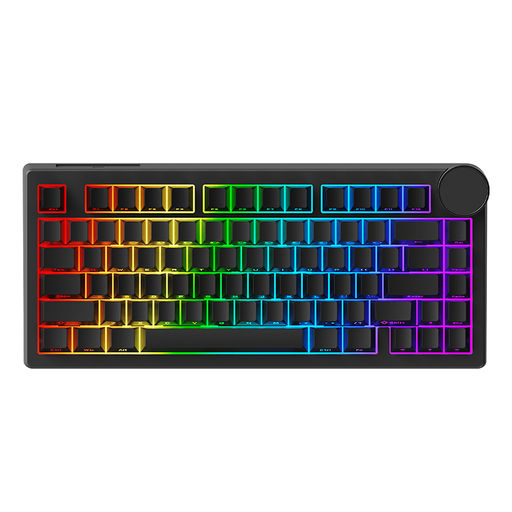
AJAZZ AK820 V2 wired HE keyboard, 75% Starry Sparkle
Consider this 75% layout if you want a compact format but expect to use more direct-access keys than a 60% board provides.
The product name identifies magnetic switches, side-engraved black keycaps and a metal knob. Check the physical key layout and legends for the exact variant.
View on Joybuy
 No image available
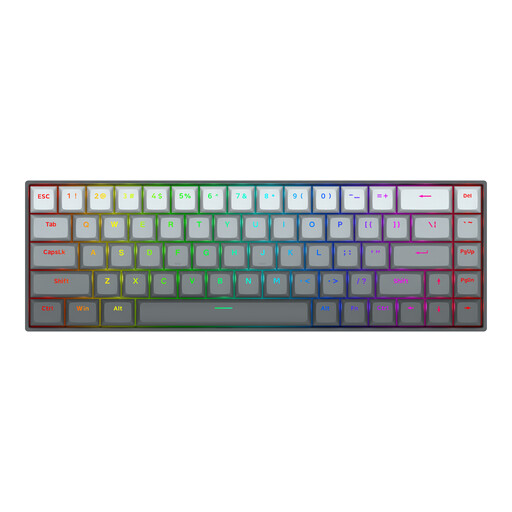
Redragon M68 magnetic keyboard, 68-key US layout
Consider this compact model if keyboard width matters and a US layout suits your typing.
Its product name specifies Rapid Trigger, a metal top plate and an 8,000 Hz polling rate. Check the exact arrow and navigation-key arrangement if direct access matters to you.
View on Joybuy
 No image available
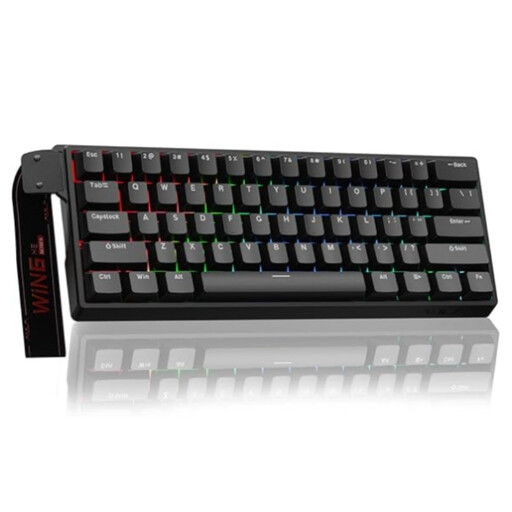
AULA WIN60HE wired 60% magnetic keyboard, Black/Graywood
Consider this 60% model when mouse space matters more than dedicated navigation and function rows.
The product name specifies adjustable actuation, Rapid Trigger and an 8,000 Hz polling rate. Confirm the physical key layout and how actuation settings are changed before choosing it for regular practice.
View on Joybuy
Common questions
Will Rapid Trigger improve my shooter aim automatically?
No: Rapid Trigger changes when a key resets as it moves upwards; it does not replace aim practice or mouse control. RTINGS describes its relevance to repeated movement inputs, so judge the feature alongside the keyboard's layout and settings.
Should I choose 60% or TKL for aim practice?
Choose 60% if mouse space is your priority and layers are acceptable for omitted keys; choose TKL if dedicated arrow and navigation keys matter more. Check the width and key arrangement of the exact model before deciding.
Can I use automated counter-strafing in Counter-Strike 2?
Certain hardware-assisted counter-strafing automation can result in a kick on Valve official servers, according to Valve's August 2024 Counter-Strike 2 release notes. Check what your keyboard's movement-assist settings do and disable prohibited automation before joining those servers; this is not a statement about every shooter or tournament.
Where should I start with adjustable actuation?
Start with a setting that lets you press movement keys deliberately, then adjust it during practice if you want a different response. Confirm the controls and available settings for your exact model; SteelSeries, Razer and Logitech G describe adjustable actuation on the models discussed here, but their controls differ.
Must a keyboard show UKCA marking rather than CE marking?
Do not choose solely on the assumption that UKCA is required instead of CE. Department for Business and Trade guidance dated August 2026 says Great Britain continues to recognise CE marking for many products; check the requirements applicable to the exact keyboard and its manufacturer documentation rather than treating a listing photograph as proof.


