Choose the keyboard layout around the work you do most: consider an ergonomic shape for long typing sessions, a compact board for a crowded desk, or a numeric keypad if you enter numbers frequently. For prolonged laptop work, keyboard choice also needs to fit your screen and workstation setup; check the exact key layout, device compatibility and connection method before buying.
Who is this for?
Long-session home-office typists
If you spend extended periods building or editing forms, consider keyboard position alongside screen height, mouse placement and breaks. The Health and Safety Executive advises assessing the workstation as a whole, rather than relying on one accessory to address discomfort.
Small-desk, multi-device workers
If a laptop shares a limited desk with other devices, you may value a smaller keyboard and a connection method that works with the devices you actually use. Check whether frequently used navigation keys remain convenient to reach.
Mac users who enter numbers often
If form fields, tables or spreadsheets involve repeated number entry, an extended keyboard may be useful. Check the exact Mac compatibility of any Apple-specific feature before making it part of your decision.
What matters when choosing?
Start with the keys and desk space your work requires, then assess typing position and whether the keyboard will connect to your work devices.
| Concern |
What to check |
Who this matters to |
| Long-session comfort |
Check keyboard height, shape and palm-rest fit alongside your screen, chair and mouse positions. |
If I type and revise forms for long stretches, I want a setup that lets me position my hands comfortably without treating the keyboard as the whole solution. Around 36% of consumers put long-session comfort first. |
| Desk space and layout |
Compare the exact UK key layout and the position of navigation keys and any numeric keypad. |
On a small desk, I need room for pointer work but cannot afford to lose keys I use repeatedly. For around 29% of consumers, layout and desk space are the primary concern. |
| Connections and shortcuts |
Confirm permitted connection modes, supported devices and whether shortcut software works on your system. |
When I move between work devices or repeat form-building actions, I want switching or remapping that fits my setup. Around 21% of consumers prioritise connections and shortcuts. |
| Mac and numeric work |
Check whether you need a dedicated number pad and whether the exact keyboard supports your Mac and its intended features. |
If I regularly enter figures in fields or spreadsheets, a number pad matters more to me than a smaller footprint. Mac compatibility and numeric entry come first for around 14% of consumers. |
Buying pitfalls
-
Expecting a keyboard to fix the whole workstation
The Health and Safety Executive links poorly arranged display-screen workstations with discomfort and advises considering keyboard, mouse and screen placement together.
Before choosing a keyboard for prolonged laptop work, check where it will sit when the screen is raised and whether you can position the mouse comfortably too.
-
Choosing a compact board without checking its keys
A 75% or tenkeyless layout differs from an extended layout with a numeric keypad. A smaller footprint is less useful if keys needed for form testing or number entry become awkward to access.
List the keys you use repeatedly, then compare the diagram for the exact layout and language variant.
-
Assuming wireless switching will work on every device
A keyboard’s connection options do not establish that your employer permits them or that its configuration software works on your operating system.
Check your work-device policy, supported platforms and whether you need Bluetooth, a receiver or a wired connection.
-
Choosing Apple-specific features before checking compatibility
Touch ID depends on the particular Magic Keyboard and Mac combination, rather than being a feature of every Apple keyboard.
Confirm the requirements for the exact model and decide separately whether your work calls for a numeric keypad.
Brands to consider
Logitech
Wave Keys is a wireless option to consider when keyboard shape and palm support are priorities.
- Logitech specifies a wave-shaped layout, cushioned palm rest, Bluetooth and a Logi Bolt receiver for Wave Keys.
- Check the physical key layout if your work requires a dedicated numeric keypad; the shape alone does not establish personal comfort.
Keychron
The K3 Max and V3 Max offer different mechanical-keyboard layouts for buyers considering customisation.
- Keychron lists UK-ISO variants and wireless connection options for these lines; the K3 Max also has a wired mode.
- Check the chosen variant’s switches, keycaps and key positions rather than assuming every configuration is identical.
Apple
British-English Magic Keyboard options include a compact USB-C model and a separate extended model with a numeric keypad.
- Apple identifies the extended model’s number pad as useful for spreadsheet and finance work.
- Check the exact Mac requirements if you want Touch ID; do not assume it works across Apple devices.
Joybuy keyboard choices
These keyboards offer different approaches to home-office form work, from split and full-size layouts to a compact 75% board. Check each model’s key arrangement against your typing and number-entry needs.
 No image available
HP 960 Ergonomic Split Layout Wireless Keyboard with Padded Wrist Rest
Consider this model if keyboard shape and wrist support are priorities during longer form-editing sessions.
Its title specifies a split layout, wireless operation and a padded wrist rest. Check the physical key layout and operating-system compatibility for your work device.
View on Joybuy
 No image available
Targus EcoSmart™ Full Size Wireless Keyboard (UK)
Consider a full-size UK layout if you prefer a conventional key arrangement for form work and have room for a larger board.
Its title identifies it as a wireless keyboard. Compare its dimensions with your available desk space before choosing it over a compact layout.
View on Joybuy
 No image available
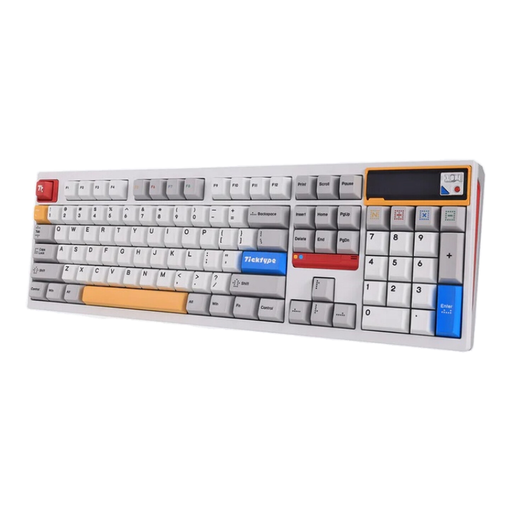
Ticktype DP104 Tri-Mode Mechanical Keyboard, Powder White, Silent Tactile Switches, US Layout
Consider this full-size option if switch customisation matters more to you than a compact footprint.
The title specifies 108 keys, hot-swappable switches and a US layout. Check whether that key arrangement suits the characters and shortcuts you use for work; the switch name is not a measured noise result.
View on Joybuy
 No image available
ET Silent Wireless Keyboard and Mouse Combo, US Layout
This set may suit a desk where you need both a separate keyboard and a mouse for laptop-based form work.
The title specifies a full-size wireless keyboard and a US layout. Check the key positions against your UK typing needs; its name does not establish measured noise or individual comfort.
View on Joybuy
 No image available
HyperX Alloy Rise 75 Wireless Keyboard UK
Consider its compact 75% layout if desk space matters more than having a dedicated numeric keypad.
The title specifies wireless operation and a UK variant. Check the exact operating-system and software requirements if you need it to work with a managed work device.
View on Joybuy
Common questions
Do I need an ergonomic keyboard for home-office form work?
Not necessarily: choose one if its shape and support suit your typing position, but assess the whole workstation too. The Health and Safety Executive advises considering keyboard and mouse placement alongside the screen and other parts of the setup.
Should I use a separate keyboard with a laptop?
For prolonged laptop work, the Health and Safety Executive advises using a separate keyboard and mouse so the screen can be raised. An occasional short session does not call for the same workstation arrangement.
Is a mechanical keyboard automatically better for laying out forms?
No: decide by the keys you need, the switch feel you prefer and the noise your workspace can accommodate. Mechanical customisation does not by itself establish greater comfort or a better fit for your desk.
When is a numeric keypad useful?
A dedicated number pad is worth considering if your work repeatedly involves numeric fields or spreadsheets. If number entry is rare, compare the extra desk space an extended keyboard needs with a compact or tenkeyless layout.


