For a geography map task, prioritise programmable keys if repeated commands are central to your work, or keyboard and workstation fit if you spend longer periods entering labels and data. A smaller keyboard can leave more room for the mouse, but only if its retained keys suit your workflow. QGIS Documentation says QGIS shortcuts can be reconfigured, so check what your software can do before deciding you need keyboard-level macros.
Who this is for
Shortcut-heavy map makers
If you repeatedly edit attributes, apply labels or run commands in mapping software, reliable access to modifier keys and configurable shortcuts may matter more than lighting. QGIS Documentation confirms that QGIS shortcuts can be reconfigured; keyboard-level programming is a separate choice.
Long-session map designers
If map work involves extended typing of place names, notes or data, consider keyboard position alongside the desk, screen and mouse. The Health and Safety Executive advises keeping the keyboard just below elbow height and central to the screen.
Small-desk or multi-device users
If the mouse needs more space beside a map canvas, compare compact layouts with the keys you actually use. If you switch devices, check both connection compatibility and whether configuration software works on each operating system; Logitech and Keychron describe these capabilities for specific models, not every keyboard they make.
What matters when choosing
Start with the part of map work that places the greatest demand on your keyboard, then check the exact layout and software support before choosing a model.
| Concern |
What to check |
Who this matters to |
| Repeated commands |
Check your mapping software’s shortcut settings, then confirm whether keyboard remapping works on your operating system. |
If I repeatedly edit map attributes or labels, I want shortcuts that fit those actions rather than extra keys I will not use. Around 37% of consumers would put shortcut customisation first. |
| Extended typing |
Check the available keyboard positions and whether it can sit centrally, just below elbow height, with the mouse within reach. |
When I spend a long session entering place names and data, I need a typing position that works with my desk setup. Extended-session comfort would come first for around 27% of consumers. |
| Mouse room |
Measure the usable desk space and compare the exact key layout with the navigation and data-entry keys you need. |
If navigating the map canvas leaves little room for my mouse, I would consider a narrower keyboard only after checking its keys. Roughly 18% of consumers would make mouse space their primary concern. |
| Layout and devices |
Confirm the purchased key-layout variant and check connection and configuration-software support for each intended device. |
If I move the task between devices or rely on familiar UK key positions, I need the right variant and compatible controls. Layout and device compatibility would lead the choice for around 18% of consumers. |
Buying pitfalls
-
Assuming you need dedicated macro keys
QGIS Documentation says QGIS shortcuts can be reconfigured. For that application, software settings may address repeated commands before keyboard-level programming becomes relevant.
List the commands you use often, try the available application shortcuts, then decide whether hardware remapping adds something you need.
-
Expecting keyboard shape to fix the whole workstation
An adjustable or shaped keyboard still has to fit your desk and mouse position. The Health and Safety Executive advises placing the keyboard just below elbow height and centrally with the screen.
Check keyboard placement, screen position and mouse reach together before choosing a comfort-focused layout.
-
Choosing a compact layout by its size label alone
A smaller footprint may leave more mouse room, but the position of navigation and data-entry keys varies by model.
Compare the exact layout image with the keys you use for map navigation, data entry and shortcuts.
-
Equating device switching with full software support
Logitech describes switching across up to three devices for MX Keys S, but says its advanced software-led functions are not equally available across operating systems.
Confirm basic connection support and the availability of the configuration features you intend to use on each device.
Relevant keyboard brands
Logitech
The MX Keys S is a low-profile, multi-device example for map work that moves between devices.
- Logitech lists programmable actions and switching across up to three devices for MX Keys S.
- Its advanced configuration depends on Logi Options+; Logitech says systems outside Windows and macOS support basic functions without that software.
Keychron
The K8 Max ISO illustrates a compact mechanical option for buyers seeking a UK-ISO variant and remapping.
- Keychron lists UK-ISO versions, an 80% tenkeyless layout and QMK/Launcher support for remapping and macros on the K8 Max ISO.
- Launcher configuration requires a wired connection and a supported browser; check that the exact key arrangement suits your map tasks.
HP
The 680 Comfort, 975 and 455 illustrate different HP approaches to adjustable typing positions and programmable keys.
- HP lists three typing positions and 23 programmable keys for the 680 Comfort, and more than 20 programmable keys for each of the 975 and 455.
- These are specifications of the named models, not features of every HP keyboard; keyboard shape also needs to work with the rest of the workstation.
Joybuy keyboard options for map work
These keyboards cover different priorities for entering map data, making room for a mouse and working with a particular key layout. Check the exact variant and the features your mapping workflow requires rather than treating every option as interchangeable.
 No image available
HP 960 split-layout wireless keyboard with padded wrist rest
Consider this split-layout model if keyboard position is a priority during longer map-labelling sessions. The product name identifies a wireless keyboard with a padded wrist rest.
Check that its split arrangement fits your desk and typing habits, and confirm the exact key layout and configuration-software compatibility if either matters to your work.
View on Joybuy
 No image available
Targus EcoSmart™ full-size wireless keyboard (UK)
This UK-layout, full-size model is an option if familiar keys for map data entry take priority over a smaller footprint.
Check the space left for your mouse. If keyboard-level shortcuts are important, confirm the configuration features of this exact model before ordering.
View on Joybuy
 No image available
AULA F75 75% wireless mechanical keyboard, US QWERTY
The 75% layout is worth considering where mouse space is tight, provided its key arrangement works for your map-navigation and data-entry habits.
The product name specifies US QWERTY keys and wired, Bluetooth and 2.4G connection modes. Check the printed legends against your UK typing needs and confirm remapping support if you require it.
View on Joybuy
 No image available
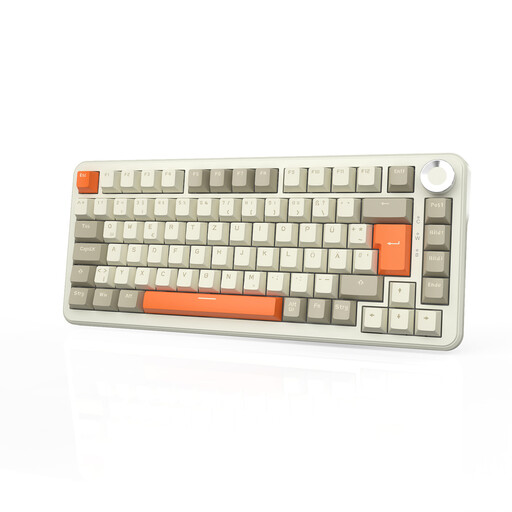
AJAZZ AK820 MAX mechanical keyboard
Consider this model only after confirming its physical layout against the keys and desk space your map task requires.
Its product information describes both German QWERTZ 75% and US QWERTY 96% layouts, so confirm the supplied variant before ordering. If you intend to use its described motorised lift, check how it operates and keep fingers and small objects clear of moving parts during adjustment.
View on Joybuy
 No image available
MACHENIKE KG87 80% tri-mode mechanical keyboard, US QWERTY, Latte Switch-Pink
The 80% layout is an option if you want to assess a narrower keyboard for a desk shared with a map-navigation mouse.
The product name specifies US QWERTY keys. Compare its exact retained keys with your shortcuts and data-entry needs, and confirm remapping support if that is a priority.
View on Joybuy
Common questions
Do I need a macro keyboard to make a geography map?
Not necessarily: QGIS Documentation says QGIS keyboard shortcuts can be reconfigured. Identify the commands you repeat and try the application settings first; keyboard-level macros are a separate consideration if you need more remapping or use shortcuts across applications.
How should I position a keyboard for a longer map-design session?
Position the keyboard as part of the whole workstation, not in isolation. The Health and Safety Executive advises keeping it just below elbow height and central to the screen so you do not twist your back.
How can I check that I am buying the right UK key layout?
Check the exact variant and its printed key legends rather than relying on the model-family name. Keychron, for example, lists a UK-ISO K8 Max variant alongside other ISO layouts; confirm the version being purchased and any operating-system keycaps you need.
Does a battery-powered keyboard need an end-of-life disposal check?
Yes, check the appropriate disposal or take-back route for the keyboard and its batteries. GOV.UK guidance explains that products need not be connected to mains electricity to count as electrical and electronic equipment for this purpose.


