Parents hosting a children’s party
Individual packs simplify serving a measured portion. The NHS advises a combined daily limit of 150ml for fruit juice and smoothies, so take account of any the child has already had.


For a children’s party, 150ml smoothie packs make individual portions straightforward; 750ml bottles suit a host who can measure servings into cups and keep the bottles chilled. If you want one 2-litre bottle, confirm that the exact product is a ready-to-drink smoothie rather than assuming a large juice bottle is equivalent. The NHS advises limiting fruit juice and smoothies to a combined 150ml a day.
Individual packs simplify serving a measured portion. The NHS advises a combined daily limit of 150ml for fruit juice and smoothies, so take account of any the child has already had.
A shared 750ml bottle allows drinks to be poured into cups, provided someone handles portions for children and keeps the smoothie chilled as directed on the pack.
Compare the ingredient and allergen information on the exact flavours you plan to serve, particularly if a guest has an allergy or intolerance. Keep the packaging available during the party.
Choose a serving format first, then count the portions and check the labels of the products you will actually use.
| Priority | What to check | Your needs |
|---|---|---|
| Child portions | Check the pack volume and how you will measure each serving. The NHS advises a combined daily limit of 150ml for fruit juice and smoothies. | I want to offer a measured drink without overlooking juice or a smoothie a child has already had that day. |
| Pack size | Four 150ml pouches provide four portions of that size; a 750ml bottle can be divided into five. Confirm that any 2-litre product is labelled as a smoothie, not juice. | How many children am I serving, and would individual packs or pouring into cups be easier to manage? |
| Serving time | Plan when drinks will be offered. The NHS advises serving fruit juice and smoothies at mealtimes rather than between meals to help reduce tooth-decay risk. | I’d rather offer the planned portion with food than leave smoothies out for repeated sipping. |
| Ingredients | Read the current ingredient and allergen information for each flavour. Check any dietary-suitability statement separately; it does not replace an allergen check. | Guests may have different ingredient requirements, so I need to know what is in each drink I serve. |
| Storage | Check the use-by date and the pack’s storage and after-opening instructions. Follow them when preparing drinks for the party. | If I’m pouring from shared bottles, I need a way to keep them stored as directed until serving. |
Juice and smoothies are different products; the bottle size alone does not establish what is inside.
Check the exact product name and ingredients before planning around a 2-litre bottle. If choosing smaller smoothie formats, count the servings you need.
That label wording does not change the NHS advice to limit fruit juice and smoothies to a combined 150ml a day.
Plan a measured portion, account for drinks already consumed that day and offer water for additional drinks.
A 750ml bottle can provide five 150ml servings, but someone still needs to measure them and follow the product’s storage instructions.
Have cups ready, pour portions close to serving time and check the pack for use-by and after-opening directions.
Different smoothie flavours can contain different ingredients, which matters when a guest has an allergy or intolerance.
Ask about guests’ requirements, check the current label of each product served and retain its packaging for reference.
Tesco Groceries lists Innocent kids’ smoothies in 4 × 150ml packs.
Tesco Groceries lists a 750ml Mango Passion Fruit Smoothie made from fruit juices and purées.
Sainsbury’s lists 750ml smoothies, including its Mango & Passionfruit flavour.
M&S describes ready-made fruit smoothies in 350ml and 750ml bottles.
Waitrose lists 750ml own-brand smoothies, including Pineapple, Banana & Coconut.
Sainsbury’s lists a 750ml Naked Green Machine Super Smoothie.
This 180ml smoothie is a smaller individual unit, rather than a 2-litre party bottle or a 150ml children’s pouch. Measure any serving for a child and check the pack’s ingredients before including it in the party drinks.
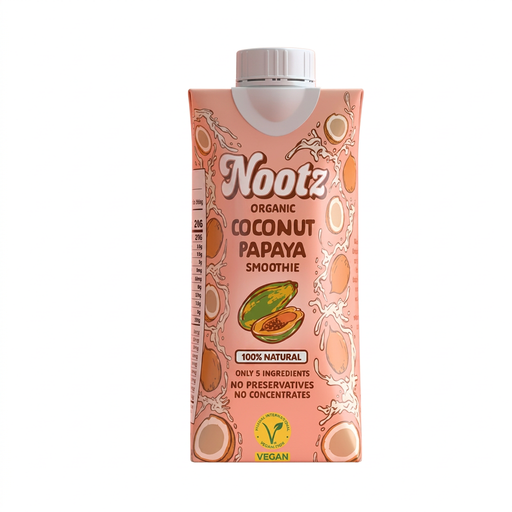 No image available
The 180ml unit is smaller than a shared party bottle, but it is not a measured 150ml serving. Check the current ingredient and allergen label before serving it to children. The listing advises serving it chilled and consuming it within 24 hours of opening.
A 150ml pouch reaches the NHS advised combined daily limit for fruit juice and smoothies. Check whether the child has already had either drink that day before offering a full pouch.
The NHS advises offering fruit juice and smoothies at mealtimes rather than between meals to help reduce tooth-decay risk. Serve the planned portion with food instead of setting out a refill station.
A 750ml bottle can be divided into five 150ml portions; two bottles can provide ten. That is a volume calculation, not a reason to offer a child a portion if they have already had juice or a smoothie that day.
No. The NHS limit for fruit juice and smoothies still applies; “no added sugar” should not be read as permission for repeated servings.
Check each product’s current ingredients, allergen information, use-by date and storage directions. The Food Standards Agency warns that food stored for too long or at the wrong temperature can pose a food-safety risk; keep the packaging available when serving guests with ingredient restrictions.