
24/7 Customer Support

Free returns

Same-day & Next-day Delivery

Quality Guaranteed

Unlock Your Welcome Offers: FREE Delivery | Up to 80% OFF | Free 30-day JoyPlus trial
Download the APP
A kids balance bike can help a young child practise steering, coordination and foot-to-floor movement before moving on to a pedal bike. However, not every product marketed as a toddler balance bike is suitable for every child, home or riding surface.
Parents and gift buyers in the UK commonly run into three purchasing traps:
The right first bike for toddlers should match the child’s height, confidence and intended riding environment rather than simply their age.
For a no-pedal bike for children, the child should be able to sit comfortably while placing their feet flat or nearly flat on the ground. This allows them to push, slow down and regain balance without relying entirely on an adult.
An adjustable seat balance bike offers more flexibility as a child grows. For example, the AIYAPLAY model listed for ages 18–48 months has a seat range of 25.5–32cm, while its 8-inch EVA wheels are designed for young riders. Always compare the stated seat height with your child’s inside-leg measurement, rather than relying only on the recommended age.
A seat that is too high may make a child feel unstable. One that is too low can restrict leg movement and become uncomfortable during longer play sessions.
Wheel construction affects comfort, maintenance and where the bike can be used.
For outdoor use, check whether the product is intended for flat surfaces and avoid public roads. A balance bike should be used under direct adult supervision, with protective equipment worn as recommended in the product instructions.
A steel frame can provide a robust structure, while a lighter construction may be easier for a small child to manoeuvre and for an adult to carry. Neither description alone confirms suitability, so check the stated maximum user weight and the overall dimensions.
Assembly is another practical consideration. Some bikes arrive mostly assembled, while others require fitting the wheels, handlebars or seat. Before the first ride, check all screws, nuts and adjustment points. Do not use the product if any component is damaged or loose.
For younger children, look for clear information such as EN71-1-2-3 certification details where supplied. This does not replace supervision or correct use, but it gives buyers useful compliance information to review alongside the manufacturer’s instructions.
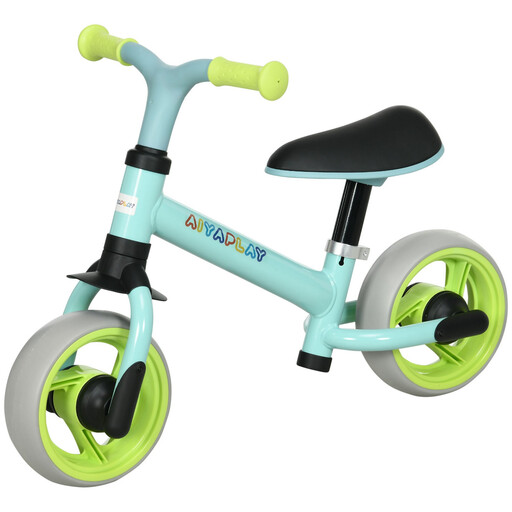
Why This Fits Their Persona: Its 18–48-month suitability, adjustable seat and simple setup make it a practical starting point for families introducing a baby balance bike at home, in the garden or on smooth paths.
The seat adjusts from 25.5–32cm, helping buyers check fit instead of selecting by appearance or age label alone. EVA wheels also avoid routine puncture maintenance.
Adjustable cushioned seat; puncture-free EVA wheels; maximum load of 25kg; EN71-1-2-3 certification information supplied.
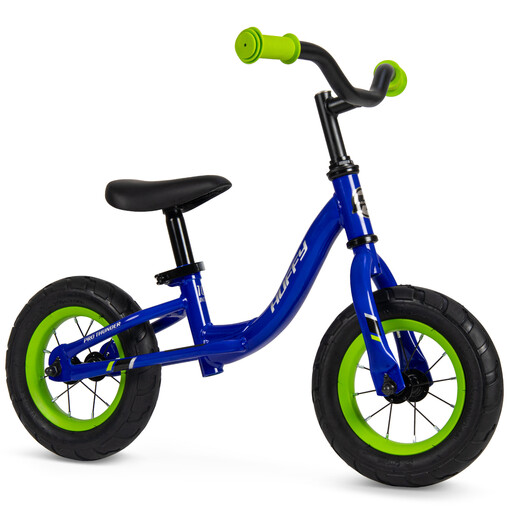
Why This Fits Their Persona: Suitable for children aged 2–4 years, this option suits families seeking a conventional two-wheel balance bike for outdoor practice before a pedal bike.
The product description gives a defined age range, 25kg maximum user weight and supervision warnings, helping buyers assess practical use rather than relying on styling.
Pedal-free design; adjustable saddle; 10-inch pneumatic tyres; arrives mostly pre-assembled.
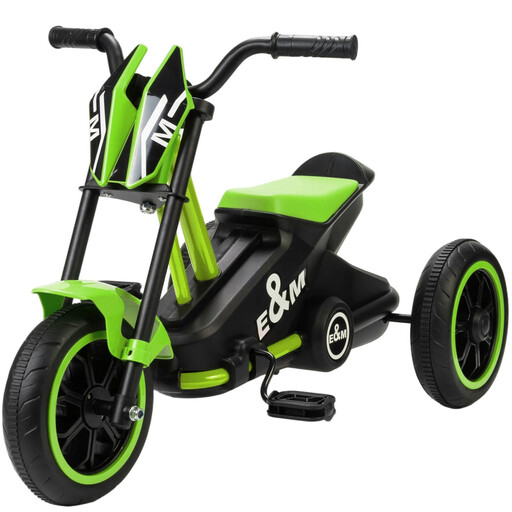
Why This Fits Their Persona: Its three-wheel layout and low seat suit younger riders aged 18–36 months who may prefer a stable toddler training bike for flat indoor or outdoor surfaces.
The 29cm seat height and wide seat are clearly stated, while the three-wheel design avoids expecting a very young child to balance on two wheels immediately.
Steel frame; three large wheels; 30kg weight capacity; EN71-1-2-3 certification information supplied.
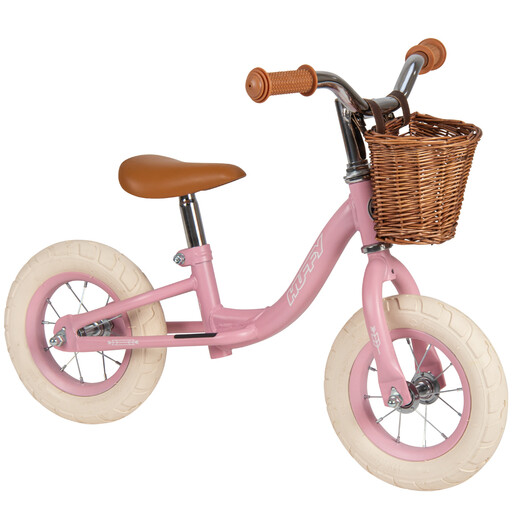
Why This Fits Their Persona: The vintage styling suits gift buyers looking for a visually distinctive first bike for toddlers aged from 2 years, while retaining a straightforward balance-bike format.
The product information specifies its 27kg maximum user weight and age guidance, so the decorative finish can be considered alongside measurable limits.
10-inch wheels; lightweight and sturdy frame description; suitable from age 2 years; no batteries required.
Many models are intended for children from around 18 months to 6 years, but the correct choice depends on seat height, inside-leg measurement, coordination and confidence. A younger child may begin with a three-wheel tricycle or low-seat baby balance bike, while an older toddler may be ready for a two-wheel design.
No. A pedal-free bike lets children push and glide with their feet, focusing on steering and balance. Some children’s tricycles include pedals, which can introduce pedalling while offering a wider base. Choose according to the skill you want the child to practise first.
Lifespan depends on the child’s growth, weight, riding frequency and storage conditions. An adjustable seat can extend the useful period, but it does not make a bike suitable beyond its stated weight or age guidance. Store it away from prolonged damp, inspect it regularly and replace damaged parts before use.