
24/7 Customer Support

Free returns

Same-day & Next-day Delivery

Quality Guaranteed

Unlock Your Welcome Offers: FREE Delivery | Up to 80% OFF | Free 30-day JoyPlus trial
Download the APP
Watching a child take their first wobbly glides on a bike is a milestone moment. A kids balance bike is often the first step on that journey, designed to build confidence and coordination without the complexity of pedals. However, the market is filled with options that look great online but fail to deliver in practice. As a Joybuy Product Recommendation Officer, my role is to help you see past the marketing jargon and choose a bike that is safe, durable and genuinely right for your child.
Before you add that shiny new bike to your basket, let's look at a few common pitfalls that can lead to disappointment and a wasted purchase.
Spiderman bike or a charming Frozen bike. While these can be a huge hit with children, sometimes the eye-catching graphics are used to mask a poorly constructed frame, flimsy parts or a lack of essential features. The initial excitement fades quickly if the bike itself isn't up to the task.To ensure you're getting a toddler balance bike that will last, focus on these core features rather than just the colour or theme.
The single most important feature of a kids training bike is its ability to grow with your child. Look for two key points of adjustment:
The materials of the bike's frame and wheels determine its durability, weight and ride quality.
Instead of a one-size-fits-all approach, we've matched some well-regarded options to different family needs and priorities.
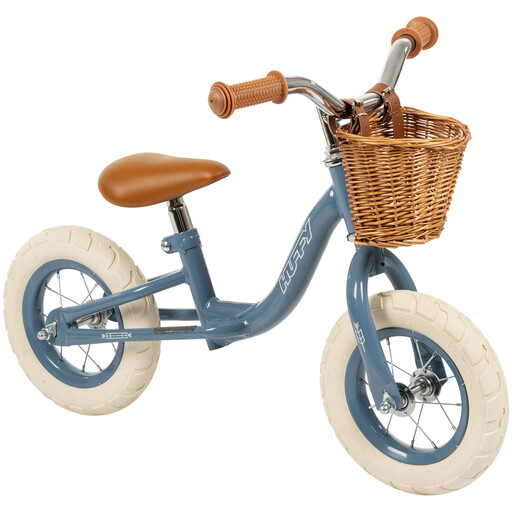
Why This Fits Their Persona: For those who appreciate a timeless, classic look. This bike's vintage gloss blue finish and charming front wicker basket make it stand out at the park for all the right reasons.
This bike avoids the "wrong tyres" pitfall by using 10-inch pneumatic (air-filled) tyres, which provide a much smoother and more comfortable ride on uneven UK pavements compared to hard plastic alternatives.
The combination of an adjustable seat, comfortable padded saddle and cushioned air-filled tyres makes for a premium riding experience. The wicker basket is a practical bonus for carrying toys or snacks.
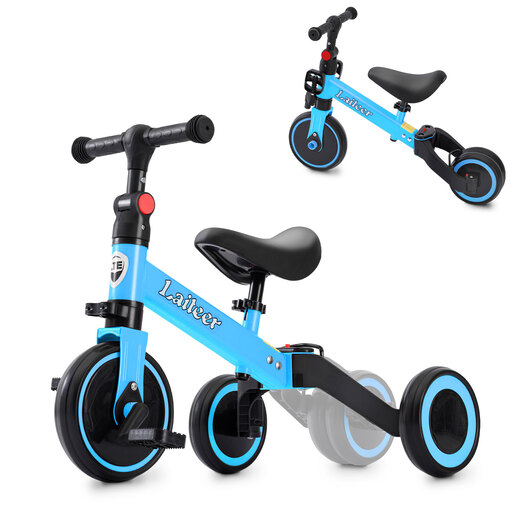
Why This Fits Their Persona: This is for the practical parent who wants one purchase to cover multiple stages of development. It functions as a stable `kids tricycle` for early riders and converts into a `no pedal bike` as they grow in confidence.
This model is the direct opposite of the "grows-too-fast" trap. Its 3-in-1 design with removable pedals and an adjustable seat is specifically engineered to adapt to a child's changing needs from age 1 to 5.
Its versatility is its main strength. You get a tricycle and a balance bike in one package, making it one of the most adaptable `ride on toys for toddlers` available.
We have compiled a complete, real-time list of products that fully satisfy these strict selection criteria and UK safety regulations.
While many balance bikes are suitable from around 18 months to 2 years, the right time depends more on a child's physical development and confidence than their age. The key indicator is whether they can stand over the bike's frame with their feet flat on the floor. A first bike for a 2 year old is a very common starting point, as this is when many children have the coordination to begin learning.
They teach different skills. A kids tricycle is very stable and great for helping a young child understand the basics of pedalling and steering, but it won't teach them how to balance. Stabilisers can sometimes encourage a reliance on leaning that needs to be unlearnt later. Balance bikes focus purely on balance and steering, which many find makes the transition to a pedal bike much quicker and more intuitive. For an alternative approach, balancing games for kids can also help develop core stability off the bike.
The most reliable method is to measure your child's inseam. Have them stand straight in their shoes and measure from the floor to their crotch. The bike's minimum seat height should be equal to or slightly less than this measurement. This ensures they can sit comfortably with their feet firmly on the ground, which is essential for control and building confidence. Always check the manufacturer's recommended height and weight limits.