
24/7 全天候客户支持

免费退货

当日/次日达

品质保障

开启新人专享福利: 全场免邮 | 低至 2 折 | 免费试用 30 天 JoyPlus 会员
下载 Joybuy
Finding the perfect bike for your child can feel like a big decision. You want something safe, durable and correctly sized, but the sheer number of options can be overwhelming. From a first toddler bike to a more advanced kids mountain bike, how do you choose the right one?
As a Joybuy Product Recommendation Officer, my role is to help you navigate these choices. This guide offers practical advice on what to look for in kids bikes and highlights a few standout models to help you find a bicycle your child will love and ride with confidence.
Before looking at specific models, let's cover a few key considerations. Getting these right will ensure your child has a comfortable and safe riding experience from day one.
A common mistake is buying a bike for a child to "grow into." A bike that is too large can be difficult to control and unsafe. The most reliable way to find the right fit is by matching the bike's wheel size to your child's height and inseam (the inside leg measurement).
Here’s a general guide to wheel sizes:
Always check the manufacturer's recommended height range, as it provides a more accurate fit than age alone. Your child should be able to sit on the saddle and place the balls of their feet on the ground.
For any children's bikes, especially for learners, safety is the top priority. Look for these features:
Based on features, design and intended use, here are a few recommended options for different ages and skill levels.
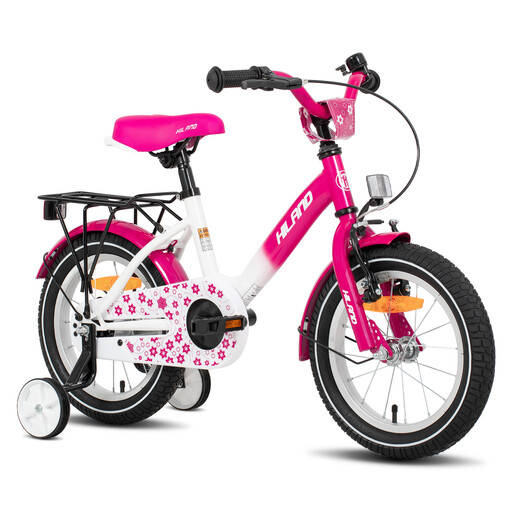
Why It Stands Out: The HILAND Starry is designed with the beginner in mind. It combines essential safety features with a child-friendly design, making it an excellent choice for a first proper pedal bike. The dual braking system, featuring both a front V-brake and a rear coaster brake, gives young riders multiple ways to control their speed.
Pros:
Who is it for? This bike is ideal for children between 4 and 7 years old (105-135 cm tall) who are transitioning to their first pedal bike. It’s a great option for a girls bike or boys bike thanks to its appealing star pattern and practical features.
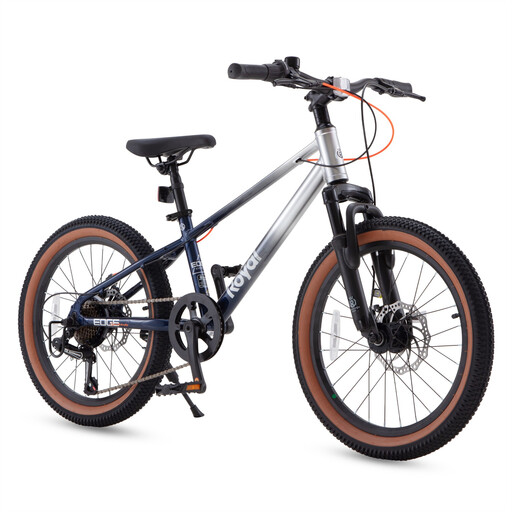
Why It Stands Out: For the child who has mastered the basics and is ready for more challenging terrain, the RoyalBaby EDGE offers a significant step up. Built with a lightweight aluminium alloy frame, it incorporates features commonly found on adult mountain bikes, such as a front suspension fork for shock absorption and a 7-speed twist shift system for tackling hills.
Pros:
Who is it for? This 20 inch kids bike is designed for confident riders aged 6 to 10 who are eager to explore parks, trails and varied terrain. It’s an excellent kids mountain bike for developing more advanced riding skills.
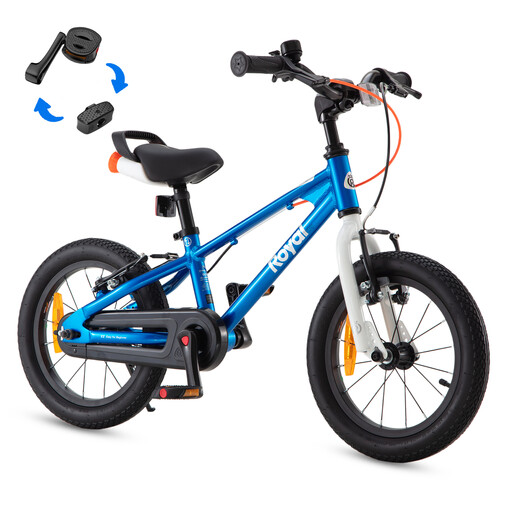
Why It Stands Out: The RoyalBaby EZ Freestyle cleverly addresses the transition from balancing to pedalling with its patent-pending 2-in-1 design. It functions as a balance bike to teach the most important skill first, and then the pedals can be attached quickly without tools when your child is ready. Its ultra-light premium high-grade aluminium alloy frame makes it exceptionally easy for a small child to handle.
Pros:
Who is it for? This is an outstanding choice for a toddler bike, aimed at children aged 3 to 5. Its innovative design allows them to master balance at their own pace before introducing pedals, making the learning process smoother and more intuitive.
While these are some of our standout choices, every young rider is different. If you're searching for a different size, colour or style, you can explore our wider collection of boys bike models to find the perfect match for your child's next adventure.
1. What size bike does my 5-year-old need? A 5-year-old typically fits well on a 16 inch kids bike, but it's always best to measure their height and inseam. Most children in this age group have an inseam that corresponds well with a 16-inch frame, allowing them to stand over the bike with their feet flat on the ground.
2. Are stabilisers necessary for a child's first bike? Stabilisers are a traditional and effective way to help a child learn to pedal without the fear of falling. However, balance bikes have become a popular alternative for teaching balance first. A convertible model like the RoyalBaby EZ Freestyle offers the benefits of both approaches in one package.
3. When should my child move to a bike without stabilisers? You can consider removing the stabilisers when your child can pedal consistently, steer confidently and use the brakes effectively. A good test is to see if they can coast with their feet up for a few seconds. Raising the stabilisers slightly off the ground can be a good intermediate step to encourage them to balance on their own.