
24/7 Customer Support

Free returns

Same-day & Next-day Delivery

Quality Guaranteed

Unlock Your Welcome Offers: FREE Delivery | Up to 80% OFF | Free 30-day JoyPlus trial
Download the APP
Buying kids’ bikes can seem straightforward until you compare wheel sizes, stabilisers, brakes, frame materials and age recommendations. A bicycle that looks suitable in a product photo may be too heavy, too large or difficult for a child to control.
As the Joybuy Product Recommendation Officer, my role is to filter out confusing marketing language and focus on the practical details that matter to families in the UK.
Age ranges are useful, but they should not be the only deciding factor. Children of the same age can have noticeably different heights, leg lengths and riding confidence. A 16-inch kids’ bike may suit one child aged five, while another may be more comfortable on a 14-inch kids’ bike.
Check the manufacturer’s recommended height, maximum rider weight and saddle adjustment range. The child should be able to sit comfortably, reach the handlebars and place their feet down when learning.
Children’s bikes with stabilisers can provide early support, but they do not automatically teach independent balance. Some children progress more naturally through balance bikes for children, which allow them to push and glide before introducing pedals.
Training wheels can also make a bike feel more stable while adding width and changing how it corners. Choose removable stabilisers if you want a gradual transition from supported riding to two wheels.
Baskets, lights, character styling and sound effects can make a bike appealing, but a heavy steel frame may be tiring for a smaller rider. Compare the bike’s weight with the child’s ability to lift, steer and stop it.
For toddlers, a toddler ride-on bike is a different product category from a pedal bicycle. It is designed for seated leg-powered movement rather than road cycling, so it should not be treated as a replacement for a balance bike or children’s bicycle.
Wheel size is a helpful starting point, but it is not a universal sizing rule.
A properly fitted bike should allow a slight bend in the knee at the bottom of the pedal stroke. Avoid buying a significantly oversized model “to grow into”, as excessive reach can make steering and braking harder.
The braking system should match the rider’s hand strength and experience. Coaster brakes operate by pedalling backwards and can be simple for young beginners. Caliper brakes and V-brakes use handlebar levers, helping children learn the braking method used on many larger bicycles.
Before the first ride, check that the levers are easy to reach, the wheels turn freely and both brakes respond correctly. For older children’s commuter bikes, disc brakes may offer more consistent stopping control in varied conditions, but they also require regular inspection and adjustment.
Steel frames can offer a robust construction but may be heavier. Aluminium or magnesium-alloy frames can reduce carrying weight, although the overall bicycle specification still matters.
Look for:
In the UK, children should wear a properly fitted helmet that meets a recognised standard such as EN 1078. Protective equipment does not remove the risk of falls, so young riders need suitable supervision and should use safe, traffic-free areas while learning.
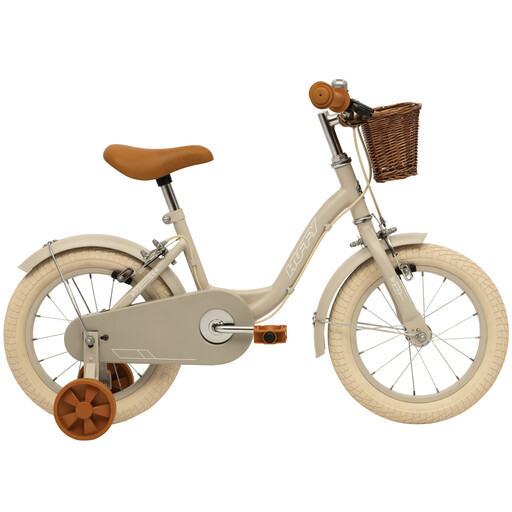
Why This Fits Their Persona: A straightforward first pedal bike for a younger child riding around the garden, park or quiet paths in the UK.
Its 14-inch wheels and removable training wheels provide a clear beginner setup without relying only on age-based sizing.
Steel frame, front basket, single-speed layout and coaster brake system.
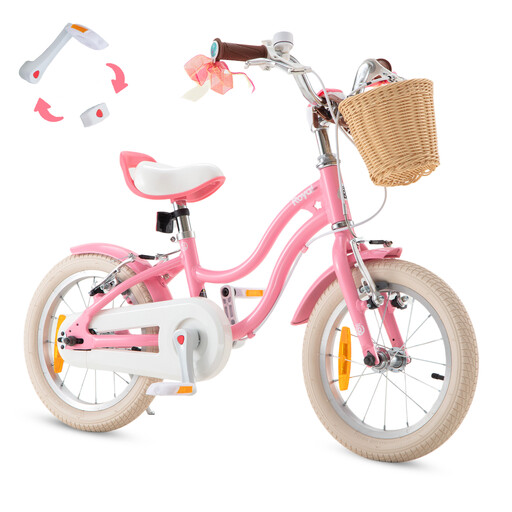
Why This Fits Their Persona: A lighter option for families prioritising easier handling, adjustable use and a low step-through design.
The aluminium-alloy frame helps address the common issue of a bicycle becoming difficult for a young rider to manoeuvre.
2-in-1 balance-to-pedal design, dual hand brakes and low step-through frame.
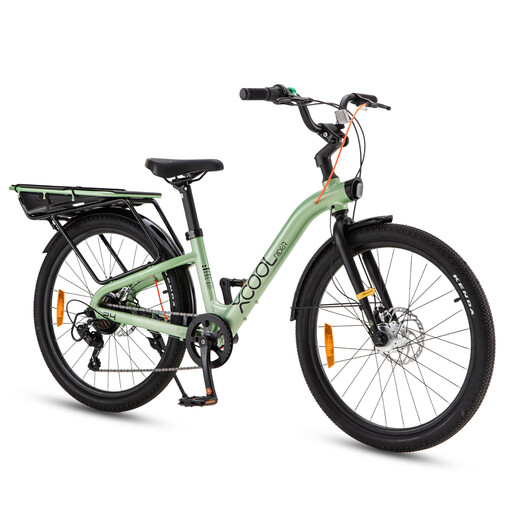
Why This Fits Their Persona: Designed around longer rides, school routes and mixed UK surfaces for taller children and early teenagers.
Its listed height range, adjustable stem, disc brakes and all-terrain tyres provide more useful detail than appearance-led marketing alone.
Front and rear disc brakes, 5 mm anti-puncture tyres, mudguards, cargo box and dynamo front light.
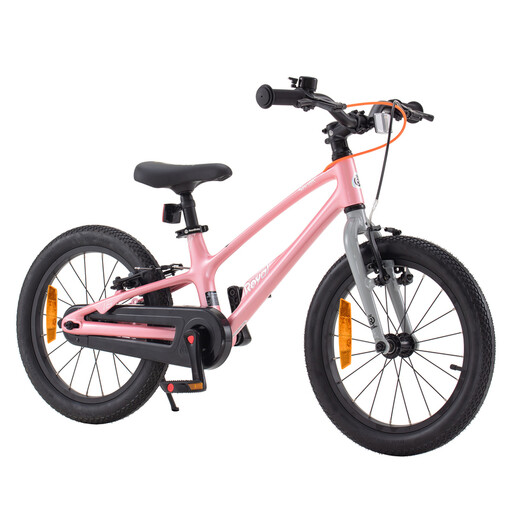
Why This Fits Their Persona: A practical choice for children who need to develop balance and pedalling in stages rather than relying on stabilisers.
The tool-free crank system allows balance and pedal modes, avoiding the assumption that every learner needs fixed training wheels.
Magnesium-alloy frame, dual V-brakes, hybrid tread tyres and enclosed chain guard.
For a simple supported setup, the Huffy Pro Thunder 16 Inch Bike Acid Green includes removable stabilisers, front and rear caliper brakes, a padded saddle and adjustable seat height. Its stated maximum user weight is 30 kg.
A Huffy Vintage 16 Inch Bike Emerald Blue also combines removable training wheels with front and rear caliper brakes, a basket and a single-speed drivetrain. For older children, the Huffy Girly Girl 20 Inch Bike in Gloss White is listed for riders aged eight and above, with a maximum rider weight of 34 kg.
Tall teenagers may need a 26-inch kids’ bike rather than a smaller children’s model. The RoyalBaby XCOOL 26-inch version is listed for riders between 150 and 178 cm and includes a rear cargo box, adjustable stem, mudguards and a self-powered front light. These features may be useful for children’s commuter bikes, but the rider must still be confident enough to manage the larger frame and road conditions.
We have compiled a complete, real-time list of products that fully satisfy these strict selection criteria and UK safety regulations.
Start with the manufacturer’s height and weight guidance, then check the child’s reach to the handlebars and ability to place their feet down. Wheel sizes from 14 to 20 inches commonly cover younger children, while 24- and 26-inch kids’ bikes are often considered for taller children and teenagers.
They can offer extra support during early pedalling practice, particularly on flat, traffic-free surfaces. However, balance bikes for children can be more suitable for learning balance and steering before pedals are introduced. Removable stabilisers or a balance-to-pedal design allow the riding stage to change as confidence develops.