
24/7 Customer Support

Free returns

Same-day & Next-day Delivery

Quality Guaranteed

Unlock Your Welcome Offers: FREE Delivery | Up to 80% OFF | Free 30-day JoyPlus trial
Download the APP
Choosing kids bikes can seem straightforward until you compare wheel sizes, frame materials, brake systems and training options. A low price may not represent good value if the bike is too heavy, difficult to adjust or quickly outgrown.
Parents, grandparents and carers should look beyond colours and age labels. The right choice depends on the child’s height, riding confidence, intended surface and ability to control the bike safely.
Age ranges are useful starting points, but children of the same age can have very different heights and leg lengths. A bike that is too large may be difficult to start, stop and balance. One that is too small can feel cramped and may be outgrown quickly.
Check the manufacturer’s height guidance, saddle range and frame geometry before ordering. The child should be able to sit comfortably, reach the handlebars and place their feet securely when learning.
Some children’s bicycles have chunky frames, accessories and steel components that add considerable weight. A heavy bike can make steering, lifting and recovery from a wobble more difficult, particularly for younger riders.
Compare the stated net weight where available. For example, the 14-inch RoyalBaby EZ Freestyle models listed here weigh approximately 7.4kg, while some 14-inch steel-frame alternatives weigh around 10kg.
Multiple gears, suspension and off-road tyres can be useful for older riders, but they may add complexity for a beginner who mainly rides on pavements, parks or quiet paths. Conversely, a basic single-speed bike may not suit a child who regularly rides hills or trails.
Match features to the riding environment rather than choosing the longest specification list.
Wheel size is one of the clearest ways to narrow the selection, but it should be combined with height and inseam measurements.
These are not universal rules. Always use the product’s own size chart and check whether the saddle and handlebars can be adjusted.
Aluminium alloy frames are often selected for a lightweight kids’ bike because they can be easier to manoeuvre and carry than comparable steel frames. Steel can still provide a practical, durable option, but the complete bike weight matters more than the material name alone.
Look for:
A low frame can also be useful for children wearing coats, school clothes or skirts during everyday outdoor play.
Younger beginners benefit from controls they can understand and operate comfortably. Dual hand brakes are used on several of the aluminium RoyalBaby models, while some beginner bikes combine a front V-brake with a rear coaster brake.
For everyday pavements and parks, smooth or hybrid tyres may be sufficient. Children’s mountain bikes designed for trails may include wider knobby tyres, front suspension and multiple gears. These features can improve versatility, but they also require more maintenance and instruction.
Before each ride, an adult should check brake operation, tyre pressure, wheel security, chain condition and saddle adjustment. Helmets and suitable protective equipment are recommended, and children should be supervised away from busy roads and unsafe areas.
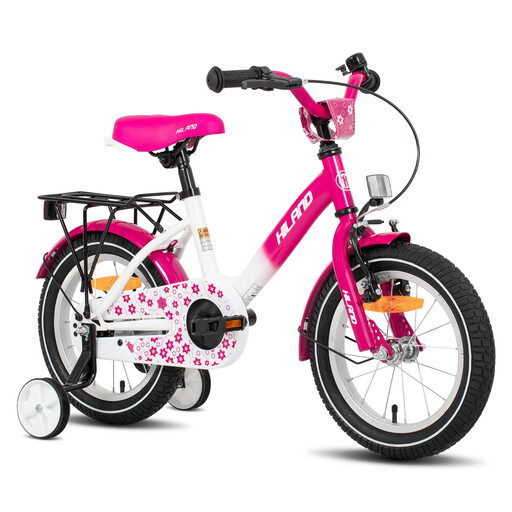
Why This Suits Their Persona: A practical option for a younger beginner who needs a straightforward bike for short rides in parks, gardens and quiet areas. It includes training wheels, a basket and a single-speed drivetrain.
The 12-inch format and stated 80–105cm height range help avoid choosing a bike solely by appearance. Training wheels can provide a familiar starting point while the child develops confidence.
Front V-brake and rear coaster brake; chain cover and handlebar edge protectors; approximately 9kg.
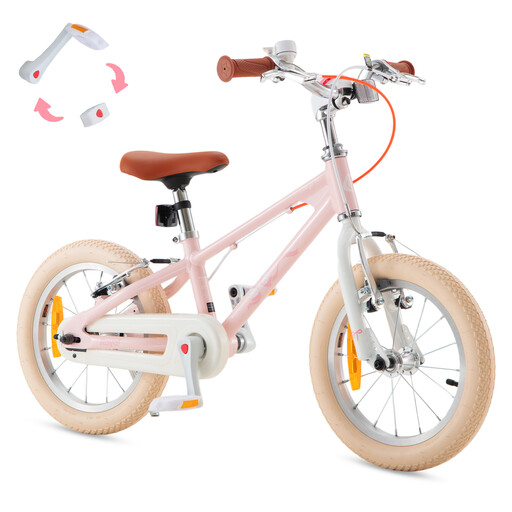
Why This Suits Their Persona: Suitable for families seeking a lighter, adaptable bike for a child moving from balance practice to independent pedalling.
Its 2-in-1 balance-to-pedal format is designed for tool-free mode switching, reducing the need to replace a balance bike immediately.
Aluminium alloy frame; approximately 7.8kg; dual hand V-brakes; adjustable saddle and handlebars.
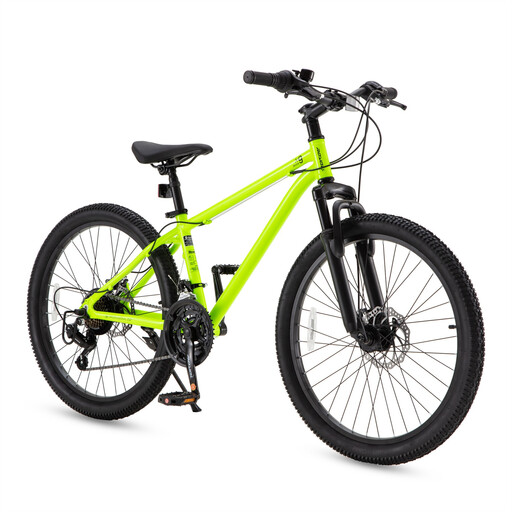
Why This Suits Their Persona: Designed for older children who ride on neighbourhood routes, hills and suitable trails rather than only smooth pavements.
The specification is suited to genuine varied-terrain use, rather than adding gears and suspension to a bike intended only for short beginner rides.
21-speed drivetrain; front suspension fork; all-terrain knobby tyres; quick-release front wheel; approximately 14.9kg.
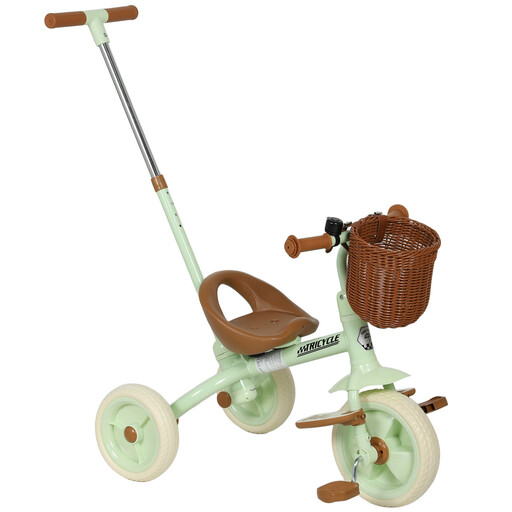
Why This Suits Their Persona: A toddler tricycle for family walks when an adult needs control, with the option to detach the handle for independent pedalling.
The two riding modes avoid committing to a fully independent bicycle before a toddler is ready. The stated 25kg weight capacity also gives a clear usage limit.
Adjustable four-level parent handle; non-slip pedals and footrests; storage basket; listed EN71-1-2-3 safety standard.
We have compiled a complete, real-time list of products that fully satisfy these strict selection criteria and UK safety regulations.
Not always. Training wheels can offer initial stability, but they do not teach the same side-to-side balance as a balance bike or a balance-to-pedal design. A child who is already comfortable scooting may progress more naturally with a suitable balance-to-pedal bike. Whichever option you choose, practise in a clear, level area under adult supervision.
Lifespan depends on frequency of use, storage conditions, maintenance and whether the child outgrows the frame. Regularly check brakes, tyres, bolts, chain and wheel alignment. A bike with an adjustable saddle and handlebars may accommodate growth for longer, but it should never be kept in use once the child cannot control it comfortably.
Allow for a correctly fitted helmet, protective clothing if needed, occasional replacement brake pads or inner tubes and basic maintenance equipment. Bikes used in wet UK weather should be wiped dry and stored in a sheltered place. Multi-speed or suspension-equipped children’s mountain bikes may require more adjustment than a single-speed beginner model.