
24/7 Customer Support

Free returns

Same-day & Next-day Delivery

Quality Guaranteed

Unlock Your Welcome Offers: FREE Delivery | Up to 80% OFF | Free 30-day JoyPlus trial
Download the APP
Buying a child’s first bicycle can look straightforward until you compare wheel sizes, frame materials, brakes and stabilisers. A colourful design may attract attention, but it does not necessarily mean the bicycle will fit properly or remain useful as your child grows.
This guide helps parents and guardians compare kids' bikes, from first bicycles for toddlers to children’s mountain bikes for older riders. It also highlights common buying traps and practical features worth checking before ordering.
Age ranges are useful starting points, but children of the same age can have very different heights and leg lengths. A bike that is too large may be difficult to control, while one that is too small can become uncomfortable quickly.
Use the manufacturer’s height guidance and adjustable saddle range alongside age recommendations. Your child should be able to sit comfortably, reach the handlebars and place their feet securely when stopping.
A steel frame can provide a solid feel, but extra weight may make it harder for a younger rider to start, turn or lift the bike. Lightweight kids' bikes made with aluminium alloy can be easier to manoeuvre, although the frame material is only one part of the overall specification.
Check the complete bike weight, not just descriptions such as “lightweight”. For example, the RoyalBaby EZ Freestyle 14-inch models have a stated net weight of 7.4kg, while the Hiland Roon 20-inch fat-tyre bike is listed at approximately 16.8kg.
Multiple gears, suspension and oversized tyres can be useful for regular trail riding, but they can add weight, maintenance and cost for a child who mainly rides on pavements or in the park.
For a beginner, a simple single-speed drivetrain, manageable brakes and stable tyres may be more practical than a complex specification. Match the bicycle to the places your child will actually ride.
Wheel size is one of the clearest ways to narrow down children's bikes, but it should not replace a proper fit check.
Always check the individual product’s stated age, height and maximum rider weight. A 20-inch bike designed for an eight-year-old may not suit every child in that age group.
Brakes should be easy for the child to reach and operate. Common options include:
Younger riders may find a coaster brake intuitive, while older children may benefit from learning hand-brake control. Whichever system you choose, check that the levers are accessible and that the child understands how to stop before riding independently.
Children's bikes with stabilisers can help some beginners feel secure, but they should not be treated as a substitute for learning balance. Removable stabilisers allow families to transition gradually when the child is ready.
For everyday riding, wide tyres can add a stable contact area. All-surface or knobbly tyres are more appropriate for gravel and park paths than narrow road-style tyres. A low step-through frame can make mounting easier, particularly for smaller children or riders wearing skirts and dresses.
Before use, complete assembly according to the instructions. Check brakes, tyre pressure, saddle height, handlebars, pedals and fasteners regularly. A properly fitted helmet and suitable protective equipment should also be used. Children should ride under appropriate adult supervision and away from public roads unless the bicycle and riding environment are suitable.
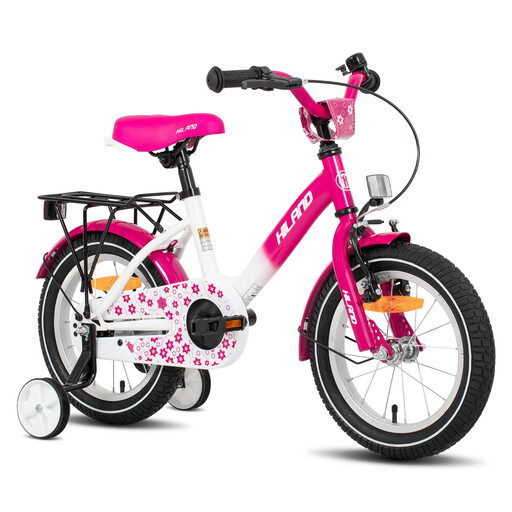
Why This Fits Their Persona: A practical starting point for children aged 2–4 and around 80–105cm tall, with stabilisers included for supervised practice at home or in the park.
The 12-inch format, low step-through frame and single-speed layout avoid overcomplicating a first bicycle.
Includes stabilisers, basket, chain cover, handlebar protectors, front V-brake and rear coaster brake.
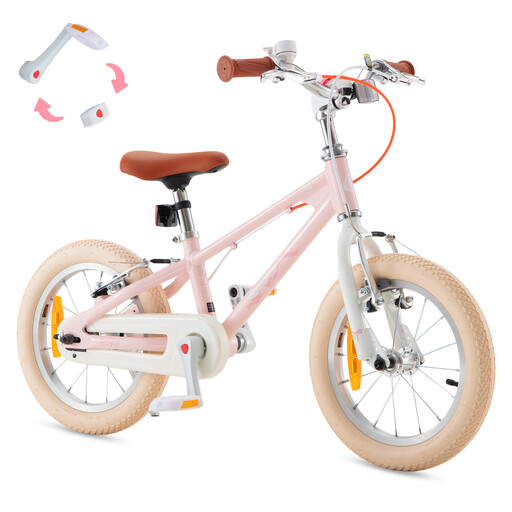
Why This Fits Their Persona: Suitable for families prioritising a lighter frame and a bicycle that can support the transition from balancing to pedalling.
Its stated 7.4kg net weight and tool-free balance-to-pedal design help avoid buying an unnecessarily heavy or quickly outgrown bike.
Aluminium alloy frame, low step-through design, adjustable saddle and handlebars, and dual hand V-brakes.
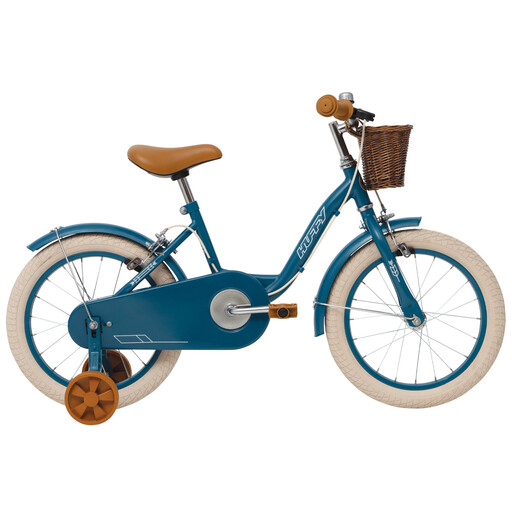
Why This Fits Their Persona: A suitable option for children aged 5–7 who want a traditional-looking bicycle for pavements, driveways and supervised park rides.
Removable stabilisers allow the family to adjust the setup rather than replacing the whole bike as confidence improves.
Single-speed drivetrain, front basket, steel frame and front and rear calliper brakes.
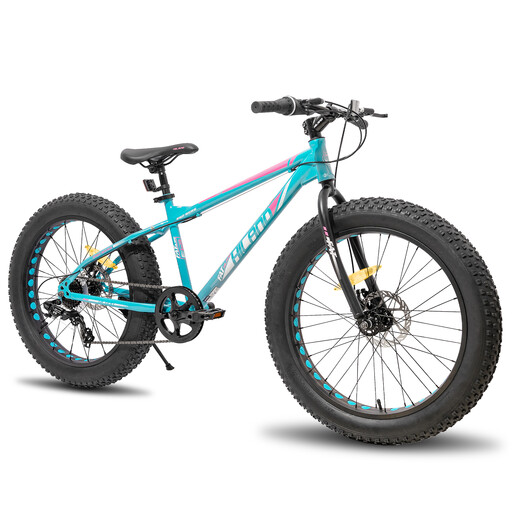
Why This Fits Their Persona: Intended for older, confident riders who use suitable private trails or varied surfaces such as gravel, mud and park paths.
The specification clearly identifies its 16.8kg approximate weight and 4-inch fat tyres, helping buyers judge whether the added bulk suits their child.
Seven-speed Shimano drivetrain, dual mechanical disc brakes and wide tyres for varied riding surfaces.
Before placing an order, check:
For families comparing colours and styles, the selection of girls' bikes includes low-step frames, baskets and lightweight options alongside practical everyday designs.
We have compiled a complete, real-time list of products that fully satisfy these strict selection criteria and UK safety regulations.
Many four-year-olds may fit a 12-inch or 14-inch bike, but height is the more reliable guide. A 14-inch model may suit a taller child, while a smaller rider may be more comfortable on a 12-inch bicycle with stabilisers.
Not always. Stabilisers can help some beginners feel secure, but balance bikes or removable stabilisers may support a more gradual transition to two-wheel riding. Choose according to the child’s confidence and current ability.
Lifespan depends on fit, use, storage and maintenance. A bicycle may remain mechanically usable for several years, but children can outgrow it sooner. Adjustable saddle and handlebars can extend practical use, while regular checks of brakes, tyres, chain and fasteners help identify wear early.