
24/7 Customer Support

Free returns

Same-day & Next-day Delivery

Quality Guaranteed

Unlock Your Welcome Offers: FREE Delivery | Up to 80% OFF | Free 30-day JoyPlus trial
Download the APP
Choosing among children’s bikes can be more complicated than expected. Wheel size, frame weight, stabilisers, brake design and advertised age ranges all affect whether a child feels comfortable and confident. A bike that looks suitable in a product photo may be difficult to control if it is too heavy or too large.
This guide explains the practical details to check before buying kids bikes in the UK, helping you compare options without relying on exaggerated marketing claims.
Age guidance is useful, but children of the same age can have very different heights and leg lengths. A 14-inch kids bike may suit one child aged three to five, while another may need a different frame shape or seat position.
Check the manufacturer’s recommended height range and measure your child while wearing normal outdoor clothing. Your child should be able to sit comfortably, reach the handlebars and place their feet securely when learning.
Steel frames can provide a solid structure, but a heavy bike may be tiring for a smaller rider to start, steer and lift. A lightweight children’s bike made with aluminium alloy may be easier to manoeuvre, although the overall weight still depends on the wheels, tyres, drivetrain and accessories.
Compare the listed net weight rather than judging durability from frame material alone.
Kids bikes with stabilisers can provide additional support during early practice, but they do not replace supervision, a properly fitted helmet or suitable riding conditions. Stabilisers can also make a bike wider, which matters when riding through narrow gates or storage areas.
Look for removable stabilisers if you want the bike to adapt as your child develops balance and coordination.
Wheel size is a starting point, not the only measurement:
Always check the product’s stated height, age and maximum rider weight. A child should not need to stretch to reach the handlebars, and the saddle should allow a comfortable leg position.
For younger riders, simple controls are easier to understand. Single-speed bikes reduce maintenance and avoid gear-shifting confusion. Some models combine a rear coaster brake with a front hand brake, while others use front and rear calliper or disc brakes.
Check that the brake levers are within easy reach of small hands. A fully enclosed chainguard can help protect fingers and clothing, while handlebar edge protectors may reduce contact with exposed ends.
For older children, gears can be useful on hills or trails. A 7-speed or 21-speed drivetrain provides more adjustment, but it also adds components that require periodic cleaning and checking.
Pneumatic tyres can provide cushioning and grip, but they need regular pressure checks. Air-free tyres reduce puncture-related maintenance, which may appeal to families seeking a simple first bike.
For parks, pavements and quiet paths, hybrid or standard tread tyres are usually practical. A kids mountain bike with knobby or fat tyres may be more appropriate for gravel, grass or uneven trails, but wider tyres and heavier frames can require more effort from the rider.
In the UK, review the product instructions and safety warnings carefully. Check whether the bike is intended for use away from traffic, and look for relevant safety information, assembly guidance and applicable conformity markings such as CE or UKCA where required. Children should wear suitable protective equipment and ride under adult supervision.
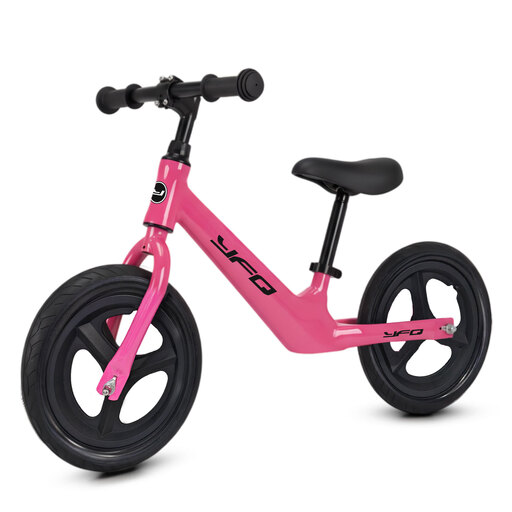
Why This Fits Their Persona: A no-pedal starting point for families introducing balance-bike practice at home, in a garden or on quiet paths. The stated age range is three to six years.
It avoids the complexity of pedals and gears while offering an adjustable seat. Air-free tyres also reduce the need for puncture or pressure checks.
No-pedal format, adjustable seat, air-free tyres and a kickstand.
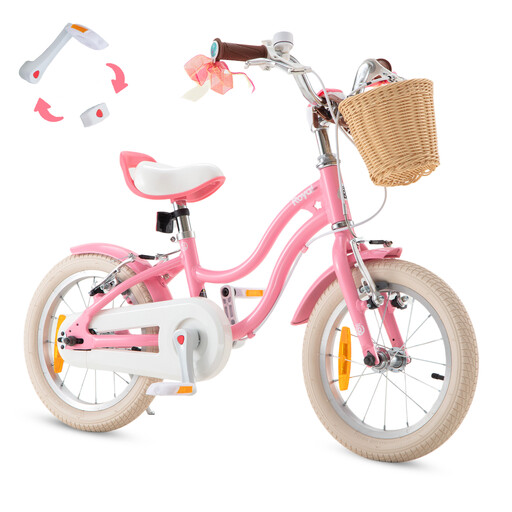
Why This Fits Their Persona: Suitable for families wanting a lighter, adaptable bike for everyday riding, with a low step-through frame and child-focused proportions.
The aluminium frame is listed at 10 kg, while the 2-in-1 design allows switching between balance and pedal modes without relying on a permanently fitted training setup.
Aluminium alloy frame, dual hand brakes, low step-through design and adjustable fit.
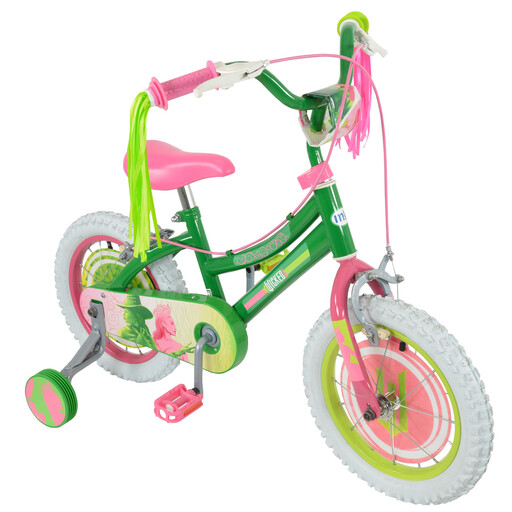
Why This Fits Their Persona: A conventional pedal bike for children from age three who want character styling, removable stabilisers and a familiar steel-frame design.
The stabilisers are removable rather than fixed, and both the saddle and handlebars adjust as the child’s riding position changes.
14-inch pneumatic tyres, enclosed chainguard, front and rear calliper brakes and adjustable components.
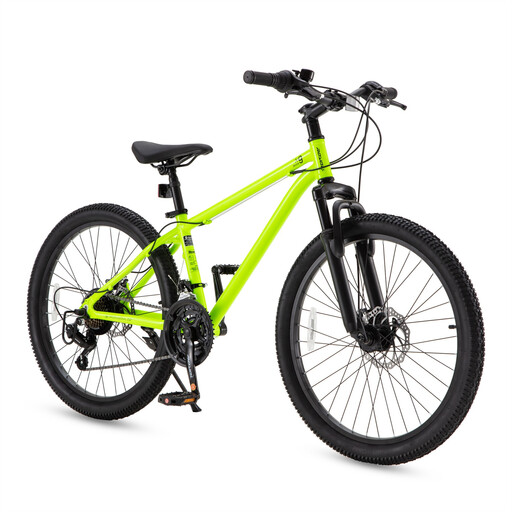
Why This Fits Their Persona: Intended for taller riders aged approximately 10 to 14 who need a bike for neighbourhood rides, hills or off-road paths.
It is clearly positioned for older children rather than younger beginners, with a 21-speed drivetrain and front suspension intended for varied terrain.
Aluminium alloy frame, front suspension fork, 21-speed gearing, knobby all-terrain tyres and quick-release front wheel.
We have compiled a complete, real-time list of products that fully satisfy these strict selection criteria and UK safety regulations.
Before the first ride:
Inspect the bike regularly for loose bolts, worn brake pads, damaged tyres and chain problems. Store it somewhere dry, particularly after wet rides on UK roads or paths.
Measure height and inside leg length, then compare them with the product’s size chart. Wheel size alone is not enough. A child should be able to control the handlebars and stop confidently without stretching.
Balance bikes for toddlers can be useful for practising steering and balance before introducing pedals. Check the manufacturer’s minimum age, seat adjustment range and product warnings, and supervise every ride.
A bicycle has no fuel or battery cost, but pneumatic tyres, brake pads, chains and gears need periodic maintenance. Air-free tyres can reduce puncture-related upkeep, while a single-speed model generally has fewer drivetrain components to inspect.