
24/7 Customer Support

Free returns

Same-day & Next-day Delivery

Quality Guaranteed

Unlock Your Welcome Offers: FREE Delivery | Up to 80% OFF | Free 30-day JoyPlus trial
Download the APP
Choosing kids bikes involves more than selecting a colour or matching a child’s age. The right choice depends on height, riding ability, terrain, braking control and how much maintenance a family is prepared to manage. A bike that looks suitable online can become uncomfortable, difficult to control or impractical after only a few rides.
This guide explains the specifications worth checking before buying, including kids mountain bikes, 20-inch and 24-inch models, fat tyre designs and electric ride-on motorbikes.
Age ranges are useful starting points, but children of the same age can have very different heights and proportions. A bike that is too large may make mounting, turning and braking harder. One that is too small can restrict leg movement and become uncomfortable quickly.
Check the manufacturer’s stated height range, saddle position and whether the rider can place their feet securely when stopped. For example, the listed 20-inch Kingplus model is intended for riders around 45–57 inches tall, while the 24-inch version is listed for approximately 55–65 inches.
A 21-speed kids bike offers a broad range of gear ratios, but younger or less experienced riders may find multiple controls confusing. Gears are most useful when the child already understands when to shift and regularly rides hills or mixed terrain.
A 7-speed bike can be easier to operate, while a 21-speed drivetrain may offer more adjustment for changing gradients. The practical choice depends on the child’s confidence and local routes rather than the gear count alone.
A lightweight frame can be easier for a child to steer and for an adult to lift into storage. However, wider tyres, steel frames, suspension components and larger wheels can add considerable weight.
Also check how much assembly is required. Brakes, handlebars, pedals and gears must be correctly fitted and adjusted before use. Never treat “mostly assembled” as “ready to ride”; inspect the bike carefully after assembly.
Wheel size is a useful comparison point, but it is not a substitute for checking the full geometry and height guidance.
The RoyalBaby 20-inch model is listed for ages 6–10 and riders approximately 45–57 inches tall. Its 24-inch Kingplus and X9 models are listed for ages 10–14, with stated height ranges of around 55–65 inches and 47–60 inches respectively.
A kids bike with disc brakes may offer consistent stopping control across varied riding conditions, but the child still needs to learn progressive braking. Mechanical disc brakes require periodic inspection and adjustment, particularly after wet or muddy rides.
Look for:
The featured Kingplus models specify dual disc brakes, while the Hiland Roon uses dual mechanical disc brakes.
A kids bike with suspension can make uneven paths more comfortable, but front suspension adds weight and requires additional inspection. It is most relevant for gravel, woodland paths and rougher recreational routes, rather than smooth pavements.
Knobbly all-terrain tyres can improve traction on loose surfaces. A fat tyre mountain bike for kids uses substantially wider tyres to provide a larger contact patch on gravel, mud, sand or snow. The trade-off is greater rolling resistance and a heavier overall bike.
For electric models, pneumatic tyres and rear suspension may improve comfort on suitable private paths, but they do not make a ride-on motorbike appropriate for every surface or public road.
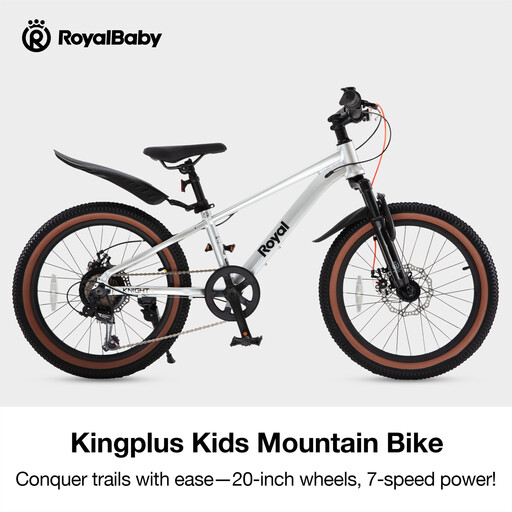
Why This Fits Their Persona: A practical option for children moving towards independent outdoor cycling, with a listed age range of 6–10 years and a stated height range of approximately 45–57 inches.
The size guidance helps buyers check fit rather than relying on age alone. It also uses a 7-speed drivetrain instead of an unnecessarily complex 21-speed setup.
Lightweight aluminium alloy frame, front suspension fork, all-terrain knobbly tyres and dual disc brakes.
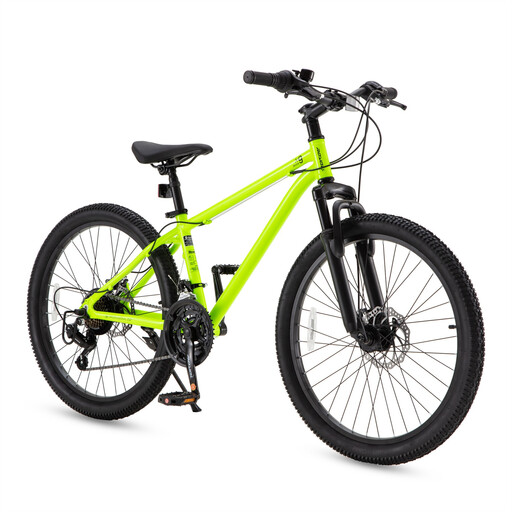
Why This Fits Their Persona: Suits taller children and teenagers who want a conventional bike for neighbourhood riding, hills and occasional off-road routes.
Its listed height range of 47–60 inches gives families a useful fit reference, while the quick-release front wheel supports easier storage and transport.
21-speed drivetrain with grip shifters, front suspension fork, aluminium frame and all-terrain knobbly tyres.
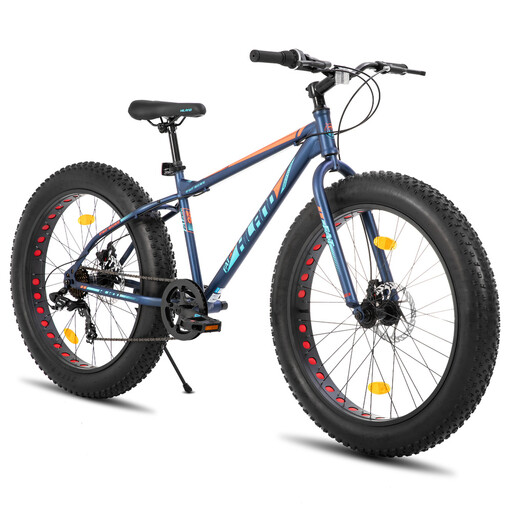
Why This Fits Their Persona: Designed for families whose children regularly ride gravel, mud, sand or other loose surfaces and need a wide-tyre format.
The 4.0-inch tyres are specified for loose terrain, while the 18.62kg approximate weight makes the carrying trade-off clear before purchase.
24-inch 4.0-inch fat tyres, 7-speed drivetrain, dual mechanical disc brakes and adjustable seat.
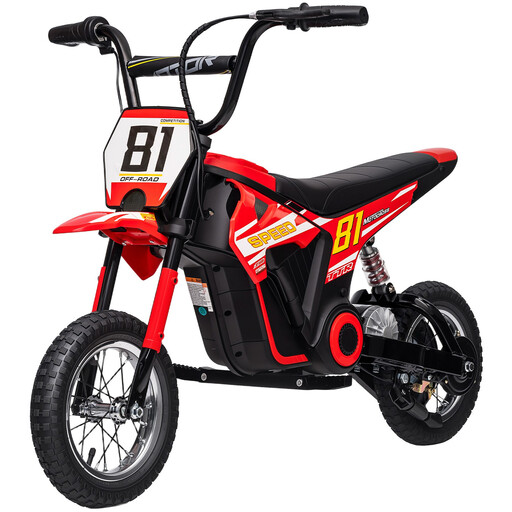
Why This Fits Their Persona: A ride-on alternative for children aged 8–12 who will use it on suitable private paths, gardens or recreational areas under close adult supervision.
Three selectable speeds from 6–16km/h provide a defined control range. Buyers should still account for the stated 8–12-hour charging time and approximately 40-minute run time.
24V 250W motor, 12-inch inflatable tyres, rear suspension, 65kg maximum load and EN71-1-2-3 and EN62115 listed standards.
Before the first ride:
We have compiled a complete, real-time list of products that fully satisfy these strict selection criteria and UK safety regulations.
Start with the manufacturer’s height range, then confirm that the rider can reach the controls and stand comfortably over the frame. Wheel size alone cannot guarantee a correct fit. A 20-inch model may suit younger riders, while a 24-inch bike is often considered for taller children and teenagers.
They can be used for neighbourhood cruising, but knobbly tyres and suspension are primarily useful on uneven or loose surfaces. On smooth pavement, these features may add rolling resistance and weight. Choose them when the child will genuinely use trails, gravel or rough paths.
The main ongoing considerations are electricity for charging, battery replacement over time, tyre maintenance and storage. The featured 24V model lists an 8–12-hour charge period and up to approximately 40 minutes of ride time. Actual running time varies with rider weight, terrain, speed and battery condition.