
24/7 Customer Support

Free returns

Same-day & Next-day Delivery

Quality Guaranteed

Unlock Your Welcome Offers: FREE Delivery | Up to 80% OFF | Free 30-day JoyPlus trial
Download the APP
Watching a child ride their first bike is a milestone moment. But navigating the world of children's bikes can be confusing. With so many options, it's easy to fall into common traps that lead to frustration for both you and your little rider. As a Joybuy Product Recommendation Officer, my role is to help you cut through the clutter and focus on what truly matters for a safe and enjoyable experience. This guide will highlight key pitfalls to avoid and the essential features to look for.
Before looking at models, it's crucial to understand the frequent mistakes that can turn a promising purchase into a garage ornament.
To ensure you're getting a suitable and safe bike, focus on these three non-negotiable factors.
While age ranges and wheel sizes (12 inch kids bike, 14 inch bike, 16 inch bike) are useful guides, the most accurate way to fit a bike is by measuring your child's inside leg.
The material of the frame directly impacts the bike's total weight and how easy it is for a child to handle.
Understanding the different types of brakes will help you choose a bike that matches your child's developmental stage.
Here are a few options that align with our selection criteria, matched to different rider profiles.
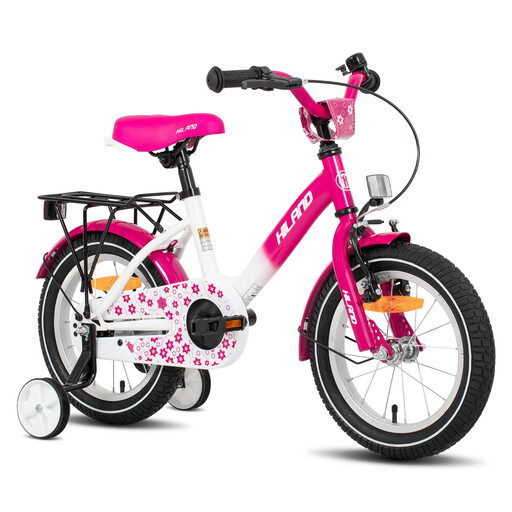
Why This Fits Their Persona: Ideal for a child's very first cycling adventures. This is a classic toddler bike setup, designed to build confidence from day one with included stabilisers and a simple single-speed drivetrain. The low step-thru frame makes it easy for small legs to get on and off.
It is correctly sized for the 2-4 age group, avoiding the "grow into it" pitfall. The dual brake system (front V-brake and rear coaster) helps children learn both methods safely.
Features a full chain guard to protect clothing and fingers, and arrives 90% pre-assembled for a quick and easy setup.
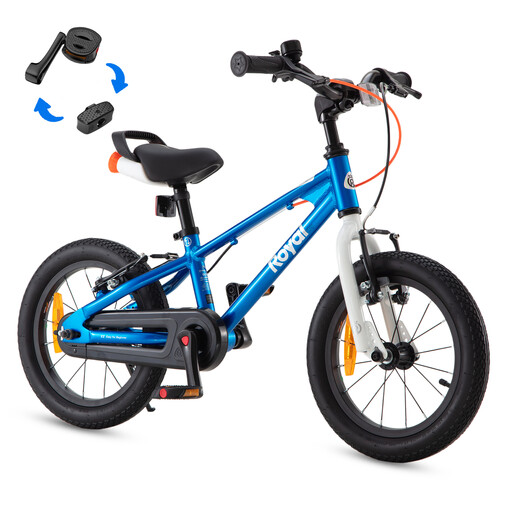
Why This Fits Their Persona: For parents prioritising ease of handling and longevity. This is a premium lightweight kids bike that can function as both a balance bike and a pedal bike, offering excellent value as a child develops their skills.
The premium aluminium frame directly counters the "heavy bike" pitfall, making it much easier for a child to control. Its 2-in-1 design also provides more utility than a basic character bike.
Features a patent-pending quick-release crank system for tool-free switching between balance and pedal modes. Dual hand brakes teach skills needed for larger bikes.
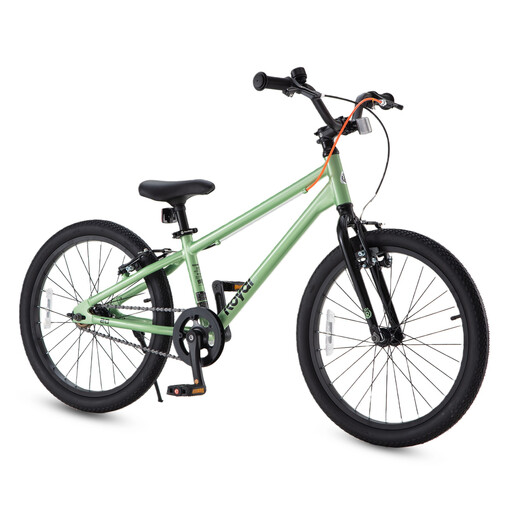
Why This Fits Their Persona: Perfect for older children (6-10 years) who have mastered the basics and are ready for a more capable boys bike or girls bike. This 20 inch bike is built for performance, with features suited for longer rides on park paths and light trails.
This model prioritises performance over gimmicks. The ultra-light aviation-grade aluminium frame and sealed bearings focus on ride quality, not just appearance.
Equipped with dual V-brakes for strong stopping power and all-terrain tyres for versatility. The sealed bearings provide a smoother, more efficient pedalling motion.
We have compiled a complete, real-time list of products that fully satisfy these strict selection criteria and UK safety regulations.
1. Should I get a kids bike with stabilisers? A kids bike with stabilisers (training wheels) can be a great tool for helping a very young child get used to pedalling and steering without the fear of falling. However, they do not teach balance. Many find that a balance bike is a more effective tool for learning to ride, as it teaches the core skill of balancing first. Some modern bikes, like the RoyalBaby EZ Freestyle, offer a 2-in-1 design to provide the best of both worlds.
2. Are lightweight aluminium bikes worth the extra cost? For many children, yes. A lighter bike is less intimidating and easier to manage. This means they can ride for longer, tackle small inclines more easily and are more likely to pick the bike up themselves after a fall. The added confidence and enjoyment can be well worth the investment, especially for smaller or less confident children.
3. How do I know when my child is ready for a bigger bike? Look for two key signs. First, if the saddle is at its maximum height and your child's knees are still significantly bent at the bottom of the pedal stroke, the bike is too small. Second, if they look and feel cramped, with their knees coming up close to the handlebars, it's time to size up. You can then repeat the inside leg measurement process to find the next appropriate wheel size.