
24/7 Customer Support

Free returns

Same-day & Next-day Delivery

Quality Guaranteed

Unlock Your Welcome Offers: FREE Delivery | Up to 80% OFF | Free 30-day JoyPlus trial
Download the APP
Watching your child pedal off on their own for the first time is a milestone moment. But choosing the right bike to get them there can feel like navigating a maze of sizes, styles and features. As a Joybuy Product Recommendation Officer, my role is to help you sidestep the common pitfalls that lead to frustrating experiences and wasted money. This guide will focus on the practical details that matter, ensuring your child’s first cycling adventures are safe, fun and confidence-building.
Before you add a bike to your basket, let's look at a few frequent buying traps:
bike with stabilisers seems like the default choice, it teaches children to lean the wrong way when turning and can become a crutch that's difficult to leave behind. It delays the development of the core skill of cycling: balance.To avoid these traps, focus on a few non-negotiable parameters. Getting these right is more important than flashy colours or character branding.
Forget age ranges. The most reliable way to sise a bike is by your child's inside leg measurement. Have them stand straight against a wall (without shoes) and measure from the floor to their crotch.
balance bike or toddler bike: The seat height at its lowest setting should be slightly less than their inside leg measurement, allowing them to sit with their feet flat on the ground and knees slightly bent.first pedal bike: They should be able to sit on the saddle and touch the ground with the balls of their feet. This provides the stability needed to start and stop safely. A 14 inch bike, for example, is generally suited for children with an inside leg of around 40-50 cm, but always check the manufacturer's specific geometry.The choice between these two starting methods can define your child's learning curve.
For a child's first bike, simplicity and safety are paramount.
We've matched some options to different needs, helping you find a suitable starting point.
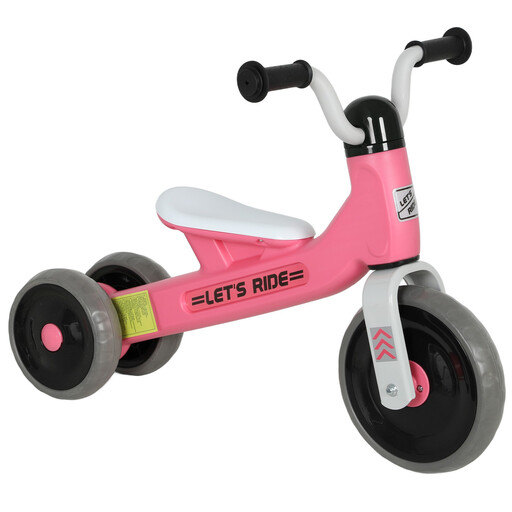
Why This Fits Their Persona: This is an ideal starting point for the youngest riders. It's designed specifically to build motor skills and coordination indoors or out, making it a perfect introduction to two-wheeled mobility before they are ready for pedals.
It directly counters the stabiliser dependency trap by focusing purely on balance. The 30-degree limited steering also prevents the sharp, sudden turns that cause falls on poorly designed toddler bikes.
Features fully enclosed, silent wheels that protect little feet and won't scuff indoor floors. The lightweight build makes it easy for a toddler to manage.
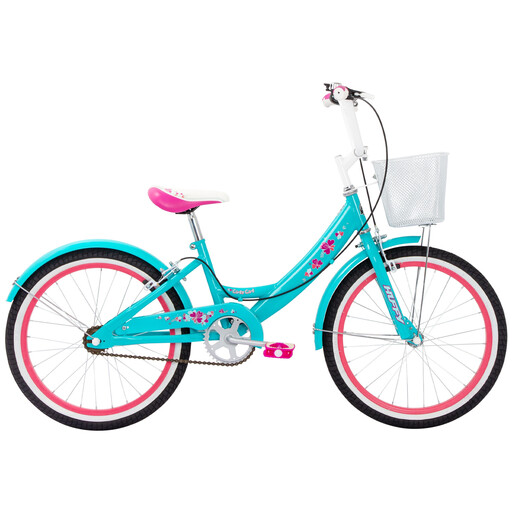
Why This Fits Their Persona: For the child who has mastered the basics and is ready for a more "grown-up" bike for rides in the park or to a friend's house. The 20-inch size and cruiser style offer a comfortable, stylish step up.
This bike is designed for confident riders, skipping stabilisers entirely. The adjustable seat and handlebars allow for a fine-tuned fit, avoiding the "too big/too small" problem as your child grows.
The sturdy steel frame provides stability, while the front and rear calliper brakes offer reliable stopping power. A practical front basket adds utility for carrying jackets or toys.
A helmet is non-negotiable for every ride. Ensure it fits snugly and sits level on the head. For parents who cycle with their children, especially during commutes or in lower light, visibility is key. A modern commuter helmet often includes features like integrated lighting. For example, the DKONI HS-086 helmet includes a removable USB rechargeable LED rear light, a feature that significantly enhances visibility to others on the road. It's a practical safety upgrade for any adult rider.
We have compiled a complete, real-time list of products that fully satisfy these strict selection criteria and UK safety regulations.
1. What's the real difference between a balance bike and a bike with stabilisers? A balance bike has no pedals and teaches a child to balance and steer. A bike with stabilisers has pedals but uses two extra wheels to hold the bike upright, which does not teach true balance. Children who start on balance bikes often transition to a pedal bike without ever needing stabilisers.
2. How do I know when my child is ready for their first pedal bike? A good indicator is when they can confidently glide for several metres at a time on a balance bike, lifting both feet off the ground while maintaining control. If they are using stabilisers, they are ready to try without them once they can pedal smoothly and use the brakes effectively.
3. How often should I check my child's bike for safety? It's good practice to perform a quick "M-check" before every ride: check that tyres are firm, brakes are working and the chain is secure. Every few months, check that all nuts and bolts are tight and that the seat and handlebars are at the correct height for your growing child.