
24/7 Customer Support

Free returns

Same-day & Next-day Delivery

Quality Guaranteed

Unlock Your Welcome Offers: FREE Delivery | Up to 80% OFF | Free 30-day JoyPlus trial
Download the APP
Choosing between kids’ bikes and stunt scooters can be harder than it looks. Product listings often highlight colourful designs, impressive-sounding materials and age ranges, while leaving out the details that affect comfort, control and long-term value.
For UK parents and gift buyers, the main risks are buying a bike that is too large to control, choosing a scooter designed for tricks when the child only needs transport, or paying for adjustability that does not actually suit the rider. The guide below focuses on the specifications that matter in everyday use, along with our top recommendations for different riding profiles.
A listed age range is only a starting point. Children of the same age can have very different leg lengths, reach and confidence levels. A bike that is too large may be difficult to start, stop or balance, while a scooter with a handlebar that is too high can reduce control during turns and tricks.
Check the manufacturer’s sizing information, saddle range and handlebar dimensions. The child should be able to mount comfortably and place their feet securely when learning.
A low listed weight does not automatically make a product easier to ride. Frame geometry, deck width, wheel size, grip design and braking position also affect handling. For younger riders, a lightweight aluminium kids’ bike with a low step-through frame may be easier to manoeuvre than a heavier steel alternative.
For scooters, a light frame can help with learning spins and jumps, but components still need to be designed for stunt use. A standard kick scooter may not withstand repeated landings or bar movements.
An adjustable handlebar scooter can be useful for growing children and everyday riding. However, some freestyle riders prefer a fixed, rigid setup because it has fewer moving parts during tricks. Before buying, decide whether the main purpose is commuting around the park, recreational riding or skate-park practice.
A 14-inch kids’ bike is commonly aimed at younger riders, while a 16-inch kids’ bike generally suits a slightly taller or more experienced child. The supplied RoyalBaby models list the 14-inch size for approximately ages 3–5 and the 16-inch size for approximately ages 4–7. These figures should still be checked against the child’s height and inseam.
Look for:
A balance-to-pedal bike can be practical for children moving from balance practice to conventional pedalling. The RoyalBaby EZ Freestyle models use a quick-release crank system for changing between modes without tools, according to the supplied product information.
Aluminium alloy frames are often selected for their relatively low weight and resistance to rust. This can be useful in the UK, where bikes may be exposed to damp storage areas or wet paths. Nevertheless, aluminium does not remove the need for maintenance: dry the bike after wet rides and check braking and fastening points regularly.
The RoyalBaby 14-inch models listed weigh approximately 7.4 kg, while the 16-inch versions weigh approximately 7.8 kg. These figures provide a useful comparison when a child needs to lift, turn or manoeuvre the bike independently.
A freestyle stunt scooter should have a rigid construction, non-slip deck, rear brake and wheels suited to trick riding. Common features in the products below include 100 mm or 110 mm solid wheels, ABEC-9 bearings and aluminium decks.
A wider deck may give a beginner more foot room, while smaller wheels can feel responsive during basic tricks. For regular skate-park use, inspect the clamp, fork, deck and brake before every session. Protective equipment, including a helmet, knee pads, elbow pads and wrist protection, is sensible for learning tricks. Riders should use smooth, dry surfaces away from traffic, stairs and steep drops.
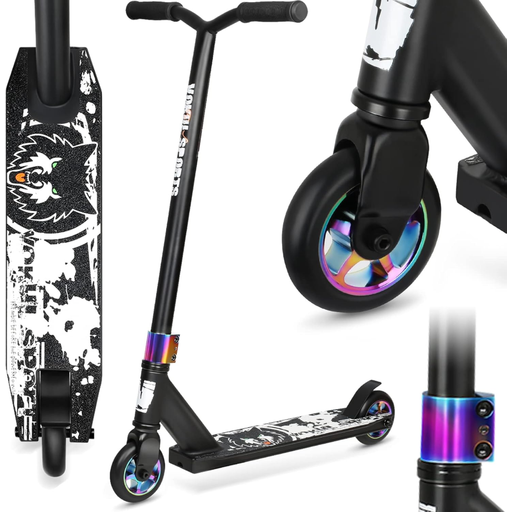
Why This Fits Their Persona: A straightforward option for a child beginning basic tricks in a local park or suitable skate area, without selecting a larger adult-oriented model.
Its product information identifies it as a lightweight entry-level stunt scooter, rather than relying only on a generic recreational label.
7 lb listed item weight, 100 mm solid polyurethane wheels, rear brake and fixed handlebar.
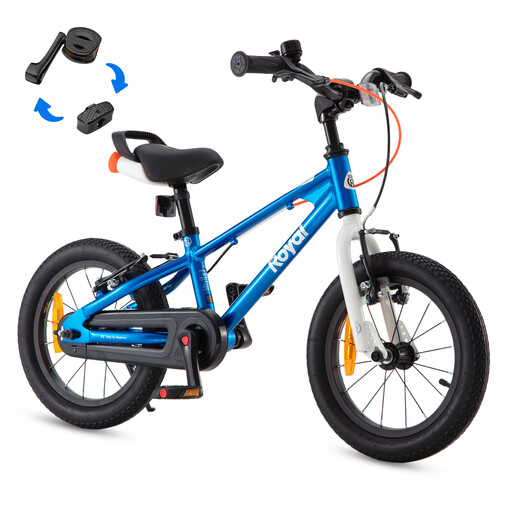
Why This Fits Their Persona: Suitable for families seeking a lighter bike for daily riding, outdoor play and continued development from balance practice to pedalling.
The listing provides a stated 7.8 kg weight, aluminium alloy frame, dual hand brakes and a two-mode balance-to-pedal design.
Low step-through frame, adjustable saddle and handlebars and dual hand brakes.
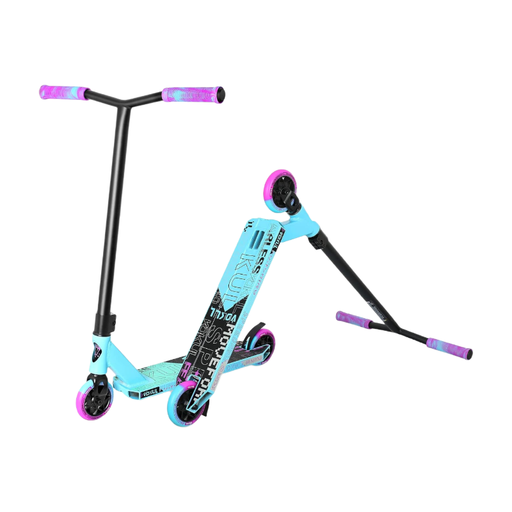
Why This Fits Their Persona: Intended for older children, teenagers and adults who want a dedicated skate-park scooter for repeated freestyle practice.
It specifies a T-6061 aluminium deck, one-piece T4T6 fork, 110 mm wheels and a non-slip deck, giving buyers more useful detail than appearance-led marketing.
ABEC-9 bearings, soft rubber grips, rear braking and an adjustable T-bar; listed weight limit is 220 lb.
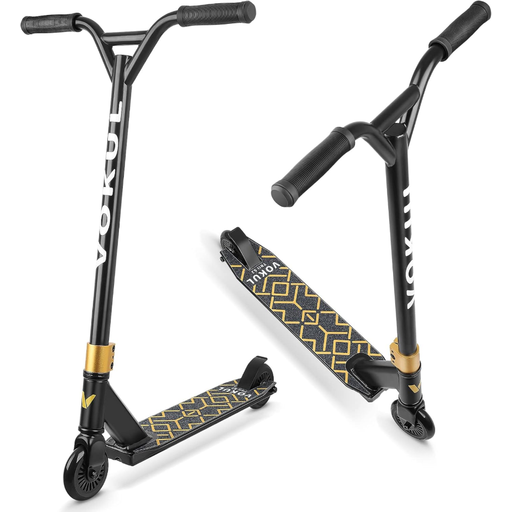
Why This Fits Their Persona: A child-friendly choice for riders developing balance and basic BMX-style or freestyle movements before progressing to more demanding tricks.
Its 20-by-4-inch non-slip deck and 100 mm wheels are clearly specified, helping parents assess footing and responsiveness before purchase.
6061 aluminium frame, reinforced deck, ABEC-9 bearings, rubber grips and rear braking.
Before the first ride:
Wheel size is a useful guide, but height, inseam and confidence matter more than age alone. A 14-inch model may suit a younger beginner, while a 16-inch kids’ bike may provide more room for a taller child. The rider should be able to control the brakes and mount without stretching.
Some can be used for short recreational trips, but stunt scooters are primarily designed for tricks and skate-park riding. Their rigid construction and compact wheels may feel less comfortable over rough pavements. Choose a conventional scooter if everyday transport is the main purpose.
Lifespan depends on rider weight, frequency of use, storage and maintenance. Regularly checking bolts, brakes, wheels, bearings and frame joints can identify wear early. A correctly sized product is also less likely to suffer damage caused by poor control or unsuitable landings.