
24/7 Customer Support

Free returns

Same-day & Next-day Delivery

Quality Guaranteed

Unlock Your Welcome Offers: FREE Delivery | Up to 80% OFF | Free 30-day JoyPlus trial
Download the APP
Choosing between a toddler tricycle, a kids bike with training wheels and a first two-wheeler can be surprisingly difficult. Age labels vary, children grow at different rates and attractive extras do not always improve everyday usability.
For parents, grandparents and other family members, the key is to match the product to the child’s height, confidence, riding environment and ability to control the bike. A suitable choice should also be straightforward to assemble, adjust and inspect over time.
A product marked for “ages 2–5” or “ages 4–7” is only a starting point. Two children of the same age may have noticeably different heights and leg lengths. If the seat is too high, a child may struggle to place their feet down; if it is too low, pedalling can become uncomfortable.
Always compare the manufacturer’s height guidance with the child’s measurements. For example:
For a beginner, a single-speed drivetrain can be easier to understand and maintain than several gears. Children learning to balance, steer and brake have enough to manage without frequent gear changes.
A single-speed children’s bike is particularly practical for short rides around parks, paths and quiet residential areas. The trade-off is that it offers less flexibility on steep hills, so consider the local terrain before buying.
A bell, basket, colourful paintwork or rear rack may make a product more appealing, but these features should come after checking the frame size, seat adjustment, brakes and wheel condition. A bike that looks engaging but is difficult to control may quickly be left unused.
Also check what “easy assembly” means. Some products arrive mostly assembled, but handlebars, pedals, brakes or training wheels may still require fitting and adjustment. Follow the supplied instructions and check every fastening before the first ride.
Wheel size is a useful guide, but it does not replace checking the child’s height and the bike’s stand-over clearance. Common options include:
A child should be able to sit comfortably, reach the handlebars without stretching and operate the brakes with manageable hand pressure. When using training wheels, check that the bike remains stable on flat ground and that the wheels are fitted evenly.
Some beginner bikes combine a front V-brake with a rear coaster brake. This gives the child two braking methods to learn, although younger riders may initially find the back-pedal brake more intuitive.
Look for covered chains and protected handlebar ends, particularly for younger children. These features do not replace supervision or maintenance, but they can reduce contact with moving parts during ordinary use.
A steel frame is generally robust, although it can make a bike heavier to lift. Wide tyres, such as 1.95-inch tyres on the Hiland Starry models, may provide a more planted feel on paved paths and compact park surfaces.
An adjustable seat can extend the useful period of the bike as a child grows. However, do not raise the seat beyond the manufacturer’s marked limit. Before each ride, check the seat clamp, handlebar, pedals, brakes and tyre pressure.
For a toddler tricycle, consider wheel construction, steering reach and storage. The AIYAPLAY models have a 10-inch front wheel, two 8-inch rear wheels, an adjustable seat, a bell and a basket. Their listed compliance is EN71-1-2-3; buyers should still follow the supplied instructions and intended age and load guidance.
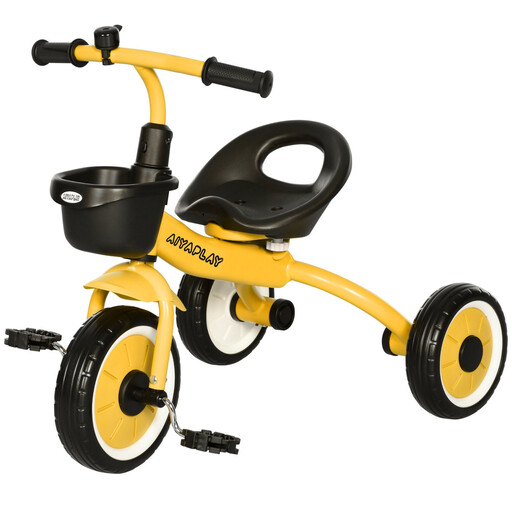
Why This Fits Their Persona: A toddler tricycle gives younger children a pedal-learning option without the immediate balance demands of a two-wheeled bike. The basket is useful for carrying small toys during park trips.
The adjustable 30 cm seat helps address the problem of buying a fixed-size tricycle that is quickly outgrown.
Metal frame, EVA wheels, bell, basket and stated 25 kg maximum load.
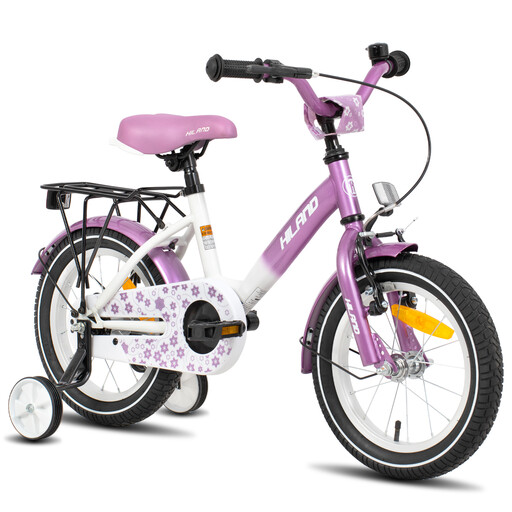
Why This Fits Their Persona: This option suits a taller child progressing towards independent riding, while still offering a single-speed setup and beginner-focused controls.
The stated 105–135 cm height range helps buyers assess fit instead of relying only on the broad age label.
16-inch wheels, adjustable seat, front V-brake, rear coaster brake and 90% pre-assembled delivery.
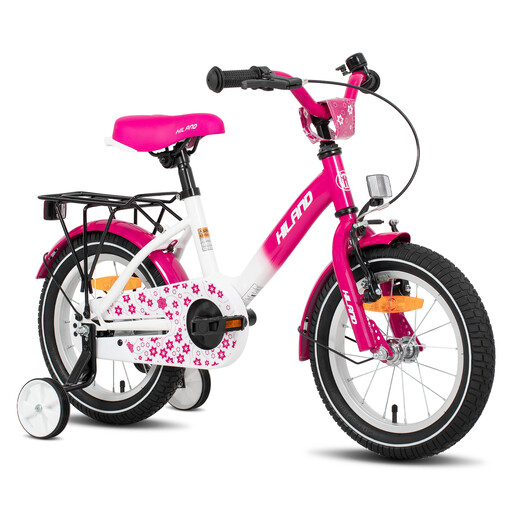
Why This Fits Their Persona: The 14-inch format can suit families seeking a practical intermediate bike for regular park rides and gradual confidence-building.
Training wheels are included, so the bike can be set up for a beginner without requiring a separate accessory purchase.
90% pre-assembled, adjustable seat, chain cover, handlebar protectors and two brake systems.
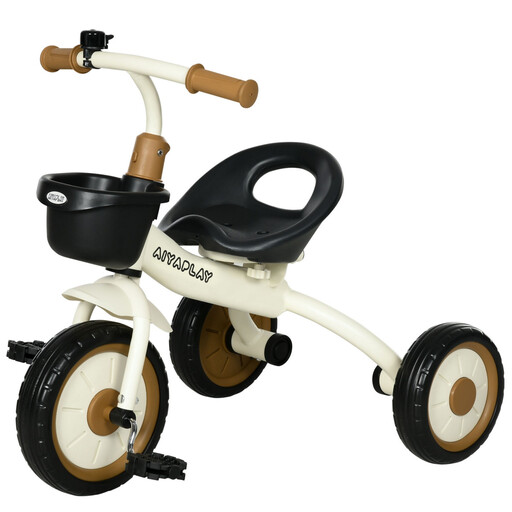
Why This Fits Their Persona: A white toddler tricycle offers the same listed functions as the yellow version for families prioritising a different colour or gifting style.
The adjustable seat and stated dimensions provide practical checks against buying a tricycle that does not fit the child.
Bell, front basket, easy-grip handlebars, metal frame and EN71-1-2-3 compliance stated in the listing.
We have compiled a complete, real-time list of products that fully satisfy these strict selection criteria and UK safety regulations.
Before the first ride:
Inspect the bike regularly, especially after impacts or frequent outdoor use. Wipe away dirt and moisture, and replace damaged or excessively worn parts rather than continuing to ride.
Use height as the primary guide, then check the manufacturer’s age range and seat adjustment. A 12-inch kids bike may suit a child around 80–105 cm, while a 14-inch or 16-inch model may suit taller children. The child should be able to reach the controls comfortably.
Training wheels can provide initial stability, but they do not teach balance in the same way as a balance bike. They may suit a child who is ready to pedal but is not yet confident on two wheels. Remove them only when the child can steer, stop and support the bike safely.
Lifespan depends on growth, storage, riding frequency and maintenance. An adjustable-seat tricycle or children’s bike can remain usable for longer if the child stays within its height and weight guidance. Regular checks of brakes, tyres, fastenings and the frame help identify wear before it becomes a problem.