
24/7 Customer Support

Free returns

Same-day & Next-day Delivery

Quality Guaranteed

Unlock Your Welcome Offers: FREE Delivery | Up to 80% OFF | Free 30-day JoyPlus trial
Download the APP
Buying a child’s first bike can seem straightforward until you compare wheel sizes, stabilisers, brake types and frame materials. The wrong choice may be too heavy to control, too large for confident mounting or quickly outgrown.
This guide explains what to check before buying kids bikes, including children’s bikes, balance bikes for toddlers, children’s pedal bikes and toddler tricycles. It also highlights suitable options for different riding stages and family needs.
Age guidance is useful, but children of the same age can have noticeably different heights, leg lengths and coordination levels. A 14-inch bike may suit one four-year-old but feel difficult for another.
Use the manufacturer’s height range, wheel size and saddle adjustment together. Your child should be able to sit comfortably, reach the handlebars and place their feet down when learning, without the frame feeling oversized.
A bigger bike may appear more economical because it could last longer. However, an oversized frame can make steering, braking and mounting harder. This may reduce confidence and lead to the bike being left unused.
A correctly sized 12-inch kids bike, 14-inch kids bike or 16-inch kids bike is generally more practical than buying a size your child will “grow into”. For older or taller children, consider an 18-inch kids bike or 20-inch kids bike, but always check the listed height and weight limits.
Bright colours, baskets and character themes can make a bike attractive, but the frame weight affects how easily a child can start, stop and turn. A heavy steel bike may be durable, yet a lightweight children’s bike can be easier for a smaller rider to handle.
Also check whether “lightweight” refers to the complete bike or only the frame. Pedals, stabilisers, baskets and mudguards all add weight.
Wheel diameter is one of the simplest ways to narrow the search:
These are broad categories rather than fixed rules. Compare the product’s stated age, height and maximum rider weight before ordering.
Young children may find hand brakes difficult to operate if the levers are too far from their fingers. Coaster brakes, which stop the bike when the rider pedals backwards, are simple for some beginners. Other bikes use front and rear caliper, V-brake or dual hand-brake systems.
A bike should have controls the child can understand and reach. Check that the brakes work correctly after assembly and practise stopping away from roads, slopes and crowded areas.
Kids bikes with stabilisers or removable stabilisers can support early practice, but they should not be treated as a permanent substitute for learning balance. Removable designs allow parents to take them off when the child is ready.
Some children’s bicycles use a 2-in-1 balance-to-pedal design. These models can allow the cranks to be removed for gliding practice and reinstalled for pedal training. Adjustable saddles and handlebars can improve fit, but adjustment cannot compensate for a frame that is fundamentally too large.
Before the first ride, follow the assembly instructions and check the handlebar stem, saddle clamp, wheel nuts, pedals and brake function. Children should wear a correctly fitted helmet and suitable protective equipment, and riding should take place under adult supervision in an appropriate area.
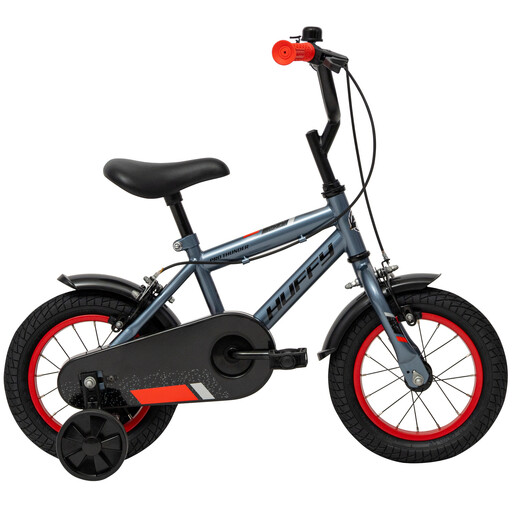
Why This Fits Their Persona: A straightforward choice for a young beginner who needs a conventional pedal bike for pavements, parks and playground paths.
The 12-inch wheels and removable stabilisers avoid the common problem of buying a bike that is too large for a first-time rider.
Removable stabilisers, front and rear caliper brakes, enclosed chainguard and adjustable saddle.
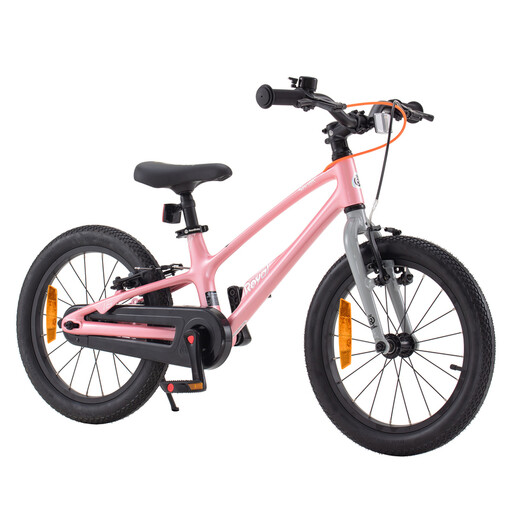
Why This Fits Their Persona: Suitable for families seeking a lighter learning bike with a clear progression from balance practice to pedal riding.
Its tool-free crank system avoids forcing a child straight into pedal riding before they are ready to practise balance.
RoyalMg magnesium alloy frame, dual V-brakes, hybrid tyres and balance/pedal modes.
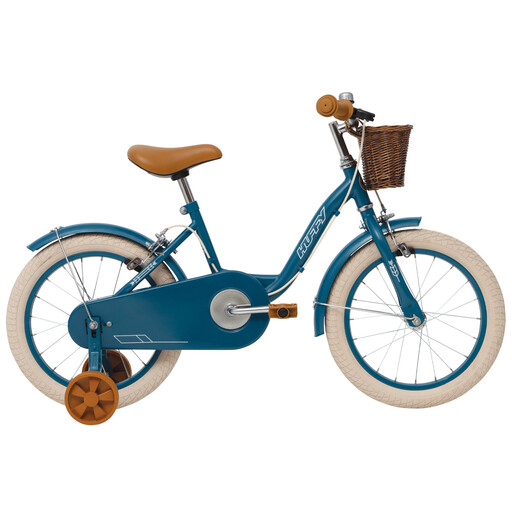
Why This Fits Their Persona: A practical option for children moving beyond the smallest bikes and riding regularly in parks or on local paths.
The adjustable design and removable stabilisers help accommodate changing ability instead of locking the rider into one learning stage.
Steel frame, 16-inch wheels, front basket, single-speed setup and front/rear caliper brakes.
For children aged around two, a balance bike such as the Huffy Vintage Style 10 Inch Balance Bike can provide a simple way to practise steering and gliding. It has a 10-inch wheel size and a stated maximum user weight of 27 kg.
For a 14-inch option with a retro appearance, the Huffy Vintage 14 Inch Bike Grey Matte includes a front basket, coaster brake and removable stabilisers. Families comparing children’s pedal bikes may also consider the RoyalBaby EZ Freestyle 14 Inch, which has an aluminium frame, dual hand brakes and adjustable saddle and handlebars.
If a 20-inch bike is more suitable, the Huffy Girly Girl 20 Inch Bike is listed for children aged eight and above, with a maximum rider weight of 34 kg. Check the product guidance carefully, as the age range for 20-inch kids’ bicycles can vary considerably.
We have compiled a complete, real-time list of products that fully satisfy these strict selection criteria and UK safety regulations.
A four-year-old may use a 12-inch, 14-inch or 16-inch bike, depending on height, inside-leg measurement and riding experience. Compare the manufacturer’s height guidance and make sure the child can reach the controls comfortably.
Bikes with stabilisers can provide initial support while a child becomes familiar with pedalling and steering. Choose a model with removable stabilisers so they can be taken off when the child is ready to develop two-wheel balance. Supervise practice in a traffic-free area.