
24/7 Customer Support

Free returns

Same-day & Next-day Delivery

Quality Guaranteed

Unlock Your Welcome Offers: FREE Delivery | Up to 80% OFF | Free 30-day JoyPlus trial
Download the APP
A kids bouncy castle can turn a garden, birthday party or play date into an active play area. However, product listings often focus on bright colours and the number of features while leaving practical details easy to miss. A large inflatable may not fit the garden, a low-cost model may have limited jumping capacity, and a baby bouncer is not a suitable substitute for an inflatable bounce house.
Before buying, check the product’s age range, usable dimensions, weight limits, materials, blower requirements and storage arrangements. These details usually have more impact on everyday value than the theme or number of accessories.
A listing may show the total dimensions of an inflatable, but this includes the slide, walls and entrance area. The actual bounce zone can be considerably smaller. Measure the available floor area, then allow additional clearance around the castle for access, anchoring and safe supervision.
For indoor use, check the ceiling height and doorway width as well as the floor space. An indoor outdoor bouncy castle needs enough room for inflation, ventilation and children to enter and leave comfortably.
A maximum load does not mean that any number of children can jump together. Weight limits should be considered alongside the recommended age, bounce-area size and the manufacturer’s instructions. Children of different ages and sizes can move unpredictably, so adult supervision and sensible separation may still be necessary.
For example, one model may list a 100kg total capacity but specify three children maximum and a 45kg limit for the jumping area. These are separate figures, not interchangeable numbers.
References to EN71 or other standards are useful information, but they do not make an inflatable safe in every situation. The product must still be installed correctly, secured outdoors, kept away from hazards and used according to its instructions.
Check whether the package includes ground stakes, a blower, a storage bag and repair patches. Also consider the blower’s stated noise level and power requirements, particularly if the castle will be used near neighbours.
Record the full length, width and height, then compare them with your intended space. A garden model may need a flat lawn and sufficient distance from fences, trees, washing lines and hard surfaces. Indoors, confirm that the material will not rub against walls or fittings.
A compact kids inflatable play centre may suit occasional home use, while a larger inflatable with slides, a ball pit or a pool may be more appropriate for parties. These added features increase the required footprint and cleaning time.
Oxford fabric is commonly used for inflatable castles because it is woven and relatively hard-wearing. Product specifications may also identify different fabric weights, such as 420D Oxford fabric, or reinforced sections using 840D material. Double stitching and reinforced seams can be useful construction details, but inspect the finished product regularly for damage.
Keep the inflatable dry before storage. Moisture trapped in folded fabric can lead to unpleasant odours and material deterioration.
Continuous-air inflatables require the blower to remain switched on during use. Compare the stated inflation time and blower power, but do not select a model solely because it inflates a few seconds faster. A suitable UK power connection, stable blower placement and protected cables are more important for everyday setup.
Some listed models inflate in approximately one to two minutes. The exact time can vary with temperature, surface, power supply and how the inflatable is positioned. Follow the supplied instructions and keep children away until the castle is fully inflated.
A baby bouncer, nursery bouncer and inflatable bounce house are different products. A baby bouncer is designed for a much younger child and usually has a harness or supportive seat. It must be used on the floor, never on a table, bed or worktop, and is not intended for unsupervised sleep.
Inflatable castles in this guide are generally intended for children aged three and above. Always follow the specific product label, especially where children under three are concerned.
The following options match different household needs rather than one universal shopping profile.
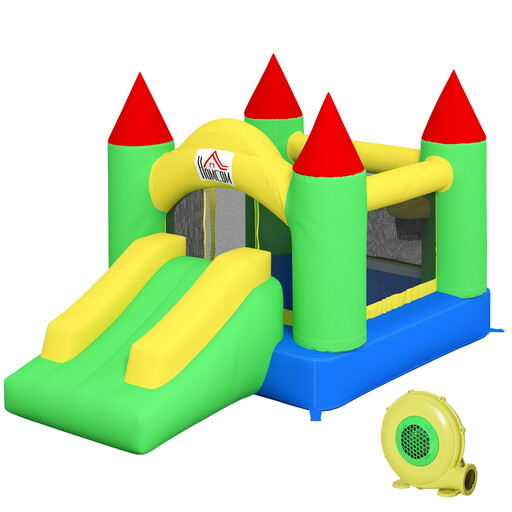
Why This Fits Their Persona: A straightforward option for families wanting a slide and jumping area for home garden use, without a multi-feature layout.
The listing separates the 100kg overall capacity from the 45kg jumping-area capacity and states a maximum of three children.
300 x 180 x 160cm; includes a 350W blower, mesh surround and slide; listed for indoor or outdoor use and ages 3–10.
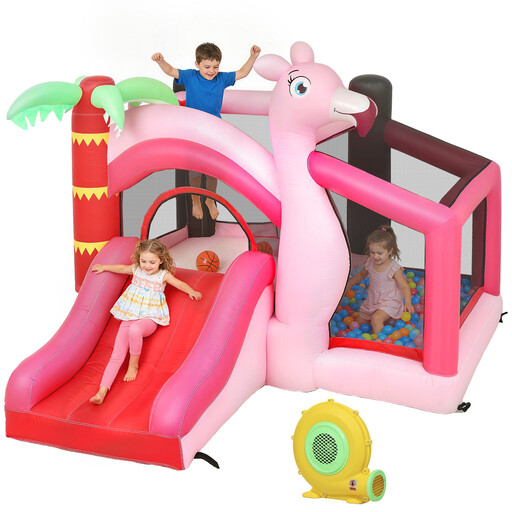
Why This Fits Their Persona: Suitable for households seeking a themed, multi-activity play centre for gardens, parties and spacious indoor areas.
Its specification states the 90kg maximum load, recommended age of 3–8 and a defined 133 x 127cm bouncing area.
Includes a 370W blower, storage bag, repair patches and two mini basketballs; measures 255 x 230 x 196cm.
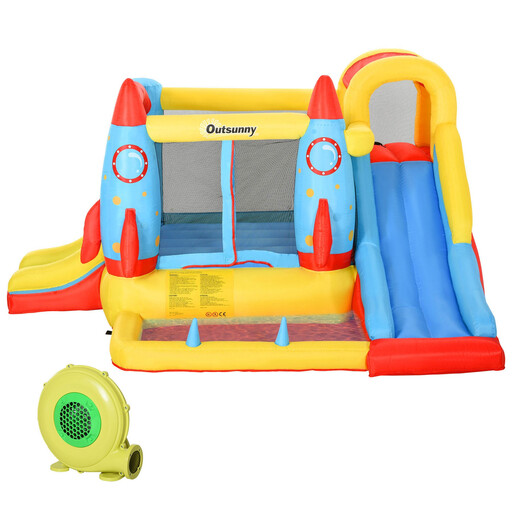
Why This Fits Their Persona: Designed for larger play dates where children can move between a trampoline, slides, climbing wall and pool area.
The listing provides separate dimensions for the trampoline, pool and slides, rather than relying only on the overall size.
330 x 265 x 185cm; listed for up to four children aged 3–8; includes a 450W inflator, five stakes, carry bag and repair patches.
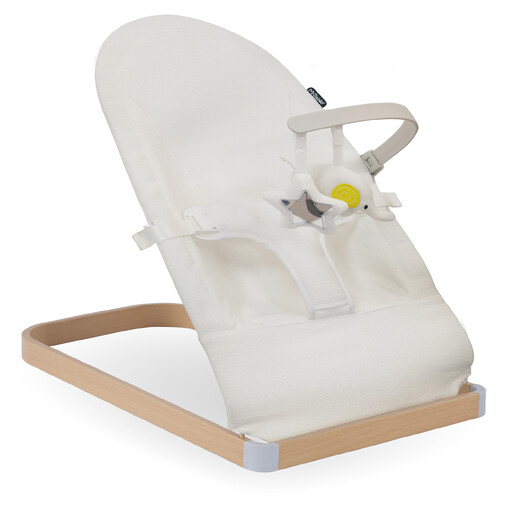
Why This Fits Their Persona: A compact alternative for parents and carers of babies who need a supervised floor-level seat rather than a children’s inflatable.
Its stated maximum is 9kg, with a supplied harness and clear warnings against unattended use, elevated surfaces and prolonged sleeping.
Battery-free rocking motion, removable toy bar and compact 55 x 40 x 23cm package dimensions.
We have compiled a complete, real-time list of products that fully satisfy these strict selection criteria and UK safety regulations.
An inflatable bounce house uses electricity continuously while inflated, so check the blower wattage and estimate usage from your household tariff. Keep the blower and plug dry, use the recommended connection and never leave the equipment running without an adult present.
After play, wipe away dirt and allow the fabric to dry fully before deflation. Store it in the supplied bag, away from rodents, sharp objects, damp and extreme temperatures. There is no fixed lifespan that applies to every model; frequency of use, weather exposure, storage and repairs all affect how long it remains suitable.
Yes, some models are listed for indoor and outdoor use, but the room must provide enough clearance, ventilation and a flat surface. Measure doorways and ceiling height before ordering, and remove nearby furniture or sharp objects.
Many household models list inflation times of roughly one to two minutes. Actual setup time depends on blower power, temperature, positioning and the condition of the fabric. Children should only enter once the inflatable is fully inflated and secured.
A baby bouncer with toy bar is a small, floor-level seat for a young baby, normally used with a restraint and direct supervision. A bouncy castle is an inflatable play structure for older children, commonly from age three. They serve different stages of development and should not be substituted for one another.