
24/7 全天候客户支持

免费退货

当日/次日达

品质保障

开启新人专享福利: 全场免邮 | 低至 2 折 | 免费试用 30 天 JoyPlus 会员
下载 Joybuy
Choosing kids craft and STEM kits can be more difficult than it first appears. Product photos often show polished finished projects, while the box may contain limited materials, tiny components or instructions that are too difficult for the intended age group.
For parents, grandparents and gift buyers, three common pitfalls are worth checking before purchase:
The right choice depends on the child’s interests, ability to follow instructions and the amount of adult support available. The selection below covers painting, building, saving-themed crafts and hands-on science.
Age guidance is not simply a marketing detail. It helps indicate the size of components, the complexity of assembly and the level of supervision required.
For younger children, look for:
For children aged 8 to 14, more involved projects such as a crystal growing kit or mechanical model may provide greater challenge. However, chemical materials, batteries and small mechanical parts still require an adult to read the instructions and oversee use.
Always check the current packaging for CE or UKCA marking, age warnings and manufacturer information. These markings support toy safety compliance, but they do not mean a child can use every kit without supervision.
An all-in-one kit is usually more convenient for a birthday, rainy afternoon or school-holiday activity. Check the contents list for:
For example, a paint your own craft kit can be frustrating if it includes only one small brush or insufficient paint for the main object. Conversely, a kit with multiple projects can offer better value for siblings or a child who enjoys repeating an activity with different designs.
The finished item can determine whether the activity continues to have value after construction. A decorative plate, money box or painted car can be displayed or used, while a one-time experiment may be more focused on the process.
Also consider workspace. Paint, glue and crystal-growing materials are better used on a protected table, with hand washing afterwards. Larger STEM builds may need a dedicated area where the model can remain undisturbed between sessions.
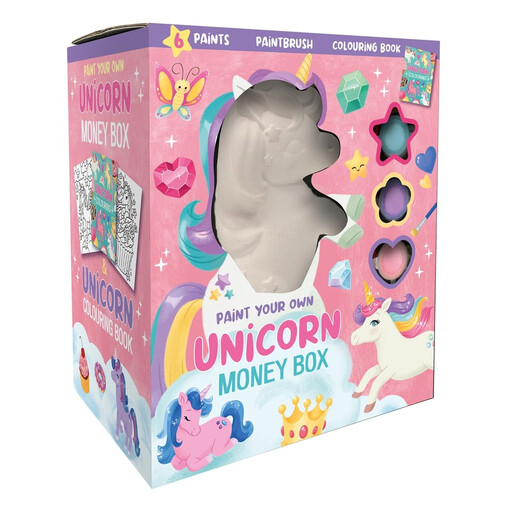
Why This Fits Their Persona: Suitable from age 5, this compact craft is a practical starting point for unicorn fans and younger children who enjoy colouring and personalising objects at home.
It includes six paints, a paintbrush and a 32-page colouring book, rather than relying on the buyer to source the main activity materials.
The finished money box can be used for pocket change, adding a saving activity after painting. Adult supervision is recommended and small-part warnings apply.
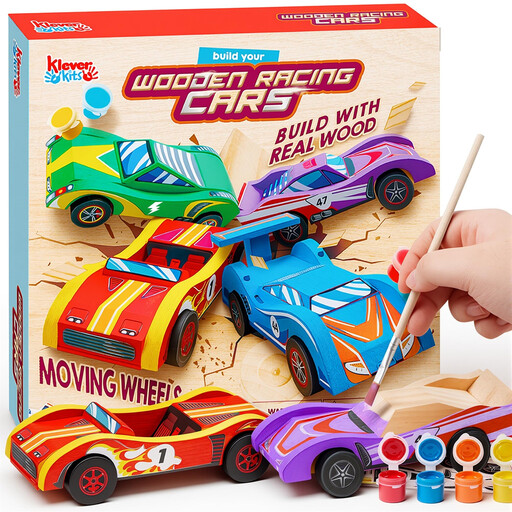
Why This Fits Their Persona: A suitable choice for children aged 6–12 who want a substantial creative project involving construction, painting and decoration.
The box lists four cars, 44 pre-cut wooden pieces, paints, brushes, glue, stickers and instructions, reducing the need for additional craft purchases.
Four vehicles support sibling play or several building sessions. The supplied pre-cut parts require no extra tools, and the listed materials meet toy safety standards.
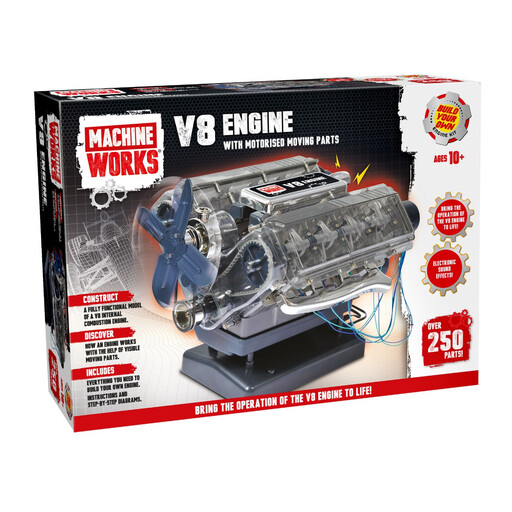
Why This Fits Their Persona: Designed for children aged 10+ who have a sustained interest in engineering, mechanics or automotive design and can manage a longer project.
The kit specifies over 250 parts, a detailed manual and a transparent case, making the learning activity more substantial than a simple snap-together toy.
The assembled model includes moving engine components, sound and illuminated spark plugs. It requires three AA batteries, which are not included.
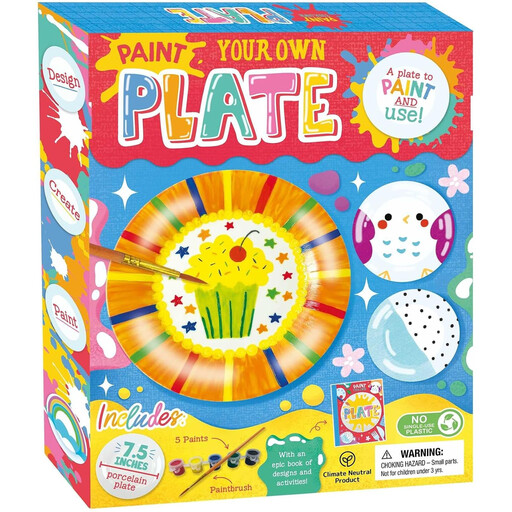
Why This Fits Their Persona: This paint your own plate set suits children aged 5+ who enjoy drawing, colour matching and making a display piece for a bedroom or playroom.
It includes an activity book with more than 50 design ideas and painting tutorials, giving children options beyond copying a single example.
The set contains a blank plate, paints, a brush and guidance. It needs no batteries, although small-part warnings and adult supervision apply.
A craft set is generally suitable when the child wants visible creative control and a finished object. A money box craft kit combines painting with a simple everyday purpose, while a paint your own plate set offers more space for patterns and illustrations.
A wooden racing car kit adds construction before decoration, making it useful for children who enjoy vehicles and hands-on assembly. For older children, a build your own engine kit introduces mechanical movement and sequencing. A crystal growing kit focuses on observation, patience and following a process, but it may involve materials that need more careful adult handling.
Before ordering, compare:
These checks make it easier to choose educational toys for children that are genuinely suitable rather than simply attractive in a product photograph.
Yes, but the activities vary considerably by age. Painting sets and simple money boxes may suit children from age 5, while engine-building kits commonly start from age 10. Crystal activities may be labelled for ages 8–14. Always follow the specific product warning and supervise where required.
Some do. Check whether the kit includes paint, brushes, glue, batteries and instructions. The wooden racing car set lists these core materials, while the V8 engine model requires three AA batteries, not included. A protective table covering and cleaning materials may still be useful for paint-based activities.
The activity time depends on the kit and the child’s pace. Multi-project sets, such as a four-car painting kit, can be split across several sessions. A completed money box or plate can remain on display, while mechanical models can be revisited for demonstration and play. Proper storage, keeping instructions with the components and following cleaning guidance can help preserve the finished project.