
24/7 Customer Support

Free returns

Same-day & Next-day Delivery

Quality Guaranteed

Unlock Your Welcome Offers: FREE Delivery | Up to 80% OFF | Free 30-day JoyPlus trial
Download the APP
Watching a child’s face light up as they take the wheel of their very own kids electric car is a priceless moment. But navigating the market to find the right one can feel like a minefield of confusing specifications and overblown marketing claims. As a Joybuy Product Recommendation Officer, my role is to help you sidestep the common pitfalls and focus on what truly matters for a safe, durable and fun ride-on toy.
Before you add that shiny new toy car to your basket, let’s look at the frequent traps that catch out even the most careful shoppers.
To ensure you're investing in a toy that lasts, focus on these three core parameters. They are the true indicators of performance, safety and longevity.
Think of voltage as the engine's power and Amp-hours as the fuel tank's size.
Beyond the basics, these features are crucial for peace of mind:
A licensed ride on car (e.g., Audi, Lamborghini, Land Rover) is an official replica, meaning its design, badges and details have been approved by the car manufacturer. This often translates to higher-quality finishes and a more authentic experience, from working LED lights to realistic dashboard details. While generic models can be excellent, a licensed product often provides that extra "wow" factor and attention to detail that children love.
Here are a few options that align with different priorities, helping you match a car to a child's personality and your requirements.
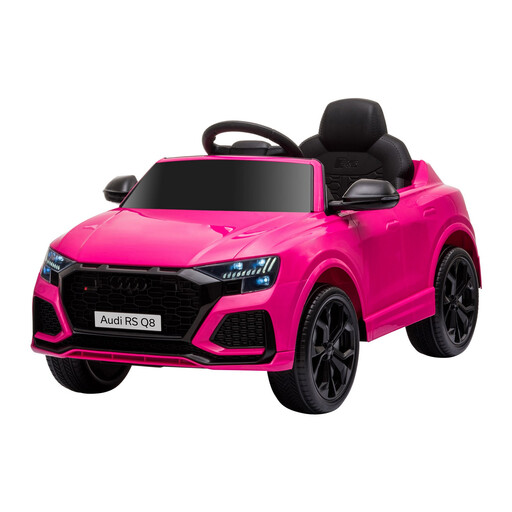
Why This Fits Their Persona: Perfect for a younger child's first driving experience. It offers the thrill of a licensed, realistic design without overwhelming speed. It's ideal for garden patio or driveway adventures where style is as important as the ride itself.
The 6V motor and 1.5–3km/h speed are appropriately matched, avoiding the trap of being too powerful for a 3-year-old. The parental remote provides a crucial safety override.
Features a high-capacity 6V 7Ah battery for its class, offering up to 45 minutes of runtime. Includes Bluetooth and USB music inputs for an entertaining ride.
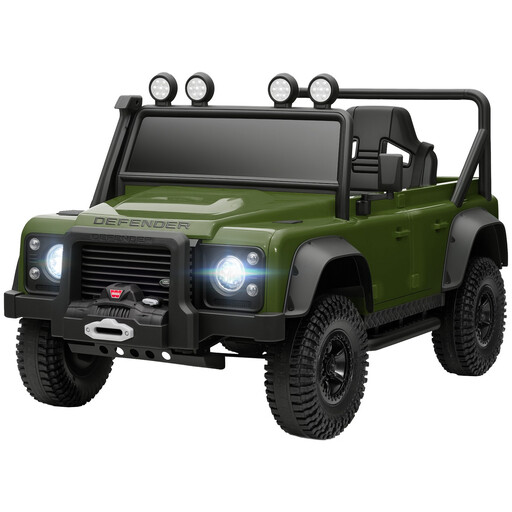
Why This Fits Their Persona: For those who want a robust, feature-packed vehicle that can handle more than just a smooth driveway. It's built for adventure, with a design that promises durability and performance for years of play.
It directly counters the "all-terrain myth" with a proper four-wheel suspension system and a soft-start function for safe acceleration. The powerful 12V 7Ah battery addresses the short runtime pitfall.
Excellent runtime of up to an hour. The dual-motor setup and three-speed control provide strong performance on varied surfaces like grass and pavement.
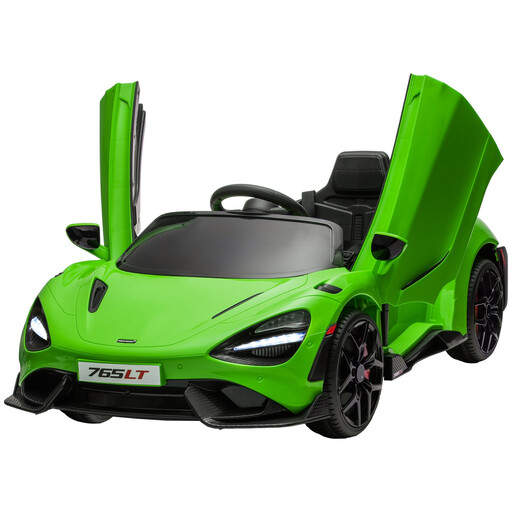
Why This Fits Their Persona: For the child (and parent) who appreciates high-end automotive design. The iconic butterfly doors are a standout feature that delivers an unmatched "wow" factor, making it a truly special gift for a young car fan.
This isn't just style over substance. It includes a soft-start function for safety and wheel suspension for a comfortable ride, avoiding the trap of a flashy but poorly performing toy.
The working butterfly doors are a unique and exciting feature. It also includes auxiliary wheels and a handle for easy transport when the battery runs out.
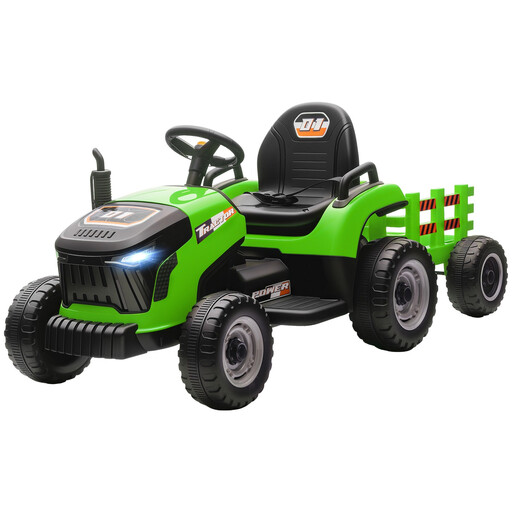
Why This Fits Their Persona: For the child who loves role-playing and imaginative games. This isn't just a vehicle; it's a tool for farming, construction and hauling precious cargo (like toys or leaves) around the garden, extending its play value far beyond a simple ride.
It avoids the "one-trick pony" trap by offering more than just driving. The six-wheel design provides enhanced stability on uneven ground, directly addressing the "all-terrain myth" with a practical solution.
The large, detachable trailer is the main attraction, encouraging hours of creative play. It also boasts an impressive runtime of up to 60 minutes.
We have compiled a complete, real-time list of products that fully satisfy these strict selection criteria and UK safety regulations.
The runtime of a children's electric car depends heavily on the battery's Amp-hour (Ah) rating, the child's weight, the terrain and the speed. On average, you can expect between 45 and 80 minutes of continuous use from a full charge. Models with larger batteries, like a 12V 7Ah, will generally offer longer play sessions than those with smaller 4.5Ah batteries.
Many 12v ride on car models are certified for children aged 3 and up. However, for this age group, it is essential to choose a model that includes key safety features. Look for a car with a soft-start function to prevent abrupt acceleration and a reliable parental remote control. This allows you to manage the speed and direction until your child is confident enough to drive independently.
This depends entirely on the car's design. Basic models with smooth, hard plastic wheels and no suspension will struggle on grass, leading to a bumpy ride and potential damage. For use on lawns, you should look for a kids ride on car that specifies a four-wheel suspension system and has textured tyres for better grip. Models with dual motors also tend to perform better on uneven surfaces.