
24/7 Customer Support

Free returns

Same-day & Next-day Delivery

Quality Guaranteed

Unlock Your Welcome Offers: FREE Delivery | Up to 80% OFF | Free 30-day JoyPlus trial
Download the APP
Watching a child’s face light up as they take the wheel of their very own kids electric car is a memorable moment. However, the journey to finding the right model can be confusing. The market is filled with options, and it's easy to fall for marketing hype that leads to a disappointing purchase. As the Joybuy Product Recommendation Officer, my role is to help you navigate the choices and focus on what truly matters for a safe and enjoyable ride.
Before you buy, be aware of a few common pitfalls. Many shoppers find themselves with a ride-on toy that doesn't live up to its promises, often due to these overlooked issues:
ride on car with remote control is a fantastic safety feature, but not all are created equal. A short operational range or an unreliable connection can turn a reassuring feature into a source of frustration for parents.To ensure you're getting a durable and suitable vehicle, focus on these core parameters. They are the true indicators of a quality ride on car.
The voltage of the battery is the single most important factor determining a car's performance. It's not just about speed; it dictates the types of surfaces the car can handle.
toddler ride on car. They offer a gentle, slow pace (around 2-3 km/h) and are designed for use on smooth, flat surfaces like patios or indoor flooring. They typically struggle with grass or even slight inclines.12v ride on car can reach speeds of 3-5 km/h (a brisk walking pace) and has enough power to handle short grass and minor bumps, making it great for garden adventures.electric go kart or larger off-road styles, 24V systems are for older children (typically 6+). They offer higher speeds (up to 13 km/h or more) and have the torque to manage uneven terrain with ease.When buying any kids ride on toys, safety is non-negotiable. Always check that the product complies with key UK and European safety standards. Look for certifications like EN71 (specifies safety requirements for toys) and EN62115 (covers the safety of electric toys). These ensure the car has been assessed for mechanical stability, electrical safety and material content. Features like a soft-start function, which prevents sudden acceleration, and a secure seatbelt are also important indicators of a well-designed, safe vehicle.
Consider if the car will be used by one child or two. A 2 seater ride on car is a great option for siblings, but it must have the motor power and weight capacity to perform properly with two passengers. Check the maximum load capacity and ensure it comfortably exceeds your child's (or children's) current weight to allow for growth.
Instead of a generic list, we've matched specific models to different family needs and age groups, helping you find the right fit.
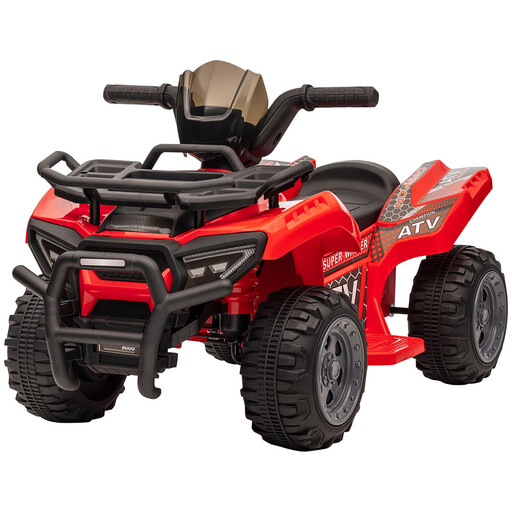
Why This Fits Their Persona: This quad bike is an ideal first ride-on for toddlers. Its simple, single-button forward motion and stable four-wheel design make it easy for little ones to operate independently and safely on patios or indoors.
It avoids the "one-size-fits-all" pitfall by being specifically designed for the 18-36 month age group. The 6V battery and 2 km/h top speed are perfectly matched to a toddler's developmental stage.
Its key advantage is its simplicity and stability. The low speed and wide wheelbase provide a secure first driving experience, building confidence without overwhelming the child.
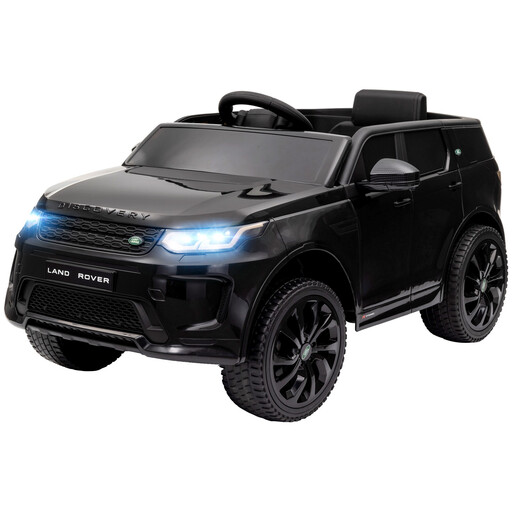
Why This Fits Their Persona: This is a classic choice for pre-schoolers. The 12V battery provides enough power for garden adventures, while the parental remote control offers peace of mind. Its licensed design and realistic features like lights and a horn make for an immersive experience.
It directly addresses safety concerns with a soft-start function to prevent jolts and a reliable remote for parental supervision. The 12V system is a realistic match for its advertised run time and performance on varied surfaces.
The dual-control system is its main strength. It allows the child to develop driving skills independently while letting the parent intervene instantly if needed, providing a safe and flexible way to play.
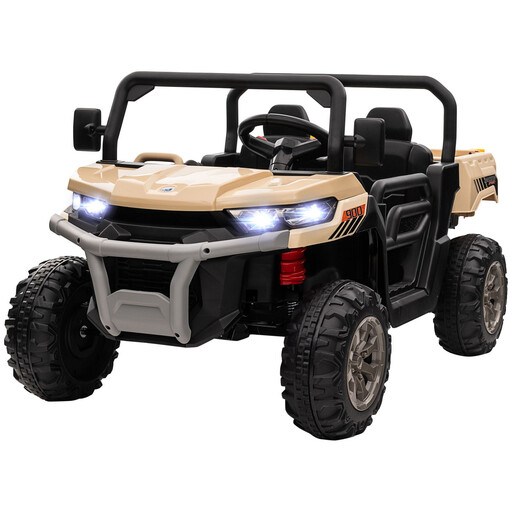
Why This Fits Their Persona: This UTV-style vehicle is built for two, making it perfect for siblings or friends to share adventures. The off-road design, spring suspension and rear storage bucket add to the practical fun for families with more than one young child.
It has a high maximum load capacity of 50kg and a robust 12V motor system designed to handle the weight of two children. This prevents the underperformance and battery drain that would occur if two kids tried to use a standard single-seater.
The two-seater capacity is the standout feature. It promotes social play and eliminates arguments over whose turn it is, making outdoor time more harmonious for everyone.
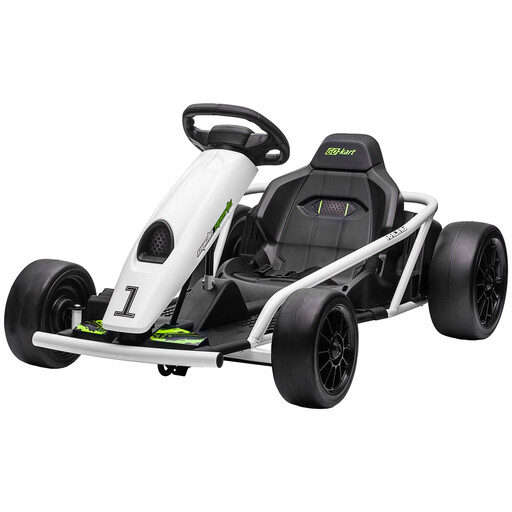
Why This Fits Their Persona: For older children who crave more excitement, this 24V electric go-kart delivers. With a top speed of up to 13 km/h and a special drift mode, it offers a genuine racing experience that standard ride-on cars cannot match.
This model is clearly defined for an older age group (8-12 years), avoiding the age-mismatch pitfall. The powerful 24V dual-drive motor is necessary to deliver the high speed and drifting capabilities that older kids desire.
The combination of high speed and a dedicated drift function provides a level of performance and excitement that keeps older children engaged. The sturdy steel frame and high weight capacity (70kg) ensure it's built to last.
We have compiled a complete, real-time list of products that fully satisfy these strict selection criteria and UK safety regulations.
The run time for most children's electric cars is typically between 40 and 60 minutes. However, this can vary significantly. A 6V car on a smooth, flat surface may run for longer, while a 12V or 24V car used on grass, carrying a heavier child or driven at top speed will drain its battery faster. Always check the battery's Amp-hour (Ah) rating if available—a higher Ah number generally means a longer run time.
Yes, when used correctly, they are a great safety feature. The remote allows a parent to override the child's controls, stopping the car or steering it away from obstacles. This is particularly useful for younger children who are still developing their coordination. Always ensure you stay within the remote's specified range and supervise your child at all times.
Most kids electric car models require some assembly. This usually involves attaching the wheels, steering wheel, seat and connecting the battery. The process is generally straightforward and takes around 30-60 minutes. Instructions are always included, but it's a good idea to check the product page for any specific notes on assembly before purchasing.