
24/7 Customer Support

Free returns

Same-day & Next-day Delivery

Quality Guaranteed

Unlock Your Welcome Offers: FREE Delivery | Up to 80% OFF | Free 30-day JoyPlus trial
Download the APP
A kids electric motorbike can offer exciting outdoor play, but choosing the wrong model may result in a toy that is too fast, too large or unsuitable for the intended surface. Parents and relatives should look beyond colours, music and realistic styling before buying a children’s electric motorbike.
The most useful comparison points are the child’s age and size, motor and speed settings, wheel design, battery runtime and the product’s listed safety information. This guide explains the practical differences between a 6V kids motorbike, a 12V kids motorbike and a larger 24V model, followed by product recommendations for different types of household.
A higher voltage does not automatically mean a better purchase. A 24V battery-powered motorbike for kids is generally designed for older and more confident riders, while a 6V ride-on may be more appropriate for a toddler. Speed, seat height, weight limit and throttle control all matter alongside voltage.
For example, a 6V model listed at 2 km/h may be easier for an 18-month-old to manage than a 12V children's electric motorbike capable of 5 km/h.
Ride time varies with the rider’s weight, surface, temperature, battery condition and how often the motor stops and starts. Charging may also take considerably longer than the play session. The products below list runtimes from around 30 to 45 minutes, but charging can take 8–12 hours.
Check whether the child will have enough space to ride and whether the family can recharge the battery between uses. Avoid buying solely because a listing uses phrases such as “long-lasting battery” without giving a stated runtime.
Training wheels help provide balance, but they do not prevent collisions, falls or poor judgement. A kids motorbike with training wheels is still a powered vehicle with moving wheels and a throttle or start button. Riding should take place on suitable private ground with an adult present, away from roads, steep slopes, ponds and other hazards.
Age guidance is a starting point rather than a substitute for checking fit. Compare the child’s height with the seat height and make sure they can sit securely while reaching the handlebars or throttle.
Always follow the manufacturer’s age and weight guidance. A child who is under the stated age or near the maximum load may not be a suitable match, even if the motorbike appears physically large enough.
For younger children, a fixed low speed or a manually adjustable range can make the first rides easier to manage. Older children’s models may include two or three speed settings, a twist-grip throttle and a mechanical brake.
Check whether the product has:
A 24V kids electric motorbike reaching 16 km/h should only be considered where there is suitable open space, protective equipment and close adult supervision. A helmet and suitable protective pads are sensible precautions, particularly for dirt-bike-style models.
Wheel design determines where the ride-on motorbike can be used. Wide textured wheels may suit smooth patios and firm outdoor surfaces for younger riders. Inflatable 12-inch tyres and rear suspension can provide more movement over brick, grass and gravel, but they also require more space and maintenance.
The listed models use combinations of PP and metal, with larger bikes featuring reinforced metal frames. Check the assembled dimensions before ordering: models measuring approximately 107–119 cm long may be difficult to store in a hallway or small shed.
Where a product listing includes them, EN71-1-2-3 and EN62115 are useful compliance references to review. They relate to toy safety and electrically operated toys, but buyers should still read the instructions, assembly requirements and supervision notes supplied with the individual product.
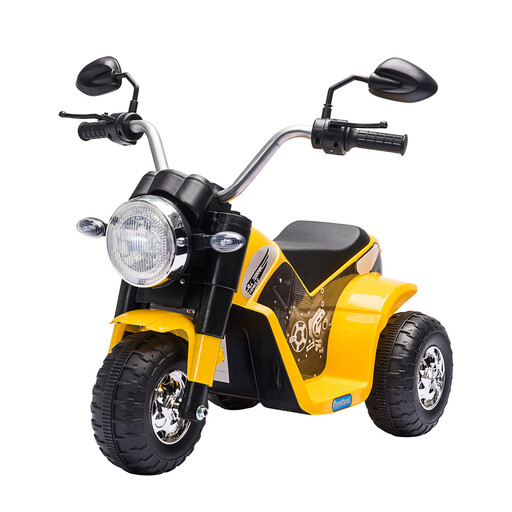
Why This Fits Their Persona: A straightforward first ride for toddlers aged 18–36 months, particularly for families wanting gentle garden or patio play.
Its maximum speed is stated as 2 km/h, avoiding the mismatch of buying a faster model for a very young rider.
Three textured wheels, a broad seat, forward/reverse buttons, headlights and a stated 45-minute runtime.
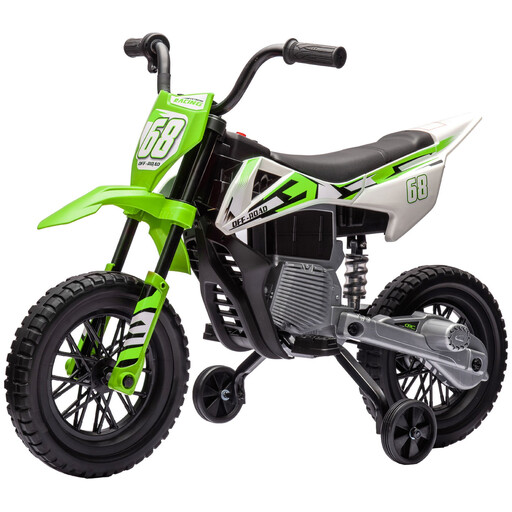
Why This Fits Their Persona: A feature-led option for ages 3–6 where parents want adjustable speed, music and a more motorcycle-like shape.
The manual throttle gives a stated 2.4–5 km/h range, while training wheels address the balance issue often missed in appearance-led purchases.
Dual 12V motors, rear shock absorption, power indicator and built-in music. The listing states EN71-1-2-3 and EN62115 compliance.
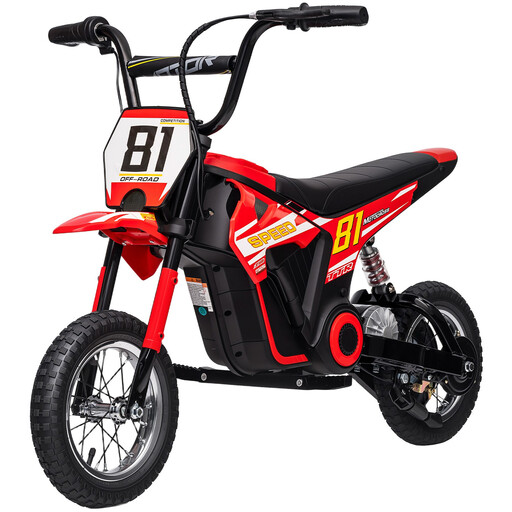
Why This Fits Their Persona: Designed for older riders aged 8–12 who have access to suitable private paths, firm grass or gravel areas.
The listing specifies three speed settings, rather than presenting one high maximum speed without adjustment.
A 24V 250W motor, 12-inch inflatable tyres, rear suspension, twist-grip throttle, 65 kg maximum load and stated runtime of up to 40 minutes.
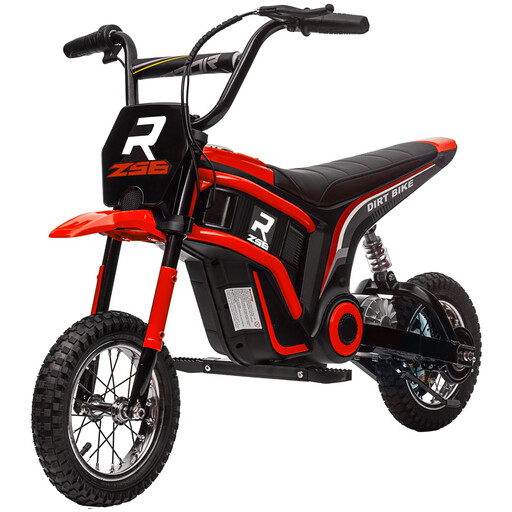
Why This Fits Their Persona: A practical match for older children who want a more substantial ride-on motorbike with manual controls and outdoor-focused wheels.
It specifies two selectable speeds, a mechanical brake handle and a holding brake, rather than relying only on decorative features.
12-inch pneumatic tyres, shock absorption, reinforced steel frame, music, horn and a stated 30-minute runtime.
We have compiled a complete, real-time list of products that fully satisfy these strict selection criteria and UK safety regulations.
Before the first ride, assemble the bike on a level surface and check the handlebars, wheels, throttle, brakes and battery connection. Charge the battery according to the manual rather than leaving it connected indefinitely. Store the motorbike in a dry place, and inspect pneumatic tyres for pressure and damage if fitted.
For UK households, remember that a ride-on toy is not intended for public roads, pavements or cycle paths. Use a suitable private area, keep the rider away from traffic and supervise every session. Battery replacement, charging time and tyre maintenance should also be considered when comparing the overall cost of ownership.
The listed models provide approximately 30–45 minutes of continuous play per full charge. Actual runtime depends on load, terrain, speed and battery condition. Charging commonly takes 8–12 hours, so overnight charging may be convenient, provided the manufacturer’s instructions are followed.
The supplied 12V models are recommended for children aged 3–6 years, with a stated maximum load of 30 kg. Check the child’s physical fit, confidence and ability to follow instructions before purchase, and always supervise riding.
Some larger models are specified for firm grass, brick and gravel, particularly those with 12-inch inflatable tyres and rear suspension. Surface suitability is not a guarantee of control, however. Avoid steep, wet or loose ground, and select the lowest speed while the child is learning.