
24/7 Customer Support

Free returns

Same-day & Next-day Delivery

Quality Guaranteed

Unlock Your Welcome Offers: FREE Delivery | Up to 80% OFF | Free 30-day JoyPlus trial
Download the APP
Watching a child’s face light up as they take the wheel of their very own electric car is a priceless moment. However, the journey to that moment can be filled with confusing choices and marketing claims that don't always hold up. Many well-meaning parents and grandparents in the UK find themselves with a toy that's either too fast, too slow or gathers dust after a few weeks.
As the Joybuy Product Recommendation Officer, my role is to help you navigate this market. Before you add anything to your basket, let’s look at the common pitfalls that can lead to disappointment and how to sidestep them.
To make a confident choice, focus on these key technical specifications. They are the true indicators of performance and safety, far more than flashy colours or brand names.
The voltage of the battery powered car for kids dictates its power and suitability for different environments.
6V (Volt) Models: These are designed for the youngest drivers, typically in the 18-36 month age bracket. They offer gentle acceleration and a lower top speed, usually around 2-3 km/h (a brisk walking pace). A 6V ride on quad is an excellent choice for use on hard, flat surfaces like pavement, patios or indoors. They generally lack the torque for uneven ground or grass.
12V (Volt) Models: A 12V ride on car provides a noticeable step up in power. Suitable for children aged 3 years and up, these models can handle more varied terrain, including short grass and gentle slopes. They often feature multiple speed settings, with top speeds reaching 5-8 km/h and provide a more thrilling experience for a growing child.
Beyond the battery, the physical design is critical for a safe and lasting toy.
Instead of a generic list, we've matched specific models to the families they would suit most, based on the practical considerations we've just discussed.
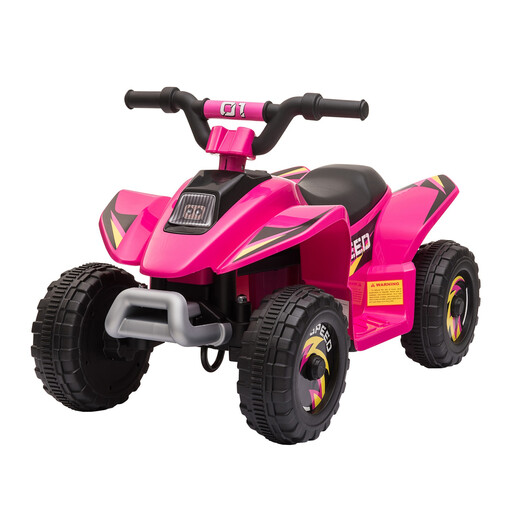
Why This Fits Their Persona: Ideal for a toddler's first ride-on experience. The quad bike design is exceptionally stable, and the simple forward/reverse controls are easy for little hands to master. It's designed for gentle fun in the garden or on the patio.
Its 6V battery and 2.8-4.6 km/h speed are perfectly matched to the 18-36 month age range, avoiding the "too fast, too soon" pitfall. It doesn't try to be a one-size-fits-all solution.
The four large, wear-resistant wheels and low profile provide excellent stability, reducing the chance of tipping. Simple button operation builds confidence.
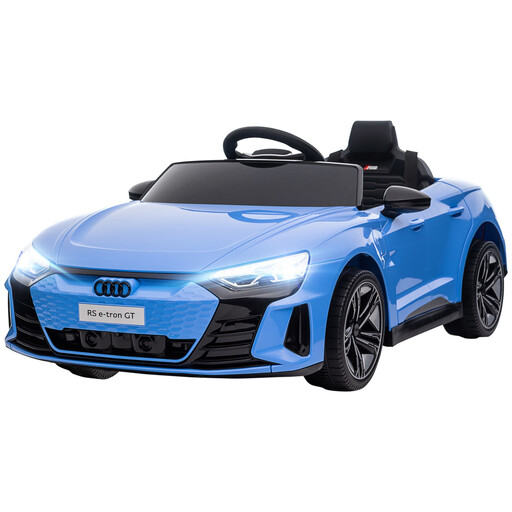
Why This Fits Their Persona: For children aged 3-5 who are ready for more. The realistic licensed design, LED lights and music ports provide an immersive experience, while the 12V battery offers the power needed for garden adventures.
It includes a full-function parental remote control with three speed settings, giving parents complete oversight and peace of mind. This directly counters the "missing remote" pitfall.
Features soft-start technology and shock-absorbing suspension for a smooth, comfortable ride. The dual manual/remote operation allows it to grow with the child's ability.
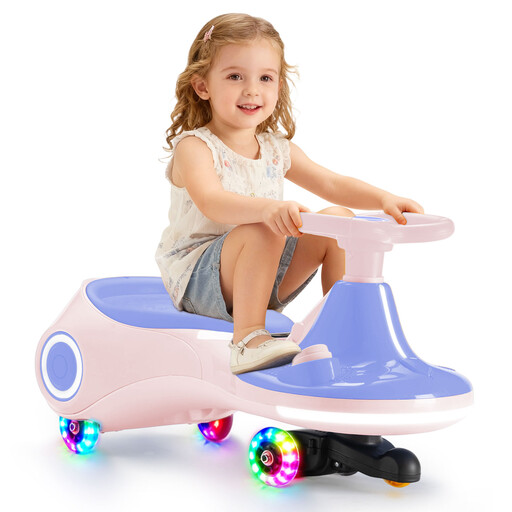
Why This Fits Their Persona: For families seeking more than a simple ride-on. This innovative toy combines a powered scooter with a rocking mode, offering multiple ways to play. It's a versatile choice for active kids aged 3 and up.
With 3 adjustable speed levels, it adapts to a child's growing skill and confidence. This avoids the problem of a toy being outgrown too quickly, providing better long-term value.
The anti-rollover design with a wide wheelbase and low centre of gravity enhances stability. It also features Bluetooth music and flashing wheels for extra sensory fun.
We have compiled a complete, real-time list of products that fully satisfy these strict selection criteria and UK safety regulations.
On average, you can expect around 45 to 60 minutes of continuous playtime from a fully charged battery. This can vary based on the model, the terrain it's used on and the weight of the child. A full recharge typically takes between 8 and 12 hours, so overnight charging is often the most convenient approach.
This largely depends on the battery's voltage. A 12V ride on car usually has sufficient power to run on short, dry grass and other slightly uneven surfaces. In contrast, 6V models are designed for optimal performance on hard, flat surfaces like concrete or tarmac and may struggle on lawns.
Most ride-on toys require some straightforward adult assembly. This typically involves attaching the wheels, steering wheel, seat and connecting the battery. It is crucial to read the instruction manual carefully and ensure all components are securely fastened before allowing a child to use the vehicle for the first time.