
24/7 Customer Support

Free returns

Same-day & Next-day Delivery

Quality Guaranteed

Unlock Your Welcome Offers: FREE Delivery | Up to 80% OFF | Free 30-day JoyPlus trial
Download the APP
Watching a child’s face light up as they take the wheel of their very own car is a priceless moment. However, choosing the right kids electric ride on car can feel like navigating a minefield of marketing claims and confusing specifications. Many parents and grandparents find themselves with a gift that disappoints within weeks, either because it can't handle the garden lawn or the battery dies before the fun has even begun.
As the Joybuy Product Recommendation Officer, my role is to help you sidestep these common issues. Before you add that shiny new car to your basket, let’s look at the three most common pitfalls that lead to buyer's remorse and how you can make a smarter choice.
The "All-Terrain" Illusion: Many models are advertised with rugged-looking tyres, suggesting they can conquer any surface. The reality is that most entry-level cars lack the motor power and wheel traction for anything beyond a smooth patio or driveway. They quickly get stuck on grass or gravel, leading to frustration for both child and parent. The key is to match the motor power and wheel design to your intended use, not the marketing photos.
The Battery Life Disappointment: A box might claim "45 minutes of playtime," but this figure is often based on ideal, non-stop conditions. In the real world, with frequent stops, starts and features like music and lights running, you may find the actual runtime is significantly shorter. This is particularly true for underpowered models, which drain the battery faster on imperfect surfaces. An 8-12 hour charge for 20 minutes of play is a common complaint.
Prioritising Style Over Safety: It's easy to be drawn to a miniature replica of a luxury sports car, but the most important features are often the least glamorous. For younger children, the absence of a ride on car with remote control, a stable design or a soft-start function can turn a fun toy into a safety hazard. A flashy design is no substitute for fundamental safety engineering.
To avoid the traps above, focus your attention on a few core technical specifications. These details will tell you more about a car's real-world performance than any glossy product description.
This is the single most important factor determining a car's power and suitability.
6V Ride On Car: A 6v ride on car is the standard for a first toddler ride on car. They typically have a top speed of around 2-3 km/h (a brisk walking pace). This gentle speed is ideal for children aged 18 to 36 months, providing a fun but manageable experience on flat, hard surfaces like pavement or indoor flooring. They are not well-suited for grass or inclines.
12V Ride On Car: A 12v ride on car offers a significant step up in power. With top speeds of 3-5 km/h and more torque, these models can better handle varied surfaces like short grass and gentle slopes. They are generally recommended for children aged 3 to 5 years who have mastered the basics and are ready for a bit more adventure.
For any battery powered car for kids, especially for toddlers, certain safety features are non-negotiable.
Instead of a one-size-fits-all approach, we've matched a few standout options to different family needs and priorities.
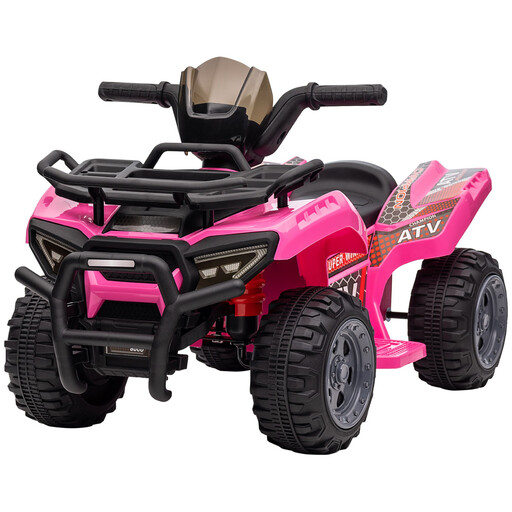
Why This Fits Their Persona: This is an ideal first ride-on for a toddler aged 18-36 months. Its quad bike design provides excellent stability and the simple, single-button forward control is easy for little ones to master.
It avoids the "all-terrain" trap by being designed specifically for flat surfaces. The 2 km/h speed and 6V battery are perfectly matched, setting realistic expectations for performance and runtime.
Its primary advantage is its stability. The four wide, textured tyres and low centre of gravity minimise the risk of tipping, building confidence in new riders.
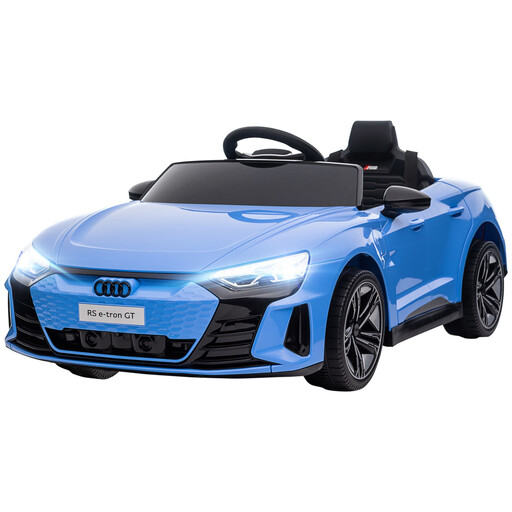
Why This Fits Their Persona: For children aged 3-5, this 12V model offers a more realistic driving experience. The dual-speed manual control and 3-speed remote give parents options, while the shock-absorbing suspension provides a smoother ride on garden lawns.
It directly counters the safety trap by including a three-point seatbelt, soft-start technology and a parental remote control. The 12V battery also provides enough power to avoid the frustration of getting stuck on grass.
The dual-control system is its main strength. It allows children to feel independent while giving parents ultimate peace of mind and control over speed and steering.
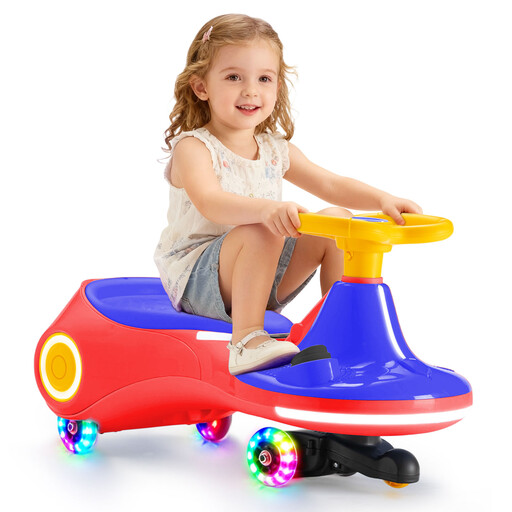
Why This Fits Their Persona: This is for the family seeking more than a simple car. Its 2-in-1 design functions as both a powered scooter and a gentle rocker, offering more play value and longevity. It's a versatile toy for indoor and outdoor fun.
By being a multi-functional toy, it sidesteps the single-purpose limitations of a basic ride-on car. The fun isn't solely dependent on driving, as the rocking mode and music features provide alternative entertainment.
Its versatility is the main draw. The combination of a powered ride, rocking motion, Bluetooth music and flashing wheel lights creates a comprehensive entertainment experience.
We have compiled a complete, real-time list of products that fully satisfy these strict selection criteria and UK safety regulations.
Yes, provided you choose an age-appropriate model and supervise its use. For toddlers (18-36 months), a 6v ride on car with a low top speed is recommended. Always look for models with a parental remote control, a stable wheelbase and a seatbelt. Adult supervision is essential at all times.
Most models offer a playtime of 45 to 60 minutes under ideal conditions. However, factors like the child's weight, the driving surface and the use of lights or music will affect the actual runtime. Most batteries require a charging time of 8 to 12 hours. To prolong battery life, avoid fully depleting it and ensure it is charged at least once a month, even when not in use.
This depends on the model's voltage. A 6V ride on car is designed for hard, flat surfaces and will likely struggle on grass. For reliable performance on a typical garden lawn or slight inclines, a 12V ride on car with a more powerful motor and better wheel traction is the more suitable choice.