
24/7 Customer Support

Free returns

Same-day & Next-day Delivery

Quality Guaranteed

Unlock Your Welcome Offers: FREE Delivery | Up to 80% OFF | Free 30-day JoyPlus trial
Download the APP
A ride-on vehicle can be an exciting birthday present, but choosing among kids electric ride-on cars requires more than comparing colours and realistic badges. A model may look impressive in photographs yet be unsuitable for your child’s size, difficult to move after the battery runs flat or lack the parental controls needed for outdoor play.
This guide explains the specifications worth checking, common buying traps and three options matched to different family needs.
Age ranges are useful starting points, but they do not replace checking the maximum load, seat measurements and seat height. A ride-on car for ages 3-6 may have a 25kg or 30kg capacity, while a larger two-seater may support up to 50kg. Compare these figures with your child’s current size and allow room for comfortable use.
Also check whether the listing gives both an approved age and a recommended age. Some models are certified for a wider range but specifically recommended for younger children.
A 12V ride-on car for kids is common for one child and generally offers a practical balance between speed, battery size and outdoor usability. A 6V model may be suitable for younger or smaller riders, while a 24V vehicle can provide more power for two riders or uneven surfaces.
Voltage alone does not determine suitability. Motor configuration, weight capacity, terrain, speed settings and charging time all matter. A faster two-seater is not automatically appropriate for a nervous first-time rider.
Marketing often focuses on lights, music and licensed styling. However, a ride-on car may be more than one metre long and require several hours to charge. Measure your storage space, access route and charging location before ordering.
A remote control is useful, but it does not replace adult supervision. Look for soft-start or slow-start, forward and reverse controls, adjustable speed and a seatbelt. Features such as auxiliary wheels, a drawbar or a handle can also make a heavy battery-powered ride-on car easier to move when switched off.
Product descriptions commonly quote ride time under particular conditions. Figures such as 40, 45, 60 or 80 minutes can vary according to rider weight, terrain, speed and use of lights or music. Charging may take 8-12 hours, so consider whether the car will be used once per day or only occasionally.
A 12V dual-motor model can suit paved gardens, driveways and parks, provided the surface is appropriate. For grass, gravel or carrying two children, check whether the vehicle includes four motors or spring suspension rather than relying only on the voltage.
A kids ride-on car with remote control normally allows the child to steer and use the pedal, while an adult can take over. Check the stated range: the products below list remote distances from 15m to 25m. This is most useful when the car remains within clear sight and the adult can react promptly.
Three-speed remote settings may offer more control than a simple on/off function. A stop button, slow-start system and forward/reverse operation are practical features for driveways and enclosed outdoor areas.
Look for a seatbelt, wide tyres, stable wheel placement and suspension where available. The supplied product information lists EN71-1-2-3 and EN62115 on several models, with some also listing EMC or other qualifications. Treat these details as part of your purchasing check, and follow the supplied manual, charging instructions and supervision guidance.
Do not allow a child to ride on public roads. Check the surface, nearby traffic, slopes, steps and obstacles before every use.
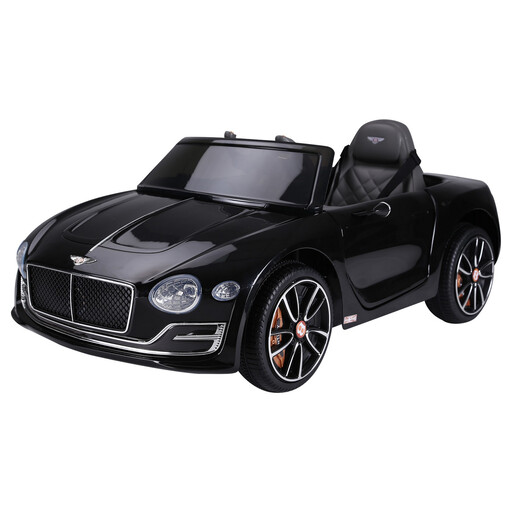
Why This Fits Their Persona: A straightforward licensed kids electric car for a first ride-on experience, suitable for children aged 3-5 years and compact enough for many UK gardens or driveways.
It includes a remote control, seatbelt, pedal-operated forward and reverse movement, a stop button and a battery indicator, rather than relying on styling alone.
12V system, up to 45 minutes of stated ride time, rear-wheel suspension, LED lights and MP3 functionality. Maximum load is 30kg.
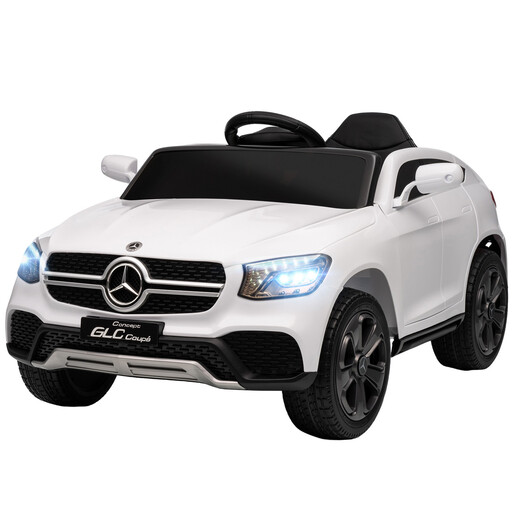
Why This Fits Their Persona: Suitable for families prioritising longer play sessions, realistic controls and a polished licensed design for children aged 3-6 years.
Its soft-start system addresses sudden acceleration, while the remote control offers adult operation within a stated 15m range.
Two 25W motors, 3-5km/h speed settings, LED lights, MP3, horn and a stated 60-80 minutes of riding time. Maximum load is 25kg.
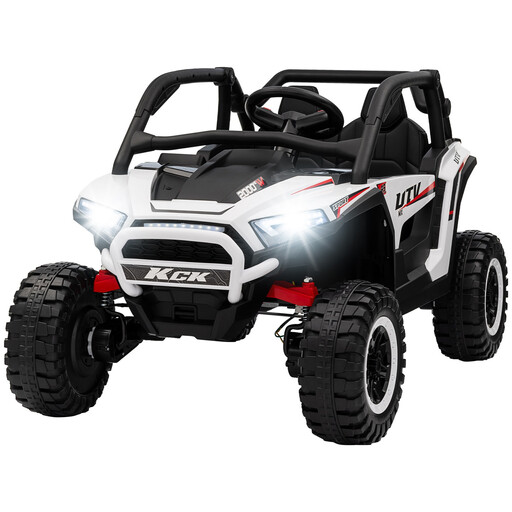
Why This Fits Their Persona: A two-seater kids ride-on truck for siblings or friends, with a larger frame and specification suited to more demanding outdoor play.
The specification clearly states two seats, a 50kg maximum load, adjustable speed and parental remote control, helping buyers check capacity before ordering.
24V 7Ah battery, four motors, spring suspension, 5-7km/h speed range and up to 60 minutes of stated ride time.
We have compiled a complete, real-time list of products that fully satisfy these strict selection criteria and UK safety regulations.
Electricity use is generally linked to the battery capacity and charging frequency, but the exact cost depends on your tariff and how often the car is charged. A full charge may take several hours, so check the battery rating, stated run time and charging instructions. Repeated short rides may still require regular charging.
There is no single lifespan for every model. Battery condition, storage temperature, charging habits, rider weight and surface type all affect performance. Avoid leaving the battery fully depleted for long periods, use the supplied charger and check whether replacement batteries are available before purchase.
Many models offer manual driving through a pedal and steering wheel, but a parental remote control ride-on car gives an adult an alternative control mode. Always supervise the child, start at the lowest suitable speed and use the remote when the environment becomes difficult to manage.