
24/7 Customer Support

Free returns

Same-day & Next-day Delivery

Quality Guaranteed

Unlock Your Welcome Offers: FREE Delivery | Up to 80% OFF | Free 30-day JoyPlus trial
Download the APP
Choosing a kids electric toothbrush can make daily brushing easier, but the wrong model may be uncomfortable, difficult to maintain or unsuitable for your child’s age. Marketing often focuses on character designs, vibration speeds and app features, while the details that affect everyday use can be easier to miss.
Before buying a children's electric toothbrush, check the age range, brush-head size, bristle softness, power source and availability of replacement heads. These details usually matter more than a flashy colour or a long list of modes.
A familiar character may encourage a child to brush, but it does not confirm that the toothbrush is suitable for their mouth. A model designed for ages 6+ may have a handle or brush head that is too large for a toddler. Always check the stated age range and supervise use, particularly with younger children.
High vibration figures can sound impressive, but children generally need a comfortable, manageable brushing experience. A powerful adult sonic toothbrush may not be appropriate as a toddler electric toothbrush. Look for soft bristles, a child-sized head and gentle operation rather than focusing only on strokes per minute or VPM figures.
The purchase price is only part of the cost. Check whether the brush head is replaceable, how often it should be changed and whether replacements are easy to find. Some battery-powered kids toothbrushes also require regular AA or AAA batteries, while a rechargeable kids toothbrush may reduce battery waste but require access to a charger.
Age guidance is a starting point for selecting an electric toothbrush for ages 3+ or an electric toothbrush for ages 6+. Younger children may need a smaller head and lighter handle. For babies and toddlers, use only products specifically described for that age group, such as a baby electric toothbrush designed for small mouths.
A child should not chew the brush head, and an adult should inspect it before use. Stop using the product if the head is damaged or the bristles become worn.
A soft-bristle children's toothbrush is generally more comfortable for developing teeth and gums. Extra-soft or soft nylon bristles should be paired with gentle brushing pressure. A pressure sensor can be useful for older children who are learning technique, although not every children's toothbrush includes one.
Avoid treating a waterproof rating as permission to submerge every part of the product. Follow the manufacturer’s instructions for rinsing, charging and storage.
A kids toothbrush with timer can help children work towards a complete two-minute routine. Some models provide a pulse every 30 seconds, prompting the user to move to another section of the mouth. Simple one-button controls may suit younger children, while older children may appreciate multiple modes or app-supported encouragement.
Also check the power arrangement. A battery-powered kids toothbrush is convenient for travel and does not need a charging stand. A rechargeable model may be more practical for regular home use, provided the charger is stored safely and kept away from water.
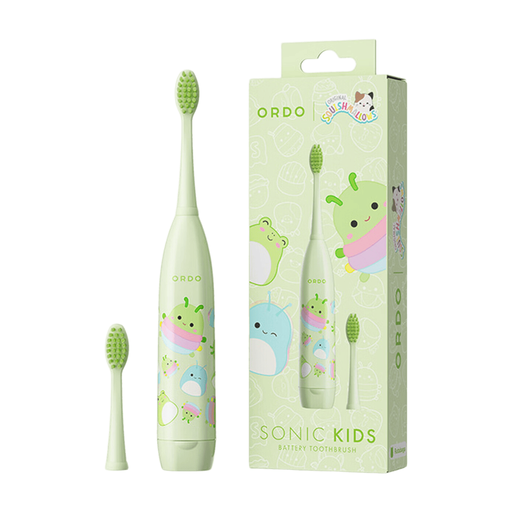
Why This Fits Their Persona: A straightforward option for families wanting a character-themed sonic toothbrush for children without a charging stand. It is designed for children aged 4+ and uses one AA battery, which can be convenient for holidays or occasional use.
The age guidance and soft-bristle description help distinguish it from adult sonic models, while the battery format avoids an additional charging accessory.
Ages 4+ suitability; lightweight handle, soft bristles and simple one-button operation.
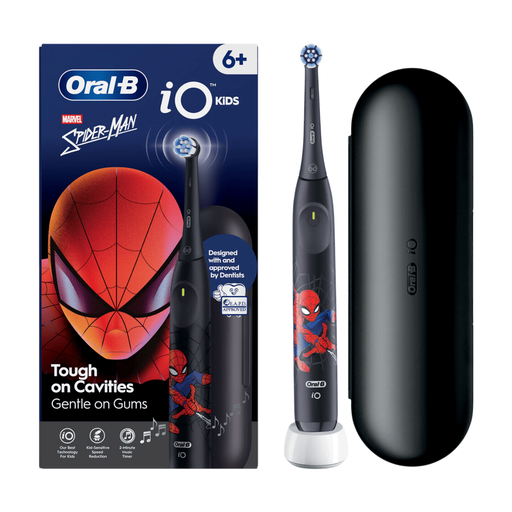
Why This Fits Their Persona: Suitable for children aged 6+ who may benefit from a rechargeable handle, several gentle modes and more feedback during brushing. The included travel case also suits families who regularly visit relatives or travel.
The product specifies three gentle modes and a pressure sensor that slows the brush when excessive pressure is detected, rather than relying only on vibration claims.
Rechargeable battery; three modes, pressure sensor, two-minute timer and travel case.
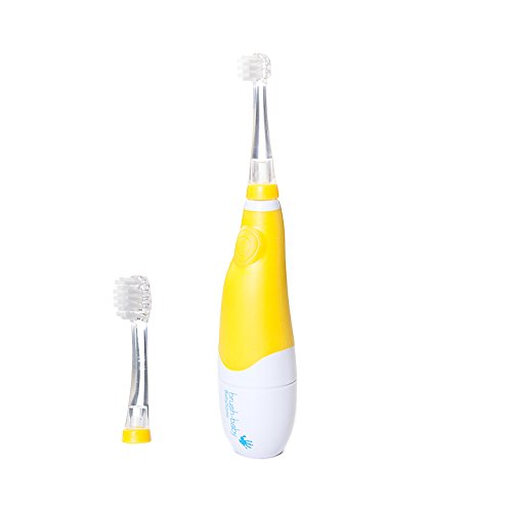
Why This Fits Their Persona: Made for babies and toddlers aged 0–3, this compact model is intended for small mouths and early brushing routines. Its light timer and 30-second pulses provide simple prompts for parent-guided brushing.
The 0–3 age range, baby and toddler brush heads and soft bristles make it more age-specific than a general children's toothbrush.
0–3 suitability; soft bristles, gentle vibrations, suction base and two-minute light timer.
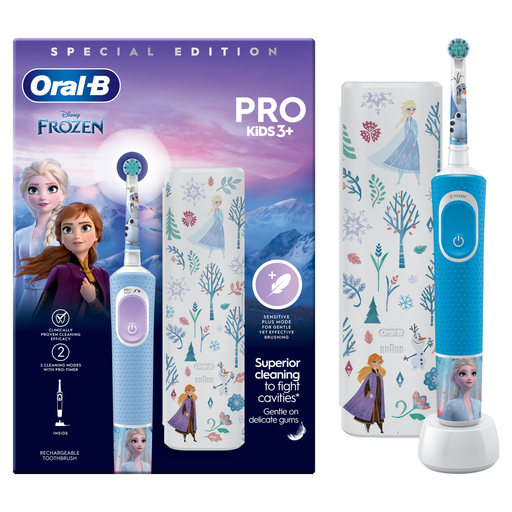
Why This Fits Their Persona: This rechargeable children's toothbrush is aimed at ages 3+ and includes a travel case, making it useful for family holidays, weekends away and overnight stays.
The product clearly lists its age range, extra-soft bristles, gentle mode and travel case, helping shoppers check practical details before buying.
Ages 3+; two modes, extra-soft bristles, 30-second zone reminders and included travel case.
We have compiled a complete, real-time list of products that fully satisfy these strict selection criteria and UK safety regulations.
Some models are designed for babies and toddlers, but not every electric toothbrush is suitable. Choose a product with an explicit 0–3 or toddler age range, a small head and soft bristles. Adult supervision is essential, and the child should be able to follow instructions and avoid chewing the head.
The handle may last considerably longer than the brush head, but service life depends on battery condition, charging habits and general wear. Inspect the handle, head, charger and cable regularly. Replace brush heads approximately every three months, following the product instructions.
A battery-powered model usually has a lower initial commitment and is convenient when travelling, but ongoing AA or AAA battery costs can add up. A rechargeable kids toothbrush avoids disposable batteries during normal use, although it may include a charging stand and require a suitable UK plug or adapter. Compare the full package, replacement heads and charging arrangements before deciding.