What matters when choosing?
Decide where the child will play and who will manage their account before comparing hardware. The console, tablet, smartphone and computer routes then call for different day-to-day supervision arrangements.
Games console
Consider it: When play can be centred on a device in an agreed household location.
Account distinction: Nintendo says Switch parental restrictions apply to the console rather than individual users; PlayStation and Xbox describe family-member account controls.
Tablet
Consider it: When a portable device for the intended games fits the household’s supervision routine.
Check: Apple Family Sharing or a supervised Google Account needs setting up, and store approval does not establish coverage of every payment route.
Smartphone
Consider it: When the child also needs a phone for communication beyond gaming.
Trade-off: Portable, personal use makes shared-room visibility harder to rely on; check phone communication and in-game chat separately.
Laptop or desktop
Consider it: When the same computer will also be used for other household tasks.
Check: Microsoft documents app and game limits for connected Windows devices, but browser services and individual game accounts need separate attention.
| Concern |
What to check |
Who this matters to |
| Location and shared use |
Choose the intended room and check the screen, power and network arrangement needed there. Decide whether several people will share the device. |
If I want to see when play starts and hear online conversation, I need a location the family will actually use. About 33% of consumers put visible, shared use first. |
| Chat and friends |
Check child-account communication permissions and the intended game’s separate chat and friend settings. |
When a child starts playing with others online, I want to manage who can contact them without assuming a device setting covers every game. For about 27% of consumers, control over communication is the primary need. |
| Purchase permissions |
Check which downloads, subscriptions, renewals and payment routes require approval before adding payment details. |
I need to know whether an adult will be asked before the child makes a purchase through the services they use. Purchase approval comes first for about 20% of consumers. |
| Accounts and wider use |
Confirm that the child can use a separate supervised account. For Windows, check app, game and website settings individually. |
If the device will serve gaming and other household tasks, I need the child’s account to remain manageable across those uses. About 20% of consumers prioritise account separation and flexible use. |
Joybuy computers and tablet
These choices cover gaming desktops and laptops for the computer route, plus an Android tablet for portable use. Choose the household setup and intended games first; hardware specifications alone do not establish whether their chat or purchase controls will meet your needs.
 Image unavailable
Stormforce Defiance Ryzen 7 5700X, RTX 5070 desktop
Consider this desktop if the family wants a computer that can be kept in an agreed location for gaming. Set up a separate Windows child account and check the intended games’ own online settings.
- 32GB RAM, 2TB SSD and Windows 11 are stated in the product name.
- Check whether a monitor and other peripherals are included before planning the setup.
View on Joybuy
 Image unavailable
Lenovo Legion Pro 7 16IAX10H, RTX 5090 laptop
This laptop offers a computer route that can be used in different household locations. Decide where online play will take place and configure the child’s Windows account before use.
- The product name specifies a 16-inch display, Intel Core Ultra 9, 64GB RAM, 2TB SSD and Windows 11 Home; the listed variant is 83F5000UUK.
- Check the intended games’ chat and payment controls separately, and keep cooling vents unobstructed during use.
View on Joybuy
 Image unavailable
ASUS ROG Zephyrus G14 GA403WR-QS088W
Consider this Windows laptop if the household wants a computer that can move between agreed locations. Its mobility makes the supervision routine, child account and game-specific settings important.
- The product name specifies a 35.6 cm (14-inch) WQXGA+ display, Ryzen AI 9 HX 370, 32 GB RAM, 2 TB SSD, GeForce RTX 5070 Ti, Wi-Fi 7 and Windows 11 Home.
- This variant is listed in German Grey; confirm the intended games and account controls before online play.
View on Joybuy
 Image unavailable
Lenovo LOQ Essential 15ARP11, RTX 5050 laptop
This gaming laptop suits a household choosing a movable Windows computer rather than a fixed-room setup. Agree where it can be used and configure family controls on the child’s account.
- The product name lists an AMD Ryzen 7 170, 16GB RAM, 1TB SSD and a 15.6-inch 144Hz FHD display.
- Check each intended game’s settings; the listed hardware does not establish performance at particular game settings.
View on Joybuy
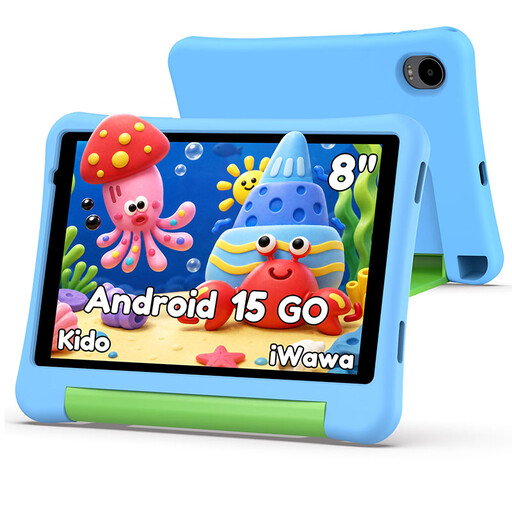 Image unavailable
Alldocube Kido 8-inch Android 15 tablet, blue case
This tablet is a portable option if the intended online games work on it and the household can supervise use across locations. The listed Child Lock is not, by itself, evidence of chat or purchase coverage; check its settings and the supervised account setup.
- The product name lists 3GB RAM, 32GB storage, Wi-Fi, a 5000mAh battery and a protective case.
- No adapter is included. Check that a compatible adapter is available, and verify game compatibility before choosing the tablet.
View on Joybuy
Questions parents ask
Can my child use my adult platform account?
Set up an individual child or supervised account for the controls you intend to use. Apple advises against sharing a family member’s Apple Account with a child; PlayStation ties its controls to accounts, while Nintendo and Xbox use family-account arrangements for key restrictions. Sign in as the child to test the setup.
Will device controls stop chat in every game?
Do not assume they will. PlayStation documents restrictions on platform communication, and Xbox lets organisers manage who can communicate with a family member. Check the specific game’s voice chat, messaging, friend and reporting settings before online play.
Does purchase approval cover every in-game payment?
No single store setting should be treated as covering every payment route. Apple’s Ask to Buy applies to eligible requests in its family setup, while Google says its purchase approval covers purchases using Google Play billing. Check subscriptions, publisher accounts and other payment methods separately.
What should I set up before the first online game?
Agree where the device will be used, create the child’s separate account and configure the applicable content, communication and purchase permissions. Then check the intended game’s own settings and test the restrictions while signed in as the child.
Do PEGI ratings determine whether a device suits my child?
No: a game rating describes the game, not the suitability of the device or its account setup. The UK government’s Kids Online Safety campaign states that games rated PEGI 12, 16 or 18 cannot be sold or hired to someone below the stated age. Check each intended game’s rating and content descriptors alongside its online features.


