Families choosing a first online-gaming device
If a child is moving from offline games to online play, compare the games available on each device alongside its child-account setup, spending permissions and communication settings.


Start with the games your child wants to play and whether their friends can join them on the same platform. A console keeps the choice centred on a gaming account; a tablet, phone or Windows PC may make more sense when the device has other everyday uses. Whichever route you choose, set up an accurately dated child account and check spending, playtime and communication settings for both the platform and each intended game.
If a child is moving from offline games to online play, compare the games available on each device alongside its child-account setup, spending permissions and communication settings.
Voice chat, messages, friend requests and multiplayer access need attention beyond a game’s age rating. Ofcom identifies contact with strangers and bullying among UK parents’ concerns about online gaming.
Look for controls that fit your arrangements for playtime, downloads and purchases, then check which settings apply to the device, the child’s account and individual games.
Choose the device route by its intended uses, then check the child-account and game settings that will govern online play. Ofcom notes that parental controls differ between connected devices.
| Priority | What to check | Your needs |
|---|---|---|
| Games and friends | Check each game’s supported devices, multiplayer features and whether friends can play together across platforms. Confirm any account or membership requirement for that game. | Will the child be able to play the games they want with the people they know? A device’s general gaming capability does not settle that question. |
| Device purpose | Compare a gaming-focused console with a tablet for other apps, a phone for calling and messaging, or a Windows PC for PC games and other computer tasks. Check the controls for each use you intend to allow. | Is this mainly for games, or will it also be a device for reading, schoolwork or staying in touch? That wider role changes which accounts and apps need managing. |
| Child account and content | Create a separate child account with the correct date of birth where the platform supports it. Check the family organiser role, age-based content settings and the PEGI rating of each game. | I want restrictions and approval requests to apply to my child’s account, rather than relying on an adult’s shared profile. |
| Communication | Review platform and game settings for voice, text, friends and multiplayer. Nintendo UK says some Switch 2 communication restrictions do not apply to GameChat, which has separate settings. | Who can contact my child during play, and how can they report an upsetting interaction? I need to check the games themselves as well as the device. |
| Purchases and online access | Check store approvals or spending limits and the intended game’s online-membership terms. Nintendo UK says many Switch games require Nintendo Switch Online for online features; PlayStation says certain games require PlayStation Plus. Xbox Support describes a Game Pass requirement for console online multiplayer, except free-to-play titles. | I want to approve eligible purchases and know whether the games my child plans to play have a separate online-access requirement. |
| Playtime | Check whether limits apply to the whole device, an account or a particular app or game, and how extra-time requests work. Google says Family Link app limits do not cover system apps. | A schedule needs to work across the activities my child will actually use, not just one game. |
The chosen device may not offer a particular game or the way the child expects to play with friends.
List the intended games and check supported devices, cross-play, chat, PEGI ratings and online-access requirements before choosing a platform.
Online multiplayer in many console games requires a separate membership; requirements and exceptions depend on the game and platform, according to Nintendo UK, PlayStation and Xbox Support.
Age-related settings and family permissions can depend on whose account is signed in. Ofcom advises that a platform needs the child’s correct registered age to apply age-based features appropriately.
Create a separate child account with accurate birth details, add it to the relevant family group and keep the adult organiser sign-in separate.
Games and services can have their own communication settings. Nintendo UK specifically says some Switch 2 restrictions do not apply to GameChat.
Open each intended game’s settings and review voice and text chat, friends, multiplayer, reporting and purchases before online play.
Settings alone do not tell a child what to do about an upsetting message or an unfamiliar player. Ofcom and PEGI both emphasise discussion alongside controls.
Agree who the child can play with, what information stays private and when to report an interaction or ask an adult for help. Revisit those rules when games or features change.
These platform references help you compare account setups; they do not indicate which devices are available in the product selection below.
Nintendo Switch and Switch 2 use console settings and a Parental Controls app for family management.
PlayStation family management uses child accounts and the PlayStation Family app.
Xbox family settings and Microsoft Family Safety offer account-based controls for Xbox and supported Microsoft services.
An iPad or iPhone can be managed through a child Apple Account, Family Sharing and Screen Time.
Family Link is relevant to supervised Google accounts on Android devices; Google Play has separate purchase-approval settings.
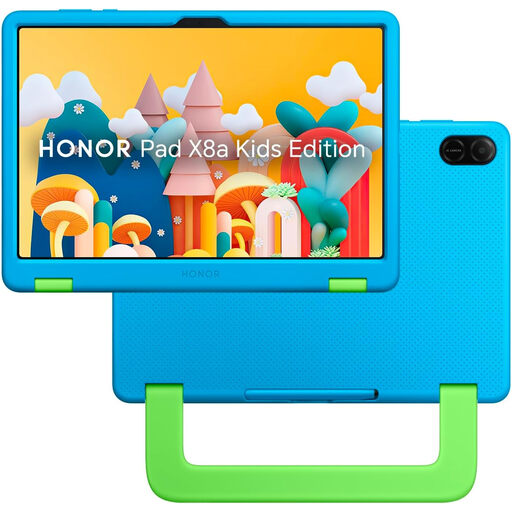
These three tablets represent the tablet route for a child who may play online games and use other apps. Check the intended games and the child-account controls on the exact device before choosing; this selection does not compare console, phone or PC models.
 No image available
Consider this Wi-Fi tablet if the child will use an 11-inch screen for games and other activities.
The listing states 4GB RAM and 128GB storage and describes parent setup of a child account, time limits and content filtering. Confirm which controls work on the delivered software, and check the intended games’ chat and multiplayer settings.
 No image available
This tablet is an option to investigate when games and other tablet uses call for a larger screen.
The listing states a 12-inch FHD+ display, 90Hz refresh rate, Helio G100 processor, Wi-Fi and a SIM slot. Confirm the delivered RAM and storage configuration, available child-account controls and compatibility with the intended online games.
 No image available
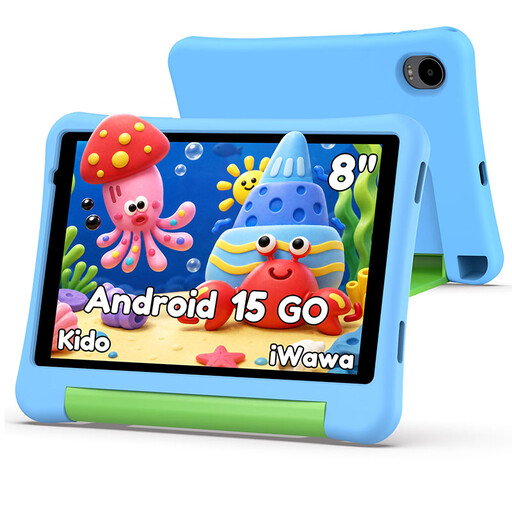
This child-focused tablet is worth checking for supervised games and other portable use.
The listing describes Wi-Fi, a child-lock feature and a protective case. Confirm the screen and battery specifications, which differ across the supplied product details, and check which controls work on the delivered device. The listing says a power adapter is not included; check your charging arrangement and the intended games’ online features.
Yes, where the chosen platform supports child accounts, set one up with the correct date of birth and link it to the adult’s family group. Ofcom explains that registered age can affect access to features and content; Apple, PlayStation and Microsoft describe family controls tied to child accounts.
No. A PEGI rating gives age-suitability information about game content; PEGI says it does not indicate difficulty or skill level. Check the game’s communication features and use relevant platform and game settings alongside the rating.
Do not assume they will. Platforms offer communication controls, but features can need separate settings: Nintendo UK says some Switch 2 restrictions do not apply to GameChat. Review voice, text, friends and reporting options for each intended game.
It depends on the console and game. Nintendo UK says many Switch games require Nintendo Switch Online for online features; PlayStation says certain games require PlayStation Plus. Xbox Support describes a Game Pass requirement for console online multiplayer except free-to-play titles. Check the exact game before buying.
Set up the child’s account and check content, purchase, time and communication controls, then review the intended game’s PEGI rating and online settings. Agree how the child can report upsetting contact and ask for help; Ofcom and PEGI recommend conversation alongside technical controls.