Families planning one living-room setup
If siblings or adults will play on the same screen, check the intended games’ local-player support, the controllers in the package and how each child will sign in.


A shared TV console suits a household that mainly wants to play together in one room; a personal handheld makes more sense when individual, portable play matters most. Consider a gaming-capable Windows computer when it also needs to serve schoolwork or general computing, provided it runs the intended games. Before choosing, check how the exact device handles child accounts, local-player controllers and online access: those arrangements differ across platforms and models.
If siblings or adults will play on the same screen, check the intended games’ local-player support, the controllers in the package and how each child will sign in.
Content, communication, play-time and spending settings matter when children use online features. The available controls depend on the platform and account setup.
A portable device can give one child a separate screen, but a handheld-only model does not answer a need to play together on the household TV.
Consider it when: playing together on one screen is the main reason for buying.
Allow for: game-specific controller needs and differences between console-wide and per-child controls.
Consider it when: one child’s portable play matters more than a shared TV setup.
Allow for: supported play modes and controller requirements that vary by device and game.
Consider it when: the same computer also has a genuine schoolwork or household-computing role.
Allow for: game requirements, screen arrangements and managed-account setup rather than assuming console-style shared play.
| Priority | What to check | Your needs |
|---|---|---|
| Shared play | Check each intended game’s local-player modes, supported controllers and the exact package contents. Nintendo UK says the standard Switch’s two Joy-Con can act as individual controllers, although some games need more. | We want to play together on one screen without discovering that the game or controller setup prevents it. |
| Child accounts | Check whether restrictions apply per child or to the whole console. PlayStation supports separate child accounts; Nintendo UK says standard Switch parental-control restrictions apply to everyone using that console. | Different children may need different settings, and the adult account must remain separate from their play. |
| Online interaction | Review the platform’s content and communication settings, then check the game’s online features. Xbox Support describes age-based restrictions and purchase approval; available controls still need setting up for the child. | Before a child plays online, I want to decide which interactions and content their account permits. |
| Access to games | Check whether the model accepts discs and whether the intended online game requires a membership. PlayStation describes PS5 Digital Edition as disc-free; Xbox describes Series S as all-digital. | Our household may already use physical games, or we may need to know what an online game requires before choosing the device. |
| Portable or TV play | Check the exact model’s supported play modes and each game’s handheld compatibility. Nintendo UK describes the standard Switch as supporting TV, tabletop and handheld modes, while Switch Lite is dedicated to handheld play. | Is a separate portable screen more useful to us than playing on the living-room TV? |
| Computer controls | Check the games’ computer requirements and the child’s managed sign-in. Microsoft Support says Family Safety app and game limits can span connected Windows, Xbox and Android devices; its web filtering requires the documented browser and setup. | If the computer also handles schoolwork, I need its games and family settings to work for that shared role. |
A child playing through the adult login may not be subject to the child-specific settings the household intended. PlayStation calls for a separate child account for each child using its online services.
Set up the adult family manager first, add each child separately and check the settings while signed in as that child.
Nintendo UK says standard Switch parental controls apply to everyone on the console. Microsoft Support says Family Safety web filtering depends on the documented account, browser and app setup.
Choose a control arrangement that fits the household’s different ages, and check its prerequisites before relying on a filter.
A game’s local-player support and its controller requirements both matter. Nintendo UK notes that some standard Switch games need additional controllers, while Xbox says Series S includes one.
Check the intended games, then compare their controller needs with the exact bundle contents.
An additional compatible controller may be needed before two children can play locally together.
PS5 Digital Edition and Xbox Series S do not take game discs. Nintendo describes Switch Lite as a handheld device, rather than a shared-TV alternative.
Decide whether discs, TV play and local multiplayer matter, then check those requirements against the exact model and games.
The standard Nintendo Switch and Switch Lite answer different needs: Nintendo UK documents TV, tabletop and handheld modes for the standard model, and handheld play for Lite.
PlayStation’s family-manager system is relevant when children share a console but need separately managed accounts.
Xbox is relevant to a shared-console household using managed Microsoft family accounts.
Microsoft Family Safety is relevant when a gaming-capable Windows computer and an Xbox are both part of the household’s device plan.
These Nintendo Switch 2 options are for households considering a console; they do not decide whether a personal handheld or gaming-capable computer better suits the household. Check each package and intended game before planning shared play.
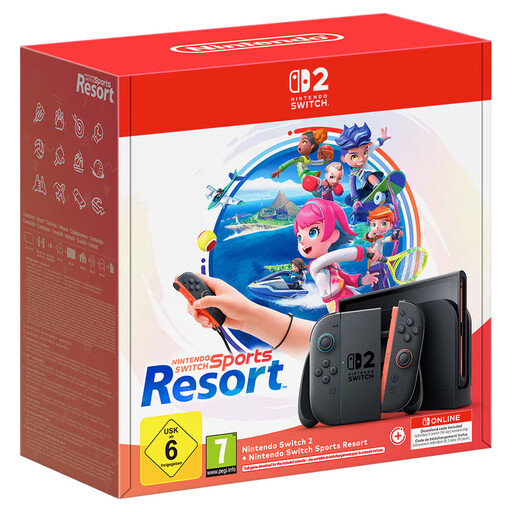 No image available
This console-and-game bundle is an option for a household considering shared and individual play. Check the included game’s age rating and local-player requirements, and confirm the Switch 2 account controls before relying on them for each child.
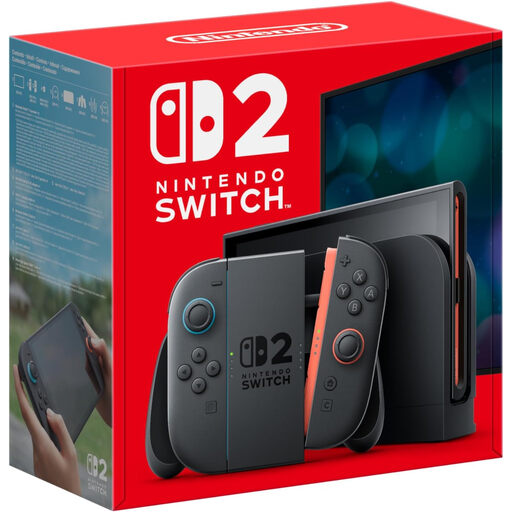 No image available
For a household considering this console for shared play, check the exact package’s controller contents and the intended games’ local-player requirements. Confirm how child accounts and supervision work on Switch 2 before setting it up for children.
Use separate child accounts where the platform supports them. PlayStation says each child needs one for its online services and lets a family manager set controls per child; Xbox family settings manage family members. Nintendo UK says standard Switch console-level parental-control restrictions apply to everyone using that console.
Only if the intended game supports local multiplayer and the package has the required controllers. Nintendo UK says the standard Switch’s included Joy-Con can work individually, but some games need additional controllers; Xbox says Series S includes one controller. Check the exact model and bundle rather than assuming the same contents for every console.
Requirements depend on the game and platform. Nintendo describes Switch Online for its online-multiplayer service, while PlayStation says certain games require PlayStation Plus. Check the intended game’s current requirements before arranging online play.
Not when shared TV play is the main requirement: Nintendo describes Switch Lite as dedicated to handheld play. Check each intended game’s handheld-mode support; games without it may require separate Joy-Con and a way to recharge them.
Check its PEGI age label and content descriptors before buying it for a child. The UK Games Rating Authority lists the PEGI ages as 3, 7, 12, 16 and 18 and explains that the rating concerns content, not whether the child will enjoy the game or find it difficult.