
24/7 Customer Support

Free returns

Same-day & Next-day Delivery

Quality Guaranteed

Unlock Your Welcome Offers: FREE Delivery | Up to 80% OFF | Free 30-day JoyPlus trial
Download the APP
Choosing kids' helicopters and drones can be more complicated than it first appears. Product listings often highlight flips, lights and wireless control, but those features do not automatically make a toy suitable for every child or home.
Before buying, consider the child’s age, available flying space, battery arrangements and tolerance for crashes. A simple toy helicopter may provide more satisfying play for a younger child, while older beginners may benefit from a protected drone with assisted controls. The right choice is usually the one that matches the child’s ability rather than the one with the longest feature list.
A product marked for children aged 8 and over may still require patience, hand-eye coordination and adult supervision. Stunt drones can be exciting, but one-touch flips do not remove the need to learn directional control. For children aged 3 to 7, a non-powered toy helicopter or building set may be more appropriate than a flying machine with fast-moving propellers.
Always follow the manufacturer’s age guidance and warnings. Products containing small parts should be kept away from younger children, and battery compartments should remain securely closed.
“Rechargeable” does not mean unlimited play. Check whether the rechargeable battery powers the aircraft only or whether the remote also needs disposable batteries. Flight time can be short compared with charging time, so spare batteries or a second compatible battery may be useful if the product supports them.
Also check the charging method. USB or USB-C charging may be convenient in a UK household, but the listing may not include a mains adaptor.
Small drones can work well in a clear room or calm garden, but wind, fences, trees and uneven ground quickly increase the difficulty. LED lights improve visibility; they do not make a drone suitable for poor weather or unrestricted night flying.
For outdoor use, select a clear, open area and keep the aircraft away from people, roads, animals and property. Check current guidance from the UK Civil Aviation Authority before flying outdoors, particularly where the toy is heavier, faster or fitted with a camera.
For younger children, look for a sturdy, handheld toy helicopter with no powered propeller requirement. The Paw Patrol rescue helicopters are designed for children aged 3 and above and support pretend rescue play without batteries.
For older children, many remote control drones for kids and RC helicopters for children are labelled 8+. This is not a substitute for supervision. Read the warning label, inspect the propeller guard design and remove all packaging before use.
Products should have appropriate UK product safety information and markings for their category. Check that instructions, warnings and responsible-person details are supplied, especially when buying online.
Beginner drones are easier to manage when they include auto hover, gyro stabilisation, assisted orientation or more than one speed setting. These functions can reduce the frustration caused by sudden drifting, although the child still needs to practise throttle and direction.
A headless mode can help new pilots understand control inputs, while one-button take-off and landing simplifies the first few sessions. Treat stunt functions as an additional feature rather than the main measure of suitability.
Protective guards help reduce damage from ordinary contact with walls and furniture. They do not make a drone indestructible, so check whether replacement rotors or propellers are included. This is particularly useful for children learning indoors.
Look for clear battery information, including battery type, charging cable, estimated flight time and remote-control requirements. Rechargeable remote control toys can be convenient, but the cost and availability of replacement batteries should still be considered.
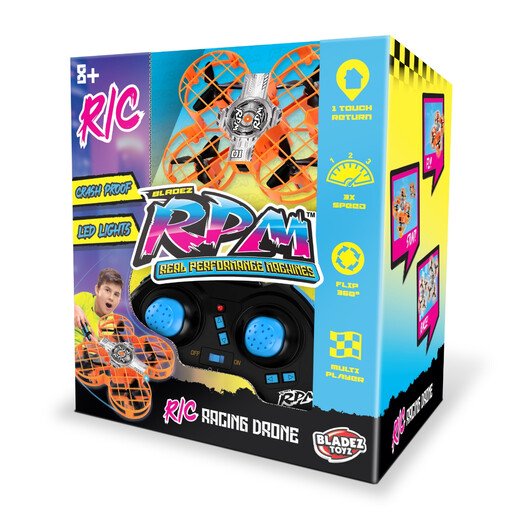
Why This Fits Their Persona: A compact option for an 8+ beginner who wants to practise at home or take a small drone outdoors in suitable conditions. Its size is convenient for storage and transport.
It includes crash-resistant guards, three speed settings and auto hover, rather than relying on stunt appeal alone. Four spare rotor blades and a screwdriver are supplied for basic upkeep.
Rechargeable battery included; headless mode, one-touch return, LED lights and training gates.
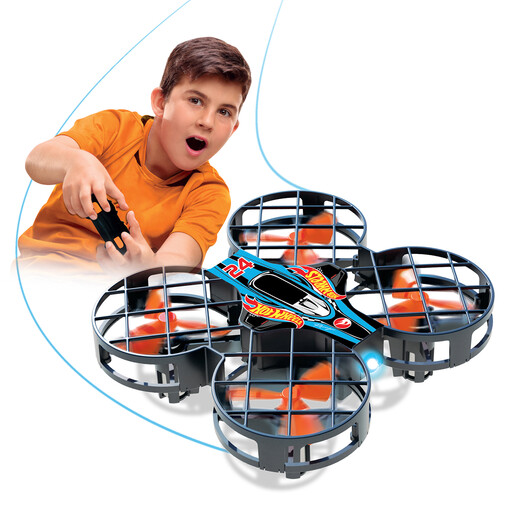
Why This Fits Their Persona: Suitable for an 8+ child who values themed design as well as flying practice. Multiplayer racing can add a social element when used in a clear indoor area or open outdoor space.
Auto hover, three adjustable speeds, protective guards and spare rotors provide useful learning support beyond the licensed styling.
2.4 GHz multiplayer racing mode; one-touch 360-degree stunts and bright LED lights.
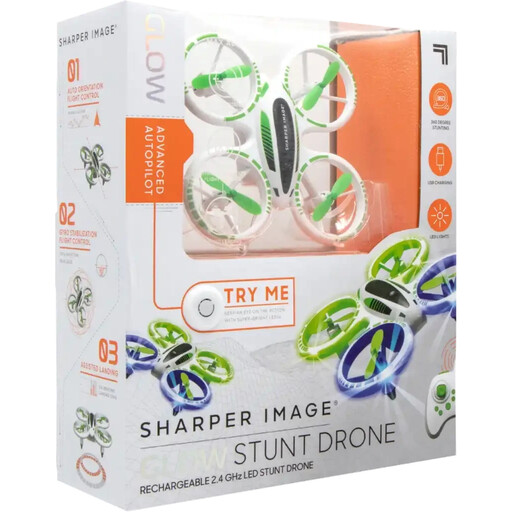
Why This Fits Their Persona: A match for an 8+ child interested in stunt drones and visible flight effects, provided an adult supervises use and the flight area is controlled.
Gyro stabilisation, auto-orientation, assisted landing pegs and four replacement propellers address the learning curve and minor accidents.
360-degree flips and barrel rolls; built-in LEDs and a rechargeable 3.7V 350mAh battery.
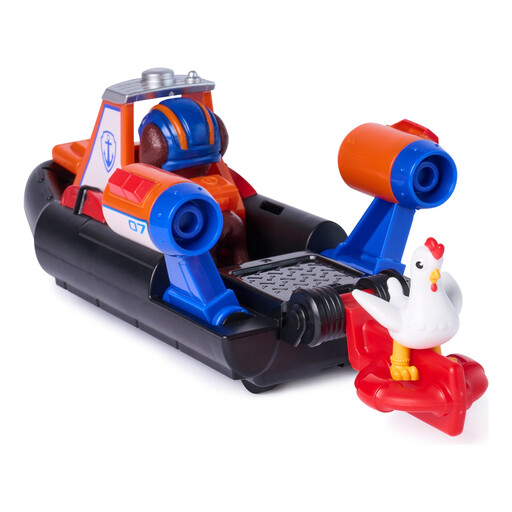
Why This Fits Their Persona: Designed for children aged 3 and above who prefer hands-on storytelling to remote control flying. It is lightweight and sized for pretend rescue missions.
There is no charging or flight-time limitation, and the play pattern does not depend on a child mastering a remote control.
Movable rotor blades, a rescue hook, included character figure and no batteries required.
We have compiled a complete, real-time list of products that fully satisfy these strict selection criteria and UK safety regulations.
A child who enjoys construction may prefer helicopter building sets to a powered aircraft. For example, the LEGO City 60503 Coast Guard Helicopter is intended for children aged 7 and above and includes movable rotors, a rescue winch, minifigures and themed accessories. It requires no batteries, making it suitable for quieter indoor play.
For an older beginner who wants a wider range of controls, the Sharper Image Remote Control Xtreme Airwave Drone includes one-button take-off and landing, assisted orientation, two play modes, LED headlights and USB-C charging. The remote requires three AAA batteries, which are not included.
Age 3 is generally more suitable for non-powered pretend-play helicopters with adult involvement. Many flying drones are labelled for ages 8 and over because children need to manage speed, direction and safe distances. Always follow the individual product warning rather than relying on the general category.
The ongoing cost usually involves electricity for charging, replacement rotor blades and, depending on the model, AAA or AA batteries for the remote. A drone with spare propellers included may reduce the need for an early accessory purchase. Check the battery specification and charging cable before ordering.
Small, guarded drones can be used indoors where there is sufficient clear space, but they should be kept away from faces, pets, windows and fragile objects. Outdoor use requires greater care around people, buildings and airspace. An adult should supervise every session and check current CAA guidance where applicable.