
24/7 Customer Support

Free returns

Same-day & Next-day Delivery

Quality Guaranteed

Unlock Your Welcome Offers: FREE Delivery | Up to 80% OFF | Free 30-day JoyPlus trial
Download the APP
From the first wobbly ride on a balance bike to mastering tricks at the skatepark, a child's journey on wheels is full of excitement. As a parent or guardian, ensuring their safety during these adventures is the top priority. Choosing the right protective gear can feel overwhelming with so many options available. This guide is designed to help you navigate the choices and find a reliable kids helmet and pads set that offers comfort, a secure fit and peace of mind.
We'll walk through the key features to look for in children's protective gear and share some of our top recommendations for 2026 to help you make an informed decision for your family.
Before diving into specific products, let's cover the essential criteria for selecting the right equipment. Focussing on these three areas will ensure you choose gear that is both safe and comfortable for your child.
In the UK, helmets sold for cycling must meet specific safety standards. Look for a UKCA or CE (EN 1078) mark, which indicates the helmet has been tested for impact absorption and construction quality. A good kids bike helmet typically features a tough outer shell, often made from Polycarbonate (PC), to resist impact and a shock-absorbing inner liner, usually Expanded Polystyrene (EPS) foam, to cushion the head. For knee and elbow pads, a hard outer shell combined with soft inner padding provides a similar dual-layer of protection.
A helmet that is too loose or too tight compromises its effectiveness. An adjustable kids helmet is crucial, not only for safety but also for accommodating a growing child. Look for features like a rear adjustment dial to fine-tune the fit around the head and adjustable chin straps for a snug, secure feel. Similarly, knee and elbow pads for kids should have adjustable elastic straps to ensure they stay in place during activity without restricting movement.
If protective gear is uncomfortable, a child is less likely to wear it. Lightweight materials, ample ventilation holes in the helmet and breathable inner linings in pads are key features. These elements help to keep your child cool and comfortable, encouraging them to wear their safety gear every time they head out on their bike, scooter or skateboard.
Here are our recommendations for protective gear that balances safety features, adjustability and child-friendly design. While these items are sold separately, they can be combined to create a comprehensive skateboard safety set for children or for any wheeled activity.
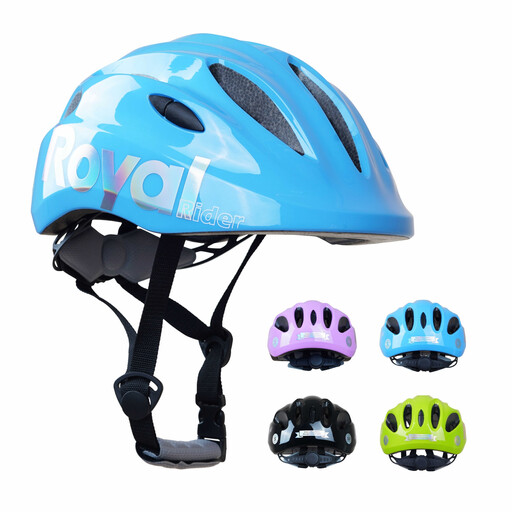
Why It Stands Out: This helmet is a versatile option designed for a wide range of activities. Its dual-layer construction, featuring a high-strength PC outer shell and an EPS inner liner, provides robust protection. At just over 213 grams, it's exceptionally lightweight, reducing strain on a child's neck.
The dual-adjustment system is a key feature, with a rotatable dial for head circumference and an adjustable strap, ensuring a secure and comfortable fit as your child grows. With 10 ventilation holes, it offers excellent airflow for warm days.
Pros:
Who is it for? This helmet is ideal for parents seeking a single, high-quality helmet for children aged 5-13 involved in various wheeled sports. Its adjustable nature makes it a practical long-term choice.
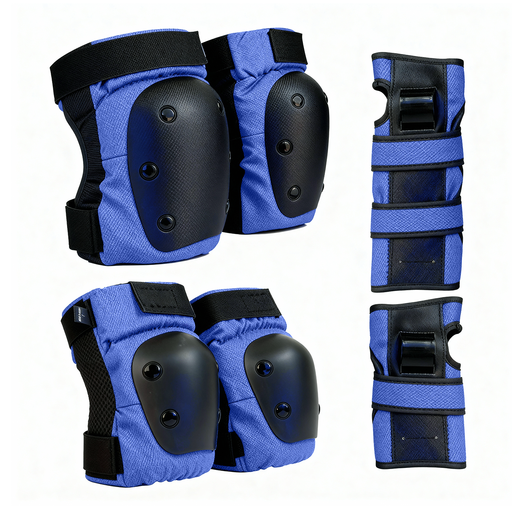
Why It Stands Out: This set provides comprehensive protection for younger children. It includes two knee pads, two elbow pads and two wrist guards. The design focuses on a balance of safety and comfort, with a hard, shock-absorbing PVC outer shell to disperse impact and a breathable inner lining to keep skin cool.
The components are specifically sized for younger children and feature adjustable straps, making them suitable for a range of activities from balance biking to rollerblading.
Pros:
Who is it for? This is an excellent starting point for parents of younger children (3-7 years) who are just beginning their adventures on wheels. It provides all the essential pads in one convenient package.
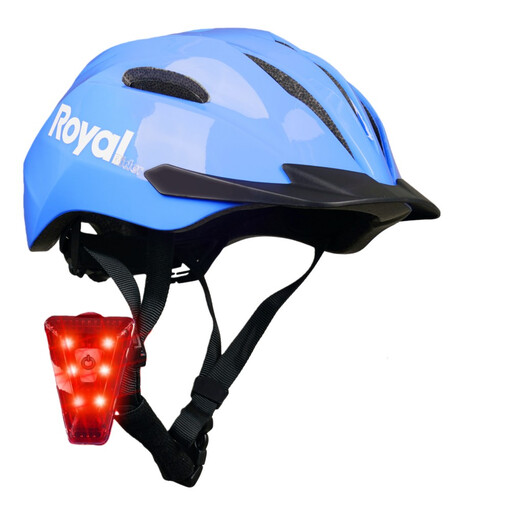
Why It Stands Out: This scooter helmet and pads companion stands out with its integrated safety light. The built-in 3-mode LED taillight significantly boosts a child's visibility to others, which is a major plus for evening rides or on overcast days.
Like other quality helmets, it uses integrated moulding to combine a PC hard shell with EPS foam. It also includes a practical black visor to shield eyes from sun and rain. Despite these extra features, it remains lightweight at only 250g.
Pros:
Who is it for? This helmet is a superb choice for parents who are particularly concerned about visibility. It's perfect for children who might be cycling or scootering home from school or playing outside as dusk approaches.
The products highlighted here are just a starting point. Every child is different, and you may be looking for different styles, colours or features. If you'd like to explore a wider selection of safety equipment, you can browse our full range.
Explore our complete collection of Child Protection gear to find the perfect fit for your little adventurer.
1. How do I measure my child's head for a helmet? Use a soft measuring tape and wrap it around the widest part of your child's head, about one inch above their eyebrows. The tape should be level all the way around. Match this measurement in centimetres to the sizing guide provided by the helmet manufacturer. An adjustable kids helmet will offer a range (e.g., 52-56 cm) for a more forgiving fit.
2. Can my child use a bike helmet for skateboarding? Many modern children's helmets are certified for multi-sport use, including cycling, scootering and skateboarding. Always check the product specifications for its intended uses. Helmets certified to EN 1078 are suitable for cycling, skateboarding and roller skating.
3. How often should I replace my child's helmet? You should replace a helmet immediately after any significant impact, even if there is no visible damage, as its protective structure may be compromised. Additionally, it's generally recommended to replace a helmet every 3-5 years, as the materials can degrade over time due to exposure to sunlight and general wear. Always replace a helmet once your child has outgrown it.