
24/7 Customer Support

Free returns

Same-day & Next-day Delivery

Quality Guaranteed

Unlock Your Welcome Offers: FREE Delivery | Up to 80% OFF | Free 30-day JoyPlus trial
Download the APP
Choosing kids' jewellery and craft kits can be more complicated than it first appears. Bright packaging may suggest hours of creative play, but the actual contents, age suitability and storage arrangements often determine whether a kit becomes a regular favourite or is quickly forgotten.
Parents, grandparents and gift buyers should look beyond the number of colours shown on the box. A useful children's craft kit should match the child's age, dexterity and preferred style of play, while offering enough usable components for more than one short activity.
Some kits use large packaging but include relatively few beads, cords or templates. Check the product description for specific quantities, such as the number of beads, jewellery pieces, templates or accessories included. A kit with clearly listed contents is easier to compare with alternatives.
Beads, charms and accessories can present a choking hazard. Age guidance is not simply a marketing category: it should be treated as a key safety requirement. For example, products listed for ages 4 and over should not be given to younger children, and children should be supervised during use where the packaging recommends it.
Always remove packaging before play and keep loose components away from younger siblings and pets. Children should not put craft materials in their mouths.
Tiny pieces are easily lost, particularly when a project is paused halfway through. A kit with a storage tray, compact case or dedicated container can be more practical for regular use. Also check whether refill beads, thread or additional templates are available if the child wants to continue creating after the original materials have been used.
A kids' jewellery making kit involving threading, clasps or small decorative parts may suit a child who can concentrate on sequential tasks. Younger children may find larger beads and simple snap-together parts easier to handle than fine elastic thread.
For ages 3 and 4+, compare the stated age guidance carefully. A product designed for children aged 3 and over is not automatically suitable for every three-year-old; supervision and the child's ability to follow instructions remain important.
Different children's craft kits create different types of play:
If a craft will be used at the kitchen table, a no-battery, water-activated or contained system may be more convenient than a project requiring several separate tools.
Look for objective details such as wooden beads, stainless steel components, elastic cord, clasps, storage trays and the number of included pieces. For a bead craft kit for children, shape variety can be as important as colour variety because it enables pattern-making, name spelling and themed designs.
For wearable items, check whether the kit creates finished bracelets or necklaces, or whether it mainly produces decorative designs. Jewellery made by children should be checked regularly for loose parts, stretched cord or damaged clasps.
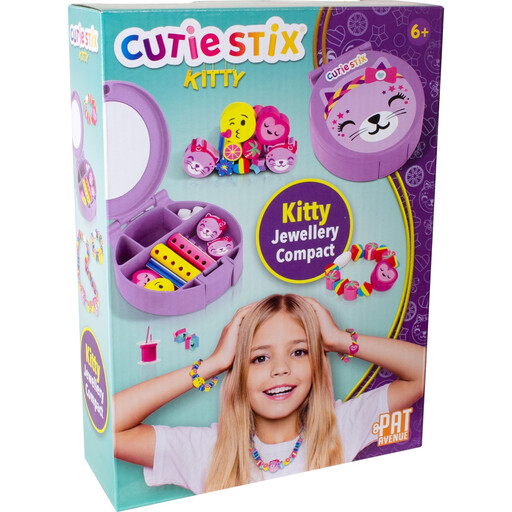
Why This Fits Their Persona: A compact choice for a first DIY jewellery set for kids, with a kitty-shaped storage box and built-in mirror that suits bedrooms, visits to grandparents or tidy craft sessions at home. It is listed for ages 3 years and over.
The set states what can be made: three bracelets or one necklace. Pre-cut materials and a storage compact make the activity more defined than an open-ended box with unclear quantities.
Includes an elastic thread spool, clasps, decorative beads and a portable compact box. No batteries are required.
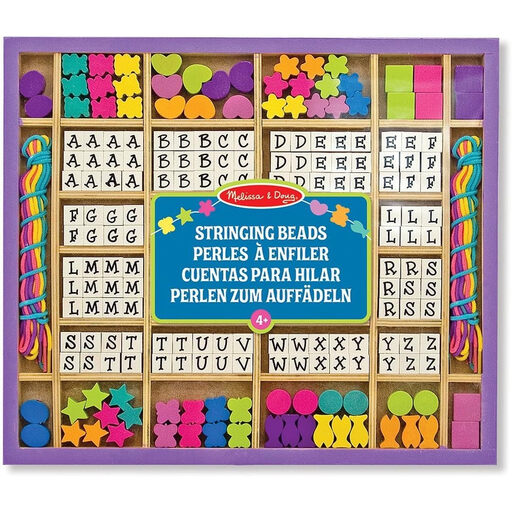
Why This Fits Their Persona: Suitable for children aged 4 and over who enjoy sorting, spelling names and creating personalised accessories rather than following just one theme.
The contents are specified in detail, including over 200 beads, eight laces with clasps and a divided wooden tray for sorting and clean-up.
Includes letter beads from A to Z and multiple shapes, allowing bracelets, necklaces, backpack tags and bookmarks to be made.
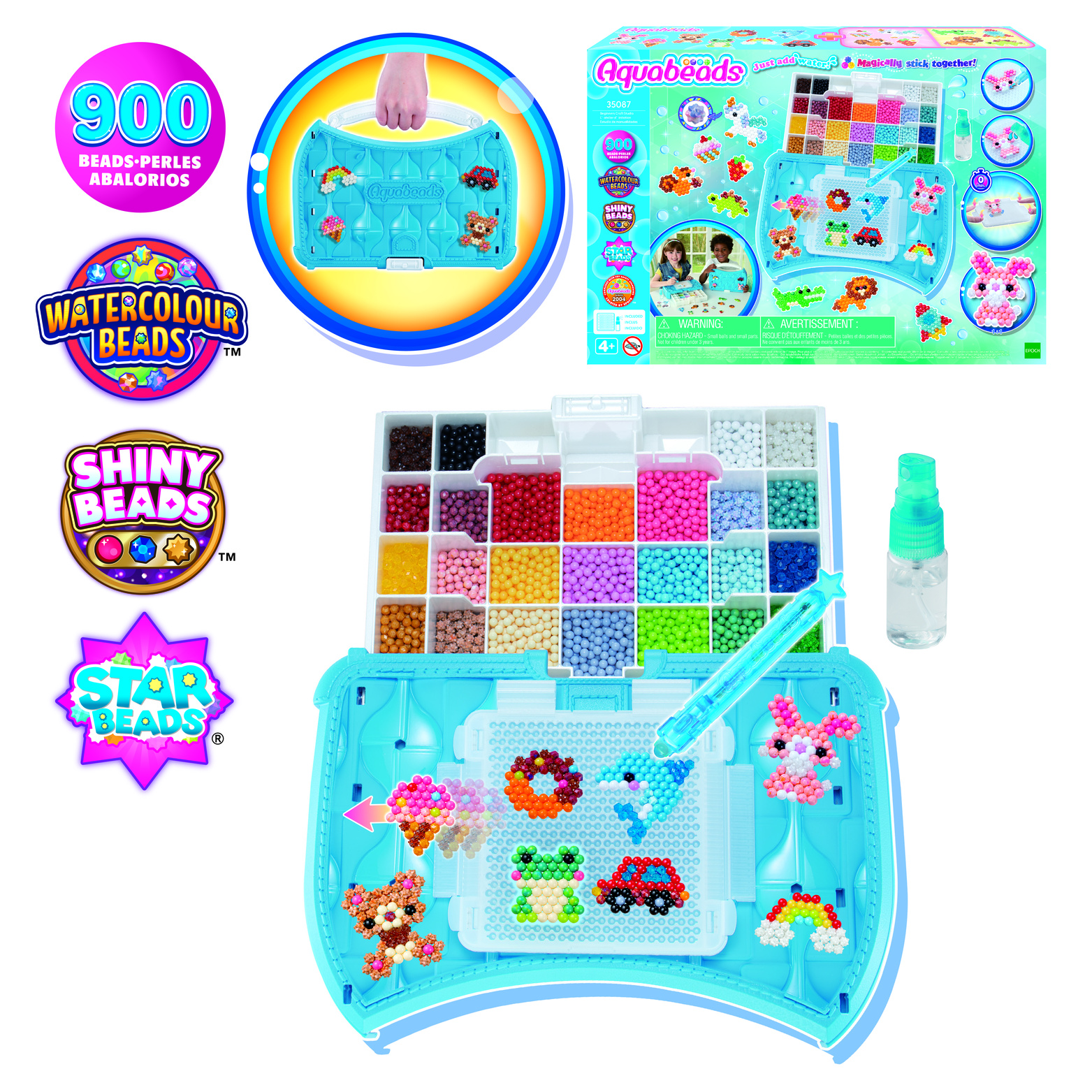
Why This Fits Their Persona: A practical match for children aged 4 and over who return to craft activities frequently and want varied designs rather than one finished project.
Its listed contents include 900 beads in 25 colours and two template collections, giving buyers clearer information about the amount and range of creative material.
Offers classic, jewel, polygon and shimmering watercolour beads, plus a portable carry case. Additional bead refills are available separately.
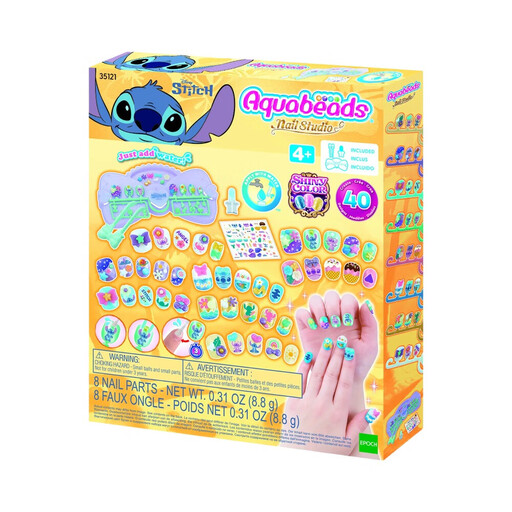
Why This Fits Their Persona: Designed for children aged 4 and over who are interested in pretend beauty play and temporary nail decoration alongside bead crafting.
The set identifies the tools required, including nail stickers, an applicator and a water spray bottle, rather than leaving buyers to purchase extra craft equipment.
Uses water-activated beads and requires no batteries. Adult supervision is recommended, particularly when applying decorations.
We have compiled a complete, real-time list of products that fully satisfy these strict selection criteria and UK safety regulations.
Some are listed for ages 3 years and over, while many bead systems are intended for ages 4 and over. Always follow the individual product warning. Because small parts are involved, direct supervision is sensible, particularly when a younger child is learning to thread, snap or sort components.
A stringing beads set is suitable for children who enjoy making wearable items and personalising them with letters or shapes. Water-activated bead kits are another option for children who prefer arranging patterns on templates rather than threading cord.
The products featured here do not require batteries. Ongoing costs depend on the format: a stringing kit may need replacement cord or beads, while an Aquabeads kit may be extended with separately available bead refills. Check the included quantity and refill availability before buying.