
24/7 全天候客户支持

免费退货

当日/次日达

品质保障

开启新人专享福利: 全场免邮 | 低至 2 折 | 免费试用 30 天 JoyPlus 会员
下载 Joybuy
Watching your child discover the freedom of two wheels is a milestone. When they're ready to move beyond the pavement and explore the UK's beautiful trails and parks, choosing the right kids mountain bike becomes the next big step. It can feel like a complex decision, with talk of suspension, gears and frame sizes. The goal is to find a bike that is not only safe and durable but also builds their confidence and fuels their passion for adventure.
This guide is designed to help you navigate the key features of a children's mountain bike. We will break down what to look for and provide some clear, practical recommendations to help you find a bike that your young rider will be excited to get muddy.
Selecting a youth MTB involves more than just picking their favourite colour. Focusing on a few key technical aspects will ensure the bike is a good fit for their size, ability and the type of riding they'll be doing.
The single most important factor is getting the size correct. A bike that is too large is difficult to control and unsafe, while one that is too small is uncomfortable and inefficient. Unlike adult bikes, kids' bikes are sized by their wheel diameter, not the frame.
Always check the manufacturer's height recommendations, as age is just a guide. A good fit means the child can stand over the top tube with their feet flat on the ground and comfortably reach the handlebars and brake levers.
Modern kids' mountain bikes borrow technology from their adult counterparts, offering features that genuinely improve performance and safety on the trail.
Gears help a rider tackle varied gradients, making climbs easier and allowing for more speed on flat sections. Most children's mountain bikes come with a simple system, such as a 7-speed drivetrain, which is easy for young hands to operate. More advanced models may offer up to 21 speeds for greater versatility on demanding trails.
Here are our recommendations for 2026, selected to cover a range of ages and abilities for young, aspiring trail riders.
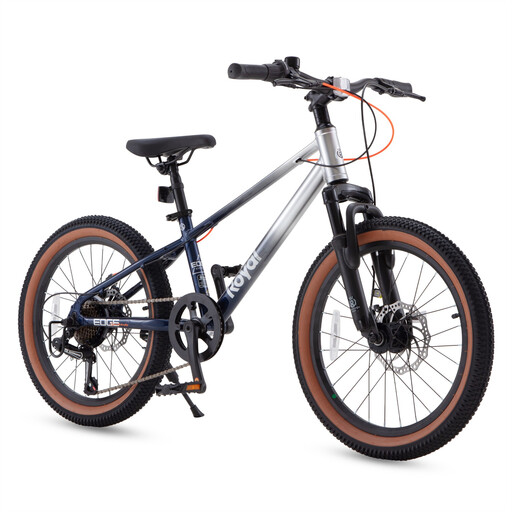
Why It Stands Out: The RoyalBaby EDGE is an excellent entry point into the world of off-road cycling. It combines a manageable 20-inch wheel size with capable features, including a front suspension fork and dual disc brakes, which are not always standard in this size category.
Pros:
Who is it for: Ideal for children aged 6-10 who are ready to leave the pavement behind and start exploring local woodland trails and dirt paths.
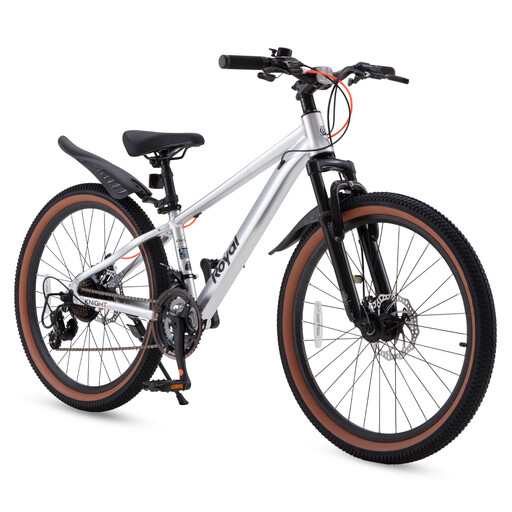
Why It Stands Out: As a junior mountain bike, the Kingplus steps up the performance for growing riders. The standout feature is its 21-speed drivetrain, offering a wide gear range to tackle steep climbs and fast descents, making it a highly versatile machine for mixed terrain.
Pros:
Who is it for: Suited for riders aged 10-14 who are progressing their skills and need a bike that can handle more challenging trail centre routes and family bike rides.
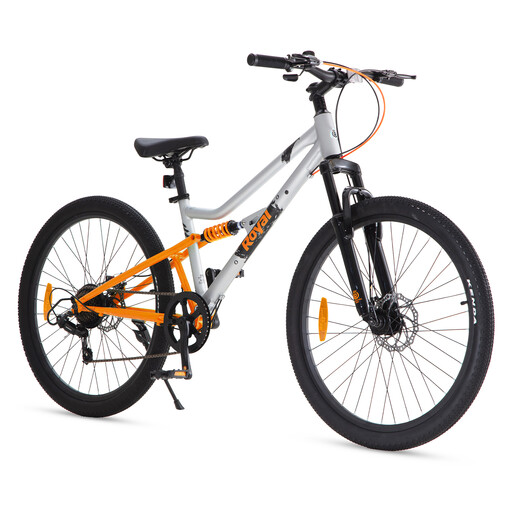
Why It Stands Out: For the older and more adventurous teen, the RS7 offers a key feature for tackling rough ground: a full suspension system. With both a front fork and rear shock, this bike is built to absorb significant impacts, providing superior traction and comfort on rugged trails.
Pros:
Who is it for: A great choice for teenagers (13+) who are ready for a proper youth MTB experience and want to ride demanding trails with confidence.
A mountain bike is perfect for trails, but if your child is more interested in the skate park, learning tricks or urban street riding, a different type of bike might be a better fit. For a durable and agile option built for this style of riding, explore our range of BMX bicycles.
What size mountain bike is right for my child? The best way to determine the right size is by your child's height and inside leg measurement. As a general guide, 20-inch wheels are for ages 6-10 and 24-inch wheels are for ages 10-14. Always check the manufacturer's size chart and ensure the rider can stand over the frame comfortably.
Is a kids bike with suspension really necessary? If your child will be riding on anything other than smooth pavement, suspension makes a big difference. It absorbs bumps, which improves comfort and, more importantly, helps the wheels stay in contact with the ground for better control and safety.
Why are disc brakes becoming common on a youth MTB? Disc brakes offer superior stopping power, especially in the wet and muddy conditions frequently encountered in the UK. They are less affected by weather and provide more consistent, reliable braking, which is a significant safety advantage for any rider, particularly one learning to navigate off-road terrain.