What should you check before buying?
Decide whether pure juice, less listed sugar or a drink you dilute is the priority; then compare labels in the form the drink will actually be served.
| Priority |
What to check |
Your needs |
| Sugar per serving |
Compare sugars for the same ready-to-drink volume, such as 150ml. Check the serving size as well as the “no added sugar” wording. The NHS counts sugars in fruit juice as free sugars. |
If I want less listed sugar in each poured serving, I need the nutrition figures—not just the claim on the front of the pack. Sainsbury’s lists 3.9g sugars per 150ml for its apple-and-pear juice drink; Tesco’s Tropicana listing gives 15g per 150ml for its pressed apple juice. |
| Fruit and sweeteners |
Read the product description and ingredients to distinguish 100% juice from a juice drink. Check the fruit percentages and any declared sweeteners; “no added sugar” does not settle either question. |
I may prefer a pure apple-juice ingredient list, or I may accept a juice drink containing water and sweeteners to get a different sugar figure. Those are different choices, even when both products say “no added sugar”. |
| Portion size |
Check the volume of a bottle or carton before treating it as one serving. For fruit juice and smoothies, the NHS advises no more than 150ml combined per day for children and adults. |
With several drinks available at a party, I want to know how much juice a child is being served. A 200ml container is larger than the NHS daily juice-and-smoothie amount. |
| Dilution and allergens |
For squash, follow the pack’s dilution directions rather than comparing its undiluted nutrition with ready-to-drink juice. Read the current allergen declaration and storage instructions on the pack. |
If I set up a drinks station, I need to prepare the squash as directed and check it for guests’ requirements. Marks & Spencer lists sulphites in its Apple and Elderflower High Juice and advises extra water if serving it to older children. |
Relevant brand and retailer examples
These examples illustrate different drink types; a brand name alone does not tell you the sugars, ingredients or serving instructions for a particular product.
Sainsbury’s
Its Apple & Pear Juice Drink, No Added Sugar is a ready-to-drink 1L juice drink rather than pure apple juice.
- Sainsbury’s lists 3.9g sugars per 150ml serving.
- The listed drink contains water, apple and pear juice from concentrate, and sweeteners; check whether that suits your guests.
Tropicana
Tesco lists Tropicana Pressed Apple Fruit Juice in a 1.5L carton as 100% pressed apple juice, not from concentrate.
- It provides a pure-juice option when that distinction is the priority.
- Tesco’s listing gives 15g sugars per 150ml; the NHS counts juice sugars as free sugars.
Tesco / Grower’s Harvest
Tesco lists a 1L Grower’s Harvest No Added Sugar Apple Juice Drink made with apple juice from concentrate and water.
- The listed ingredients identify it as a juice drink with 50% apple juice from concentrate.
- It contains sucralose. Confirm current availability and check the pack before buying for an imminent party.
M&S
Apple and Elderflower High Juice is a squash to dilute, not a ready-to-drink apple juice.
- Its format suits a drinks station where water is added before serving.
- Marks & Spencer lists sulphites and advises extra water for older children; it states the product is not suitable for babies.
Copella
Sainsbury’s apple-juice category lists Copella Cloudy Apple Fruit Juice in a 1.35L format.
- It is a cloudy apple fruit-juice option to consider if that drink type is what you want.
- Check the specific pack’s ingredients, sugars per serving and storage instructions before choosing it for the party.
Apple-based drinks on Joybuy
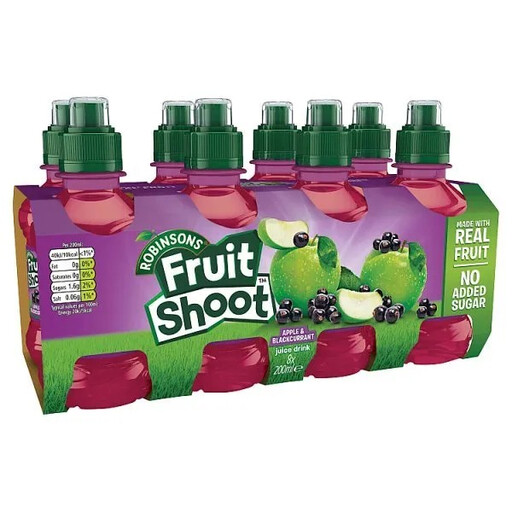
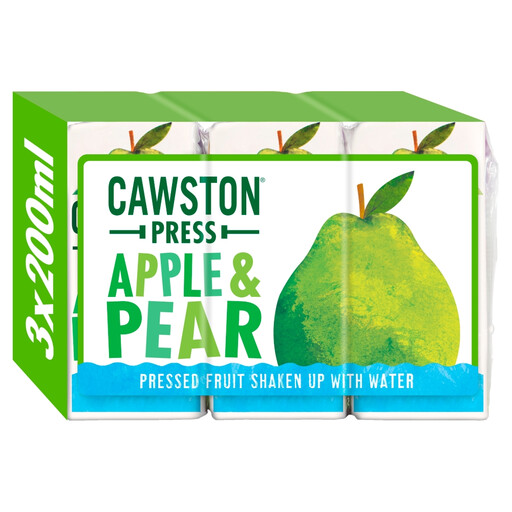
These are ready-to-drink, apple-based party options: an apple-and-blackcurrant drink in individual bottles and an apple-and-pear fruit water in cartons. Neither product title identifies it as pure apple juice.
 No image available
Fruit Shoot Black & Apple No Added Sugar, 8 × 200ml
The individual bottles offer a ready-to-serve format for a party. Each holds 200ml, so plan pours separately if serving smaller portions. This apple-and-blackcurrant drink is not pure apple juice; check its ingredients if guests avoid sweeteners. The product warns that its caps contain small parts and are unsuitable for children under 36 months.
View on Joybuy
 No image available
Cawston Press Apple & Pear Fruit Water, 3 × 200ml
The cartons provide a ready-to-drink apple-and-pear option. Each holds 200ml; check the current ingredients and nutrition panel when planning how much to serve. For fruit juice and smoothies, the NHS advises a combined daily maximum of 150ml.
View on Joybuy
Questions about serving apple drinks
Does “no added sugar” mean an apple drink is sugar-free?
No. The NHS counts sugars in unsweetened fruit juice as free sugars. Tesco’s Tropicana Pressed Apple Fruit Juice listing gives 15g sugars per 150ml despite the juice having no added sugar, so compare the nutrition panel as well as the front-of-pack wording.
How much fruit juice should I plan for each child?
The NHS advises no more than 150ml of fruit juice and smoothies combined per day for children and adults, taken with meals. If serving juice at the party, plan a portion within that amount and make water available for further drinks.
Can a no-added-sugar juice drink contain sweeteners?
Yes. Sainsbury’s lists acesulfame K and sucralose in its Apple & Pear Juice Drink, No Added Sugar, while Tesco lists sucralose in its Grower’s Harvest apple juice drink. Read the ingredients of the particular pack if this matters to a guest.
Can apple high-juice squash be served undiluted?
Follow the product’s dilution instructions rather than serving it as ready-to-drink juice. Marks & Spencer says to add extra water to its Apple and Elderflower High Juice if giving it to older children; the undiluted nutrition figures are not directly comparable with a prepared drink.
What should I check for guests with allergies?
Read the allergen declaration on the actual pack before serving. Marks & Spencer lists sulphites in its Apple and Elderflower High Juice, so do not assume that all apple-based drinks have the same ingredients.


