Parents making a quick weekday tea
If the dried pasta is already cooked, a sauce designed to be stirred directly into hot pasta removes a separate sauce-heating step. Check that the pot serves everyone eating.


Choose a ready-to-stir sauce when the pasta is hot and the shortest finishing step matters most. A finished tomato-and-vegetable jar suits a larger meal if you are happy to heat the sauce; passata gives you control over seasoning but needs more preparation. Whichever route you take, compare the sauce’s salt figures and check the current labels of both the sauce and pasta for allergens.
If the dried pasta is already cooked, a sauce designed to be stirred directly into hot pasta removes a separate sauce-heating step. Check that the pot serves everyone eating.
A finished jar or passata base leaves room to compare ingredients, salt, sugars and pack size before deciding how much sauce to prepare.
Check the current labels of both the pasta and sauce against the child’s requirements. The Food Standards Agency identifies cereals containing gluten as relevant to pasta and some sauces; other allergens depend on the exact recipe.
Start with the preparation time you have, then compare the exact sauce and dried pasta you plan to serve.
| Concern | What to check | Who this matters to |
|---|---|---|
| Preparation time | Check whether the sauce is stirred into hot pasta, heated separately or used as a base; check the stated servings. | When tea needs to be finished as soon as the pasta is cooked, I want as few extra steps as possible. About 31% of consumers put minimal finishing steps first. |
| Nutrition label | Compare salt and total sugars per 100g, then check the figures for the amount you intend to serve. | If I am choosing between different pots and jars, I want the label figures to be comparable before deciding on a portion. For about 25% of consumers, nutrition-label comparison is the primary concern. |
| Ingredients and flavour | Read the ingredient list for the vegetables and seasonings present; allow time to finish a passata-based sauce. | When choosing a tomato sauce for a child with particular flavour preferences, I want to know what is already in it and what I can add myself. Roughly 25% of consumers put that flexibility first. |
| Allergen suitability | Check the current allergen information on both packs. If packing food for school, confirm that school’s policy. | If a child must avoid an ingredient, I need to check the pasta as well as the sauce before serving or packing it. Around 19% of consumers make allergen and dietary suitability their primary concern. |
In the specific products described by Napolina and listed by Sainsbury’s, plain Napolina passata has 0.12g salt per 100g, while Dolmio Tomato and Basil Stir In has 1.3g per 100g. Those figures describe different products, not every passata or stir-in sauce.
Compare salt per 100g for a like-for-like label check, then look at the amount you expect to serve.
The Food Standards Agency identifies cereals containing gluten as relevant to pasta and some sauces. Marks & Spencer also states that its Tomato and Basil Pasta Sauce is not suitable for people with milk or egg allergy.
Read the current labels of both products. Before packing food for school, check the individual school’s food policy.
Opened-life instructions differ by product. Marks & Spencer specifies three days refrigerated for its Tomato and Basil sauce, while the Joybuy listing for Napolina Tomato Passata 500g specifies two days.
Choose a size you can use within the particular product’s instructions and follow its directions after opening.
Sauce left over beyond its stated opened-life may have to be discarded.
Napolina describes its passata as a base ingredient for pasta sauce, rather than a sauce ready to stir straight through the meal.
Choose it when you have time to cook and season the sauce yourself; if that time is unavailable, check the preparation instructions on a finished sauce instead.
Its Tomato and Basil Stir In pot illustrates the quick-finishing route for hot, cooked pasta.
Its tomato passata is a base for cooks who want to make and season their own pasta sauce.
Its No Added Sugar Tomato & Hidden Veg Pasta Sauce is a 500g finished sauce labelled for four servings.
Its 340g Tomato and Basil Pasta Sauce is an example of a finished jarred sauce.
These Dolmio sauces cover a stir-in option for hot pasta and finished Bolognese-style sauces. Check each variant’s flavour and preparation instructions against the tea you are making.
 No image available
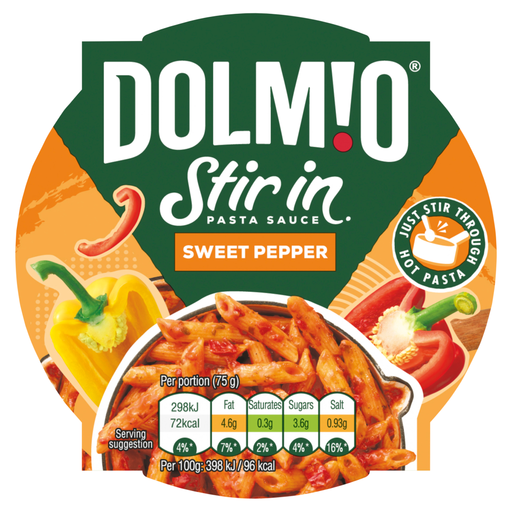
Consider this stir-in sauce when the pasta is already hot and avoiding a separate sauce-heating step matters. It is a 150g Sweet Pepper variant; check the pack’s ingredients and serving guidance for the meal you have planned.
 No image available
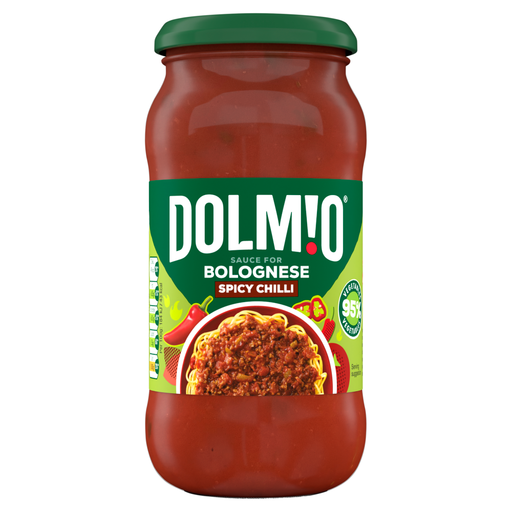
This finished sauce is an option when you can heat sauce before mixing it with pasta. The 450g jar is labelled Spicy Chilli, so check that flavour against the child’s preferences and check the pack for servings.
 No image available
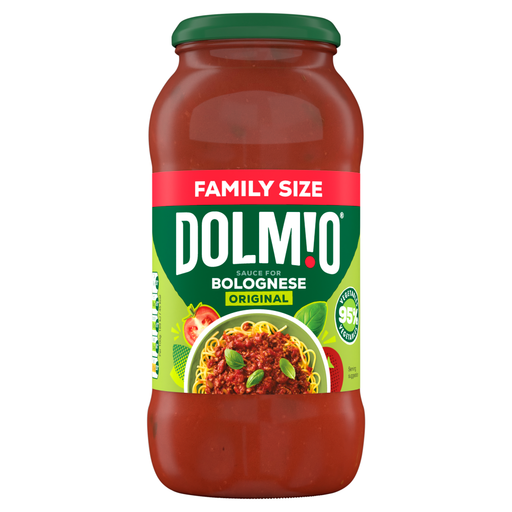
Consider this Bolognese sauce if you want a 675g jar for a pasta meal. Check its preparation directions, serving guidance and current allergen information on the pack before relying on it for a particular tea.
 No image available
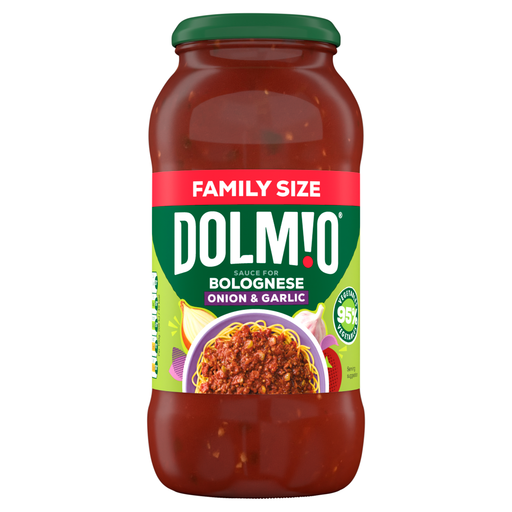
This 675g Bolognese variant suits a meal where onion and garlic are wanted in the sauce. Check the pack’s preparation, serving and allergen information for the children being served.
Do not assume it is. The Food Standards Agency identifies cereals containing gluten as relevant to pasta and some sauces, so check the current allergen information and precautionary statements on both packs. Only choose an alternative after checking its own label against the child’s requirements.
Compare the salt figures per 100g first, then check the amount in the portion you intend to serve. NHS Healthier Families states maximum daily salt amounts of 3g for children aged 4 to 6 and 5g for those aged 7 to 10; the sauce is only one part of what they may eat that day.
No. Check the total-sugars figure in the nutrition panel: Sainsbury’s lists 3.9g sugars per 100g for its No Added Sugar Tomato & Hidden Veg Pasta Sauce. The wording about added sugar does not replace the total-sugars figure.
Follow the storage instructions on the particular product. Marks & Spencer says to refrigerate its Tomato and Basil Pasta Sauce after opening and use it within three days; the Joybuy listing for Napolina Tomato Passata 500g specifies two days refrigerated. Do not apply either period to another sauce without checking its label.