
24/7 Customer Support

Free returns

Same-day & Next-day Delivery

Quality Guaranteed

Unlock Your Welcome Offers: FREE Delivery | Up to 80% OFF | Free 30-day JoyPlus trial
Download the APP
Watching a child’s imagination come to life is one of the great joys of parenthood. A kids play kitchen is more than just a toy; it's a miniature world where they can become a head chef, a café owner or simply mimic the daily routines they see at home. However, with so many options available, finding the right one can feel overwhelming.
As the Joybuy Product Recommendation Officer, my role is to help you navigate the choices. This guide offers practical advice and highlights a few standout options to help you find a playset that will inspire hours of creative fun for your little one.
Before diving into specific models, let's consider a few key factors. Keeping these in mind will help you select a toddler kitchen playset that fits your home, your child's needs and your budget.
Safety is paramount when choosing any toy. In the UK, look for products that conform to EN71 safety standards, which ensures they are free from harmful chemicals and designed to prevent hazards. Play kitchens are typically made from wood (or MDF) or plastic. A children's wooden kitchen often offers a classic look and substantial feel, while plastic models can be lighter and may incorporate more intricate moulded features. Both materials are excellent choices, provided they are durable and well-constructed.
Consider where the play kitchen will live. If you're short on space, a compact or tabletop model can provide all the fun without taking over a room. For those with a dedicated playroom or a larger area, a substantial corner play kitchen can become an impressive centrepiece for imaginative play, often with enough room for siblings and friends to join in.
The most engaging play kitchens often include features that mimic the real thing. A toy kitchen with lights and sounds, such as a sizzling hob or a beeping microwave, adds a layer of realism that children love. Some sets even feature running water for washing up. Also, check what's included. A toy kitchen with accessories like pots, pans and pretend play food offers great value and means the fun can start right away.
Here are a few recommendations that cater to different spaces, play styles and budgets.

Why It Stands Out: This mini kitchen packs a lot of play potential into a small, portable design. Its official Miele branding gives it a realistic, high-quality look that little ones will recognise. It’s an ideal starter kitchen that focuses on the core activities of cooking and cleaning.
Pros:
Who is it for? Families with limited space or those looking for a high-quality, introductory play kitchen for children aged 3 and up.
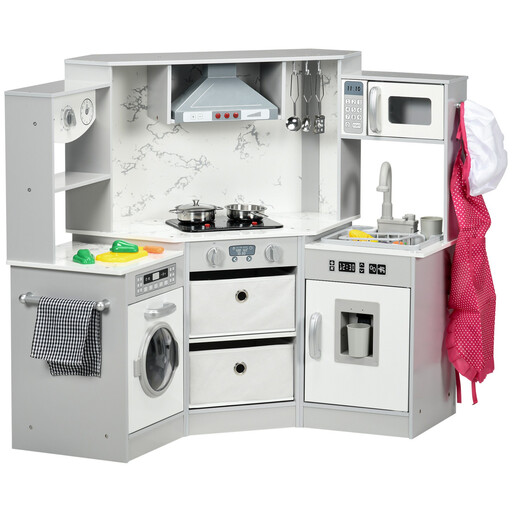
Why It Stands Out: This is a complete role-play hub. The clever corner play kitchen design maximises play space while fitting neatly into a room. It is packed with interactive features, including a sink with a water circulation system, a microwave and a washing machine, creating a truly immersive experience.
Pros:
Who is it for? Parents looking to create a dedicated, feature-rich play area that will captivate children aged 3 to 6 for years to come.
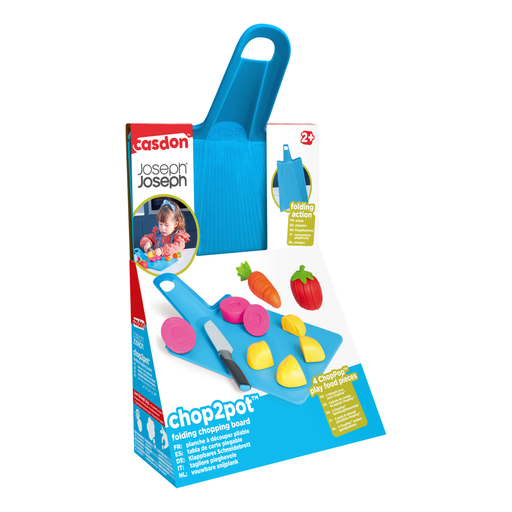
Why It Stands Out: This isn't a full kitchen, but a brilliantly designed pretend play food set that enhances any culinary setup. It features unique Choppop technology, allowing children to "chop" the food pieces without relying on magnets or velcro, providing a satisfying and realistic action.
Pros:
Who is it for? Those who already own a play kitchen and want to add high-quality, interactive accessories, or anyone looking for a fantastic, smaller-scale culinary toy.
The world of play kitchens is vast, with countless designs and colour schemes to match any child's personality or playroom decor. If you're searching for a specific look, such as a popular pink kids kitchen, or simply want to browse a wider selection, we have many more options to explore.
Most play kitchens are designed for children aged 3 to 6 years. This is because they often contain small parts that could be a choking hazard for younger toddlers. Always check the manufacturer's recommended age and safety warnings. For children under 3, simpler, larger-scale sets with no small accessories are a safer starting point.
Both have their advantages. A children's wooden kitchen is often praised for its durability, stability and classic aesthetic. Plastic kitchens are typically lighter, easier to clean, and can incorporate more moulded electronic features like lights and sounds. The choice often comes down to personal preference on style, features and budget.
Pretend play with a toy kitchen is incredibly beneficial. It helps develop fine motor skills through actions like stirring and chopping. It fosters social and communication skills when children play together, assigning roles and cooperating. It also sparks creativity, introduces basic life skills and can even be a fun way to learn about different foods.