
24/7 Customer Support

Free returns

Same-day & Next-day Delivery

Quality Guaranteed

Unlock Your Welcome Offers: FREE Delivery | Up to 80% OFF | Free 30-day JoyPlus trial
Download the APP
Finding a toy that captures a child's imagination while also supporting their development can be a challenge. A kids play kitchen is a classic choice that continues to be a favourite in playrooms across the UK, offering a wonderful platform for creativity, learning and fun. This type of kitchen role play toy allows children to mimic everyday activities, helping them make sense of the world around them.
However, with so many options available—from large, feature-rich sets to compact countertop accessories—choosing the right one can feel overwhelming. This guide is designed to help you navigate the choices by highlighting key features to consider and offering a few recommendations to suit different play styles and spaces.
Before you decide, it's helpful to think about a few practical points. Considering these factors will ensure you find a set that your child will enjoy for years to come.
The material of a play kitchen often influences its feel, durability and features.
Consider the space you have available. A full-sized, freestanding play kitchen can be the centrepiece of a playroom, offering a complete, immersive experience with ovens, sinks and hobs. If space is limited, or if you're looking to supplement an existing toy collection, a smaller countertop model like a kids coffee machine toy or a portable trolley can be an excellent alternative. These smaller sets still provide rich opportunities for imaginative play without requiring a large, permanent spot.
The fun of a play kitchen is often in the details. Check what comes with the set. A good selection of toy kitchen accessories, such as pots, pans and utensils, is essential. Many sets also come with a play food set, which immediately allows children to start "cooking". The number and variety of accessories can significantly enhance the play value, allowing for more complex scenarios like shopping, serving meals or running a café.
Here are a few options that cater to different interests and play environments, selected to give you an idea of the variety available.
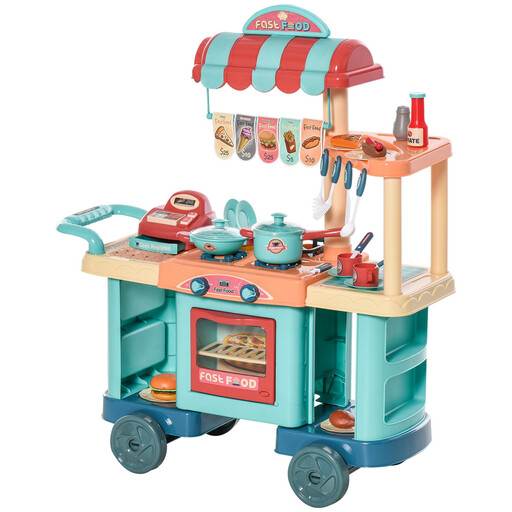
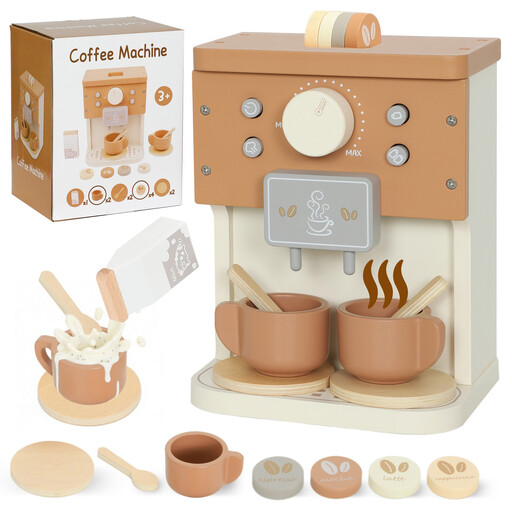

A play kitchen is just the beginning. The world of pretend play can be expanded with countless accessories that add new layers of fun and learning. From extra food sets to specialised cooking equipment, these additions can keep playtime fresh and exciting.
If you're looking for the perfect finishing touch or a smaller gift, explore our full range of kitchen accessory sets to find the ideal addition for your little chef.
Most play kitchens are designed for children aged 3 to 6 years. At this age, children are actively developing their imagination and social skills through role-play. Always check the manufacturer's recommended age and be mindful of small parts, which can be a choking hazard for younger children.
Playing with a toy kitchen helps children in several ways. It encourages imaginative storytelling, develops social skills like sharing and cooperation when playing with others, and improves fine motor skills through handling small accessories. It can also be a fun way to introduce concepts like counting, sorting and learning the names of different foods.
This often comes down to personal preference and priorities. A wooden play kitchen is generally valued for its durability and timeless appearance. A plastic kitchen is often lighter, more portable, and may include more electronic features like lights and sounds. Consider your available space, budget and the type of play you want to encourage.