
24/7 Customer Support

Free returns

Same-day & Next-day Delivery

Quality Guaranteed

Unlock Your Welcome Offers: FREE Delivery | Up to 80% OFF | Free 30-day JoyPlus trial
Download the APP
Choosing a kids play kitchen can feel like a big decision. With so many styles, materials and features available, it’s easy to feel overwhelmed. You want a toy that will spark your child's imagination, stand up to enthusiastic play and fit nicely into your home.
As the Joybuy Product Recommendation Officer, my role is to help you navigate the options. This guide offers practical advice and highlights a few standout models to help you find a pretend play kitchen that your little one will cherish.
Before diving into specific products, let's cover a few key points. Keeping these in mind will make your decision much simpler.
The material of a play kitchen influences its look, feel and features.
A toy kitchen with accessories provides instant fun and can offer better value. Check what's included. A good starter set might come with pots, pans, utensils and some pretend food. This saves you from having to make extra purchases and allows your child to start cooking up imaginary feasts straight away.
Consider the kitchen's footprint and height. It needs to be accessible for your child but also fit comfortably in your playroom or living area. Features like an oven, microwave, sink and storage cupboards add to the realism and enhance the role play kitchen experience, helping children mimic the activities they see adults do every day.
Here are a few different types of play kitchens, each offering a unique play experience.

Why It Stands Out: This kitchen combines a sleek, contemporary design with engaging interactive features. The electronic hob, which produces realistic cooking sounds and the espresso machine with capsules add a layer of modern fun that children love.
Pros:
Who is it for? This is a great option for families seeking a feature-rich toddler kitchen set that provides a complete, all-in-one play station with sounds and plenty of accessories for immediate fun.
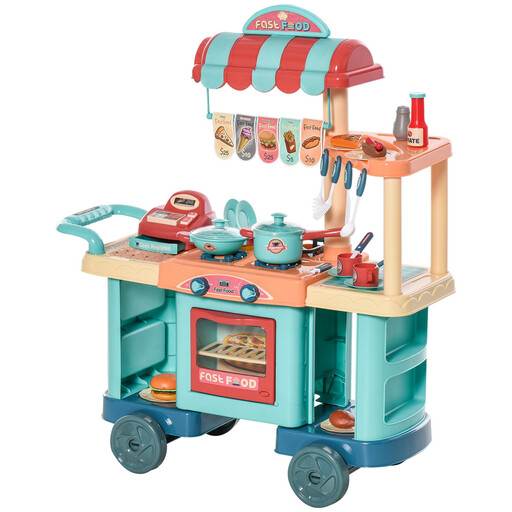
Why It Stands Out: Moving beyond the traditional static kitchen, this playset is a mobile fast-food trolley. It encourages a different kind of role-play, allowing children to be a chef, cashier and business owner all in one.
Pros:
Who is it for? Ideal for children who enjoy dynamic, imaginative scenarios beyond just cooking. It's also a practical choice for those who need a small footprint but want a set packed with accessories.

Why It Stands Out: This wooden play kitchen is notable for its beautiful, Montessori-inspired design and construction from FSC-certified wood. It focuses on pure, imaginative play without electronic distractions.
Pros:
Who is it for? This set is perfect for parents who prioritise sustainable materials, a classic aesthetic and toys that encourage open-ended, child-led play.
The models above represent just a sample of the different styles available. If you're looking for a different size, colour or feature set, there are many more to discover.
Explore our full collection of pretend kitchen food playsets to find the ideal match for your little chef.-> See More Play Kitchens
Most play kitchens are designed for children aged 3 to 6. At this age, children are developing their social and imaginative skills, making a role play kitchen an ideal toy. Always check the manufacturer's age recommendation and be mindful of small parts, which can be a choking hazard for children under 3.
Neither is inherently "better"; it depends on your priorities. A wooden play kitchen offers a classic look and durability, appealing to those who prefer natural materials. Plastic kitchens are often lighter, more colourful and more likely to include electronic features like sounds and lights, which can enhance sensory play.
Play kitchens are fantastic tools for development. They help children improve fine motor skills by handling small accessories, develop social skills by playing with others and expand their vocabulary and storytelling abilities. It’s a fun way for them to understand the world around them by imitating everyday activities.