
24/7 Customer Support

Free returns

Same-day & Next-day Delivery

Quality Guaranteed

Unlock Your Welcome Offers: FREE Delivery | Up to 80% OFF | Free 30-day JoyPlus trial
Download the APP
Choosing a toy that is both entertaining and beneficial for a child's development can be a challenge. A kids play kitchen is a classic choice that continues to captivate young minds, offering a wonderful platform for creativity, learning and fun. From mimicking daily routines to hosting imaginary dinner parties, a toy kitchen set provides hours of engaging role-play.
This guide is designed to help you navigate the options available. We will look at key factors to consider before you buy and highlight some of our top recommendations to help you find a pretend play kitchen that your little one will cherish.
With so many styles and features, it helps to have a few pointers in mind. Considering these aspects will ensure you select a kitchen playset for kids that fits your home and your child's needs.
The material of a children's play kitchen is one of the first decisions you will face.
Before you fall in love with a particular design, measure the space you have available. Play kitchens range from compact, countertop units to large, freestanding sets with multiple appliances. Consider the height of the countertop to ensure it is comfortable for your child to use now, but also offers some room to grow.
A play kitchen with accessories offers great value and allows for immediate play. Check what is included—some sets come with pots, pans, utensils and even pretend food. Others are a blank canvas, giving you the freedom to choose your own accessories. Interactive features like clicking knobs, opening doors and electronic cooking sounds can make the role play kitchen experience more immersive and exciting for a child.
Here are a few standout options that cater to different spaces, budgets and play styles.
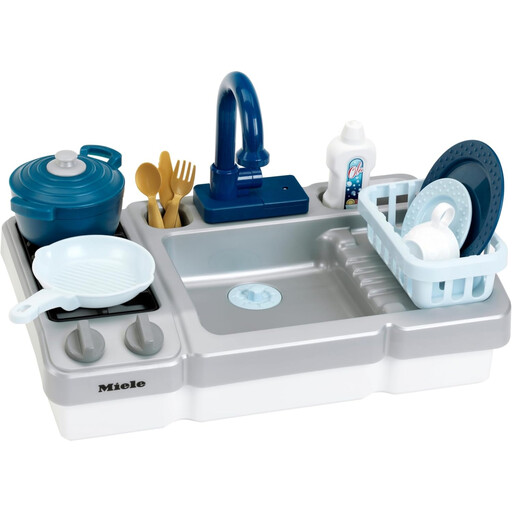
Why It Stands Out This compact kitchen brings a touch of realism to playtime with its official Miele branding. It’s cleverly designed to offer the core kitchen experience—a sink and a hob—without taking up significant floor space, making it an excellent choice for smaller rooms or as a first toddler kitchen.
Pros:
Who is it for? Families with limited space or those looking for a simple, high-quality starter kitchen that focuses on the essentials of pretend cooking.
View the Theo Klein Miele Mini Kitchen on Joybuy
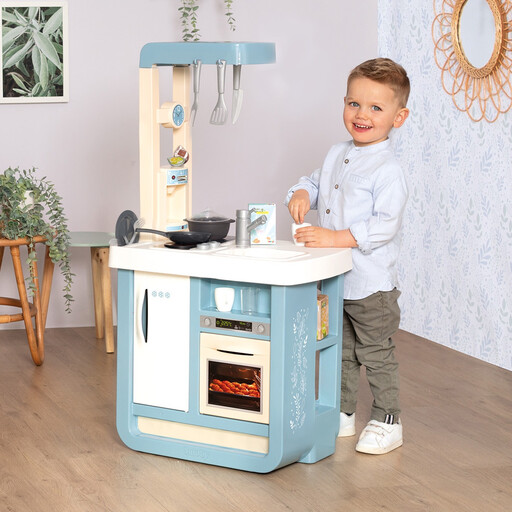
Why It Stands Out For the child who loves interactive features, the Smoby Bon Appétit kitchen is a fantastic all-in-one solution. It comes equipped with a hotplate that makes sizzling sounds, an espresso machine and a generous set of 23 accessories. Its contemporary design and soft colours ensure it looks great in any playroom.
Pros:
Who is it for? Budding young chefs who enjoy realistic sounds and parents who want a complete toy kitchen set that is ready for play straight out of the box.
View the Smoby Bon Appétit Kitchen on Joybuy
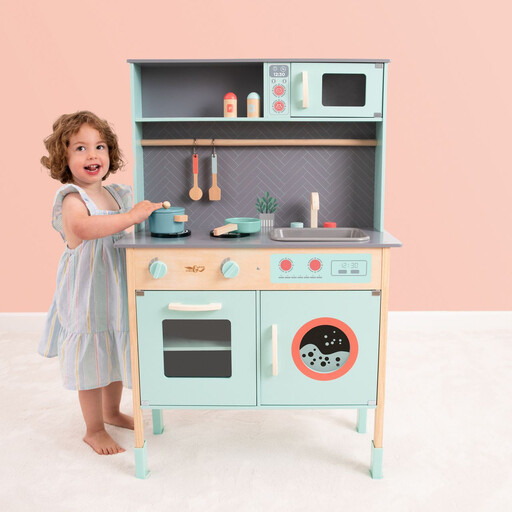
Why It Stands Out This beautiful wooden play kitchen from TP Toys combines playtime with tasteful design. Made from FSC certified wood, it’s a choice that supports responsible forestry. Its Montessori-inspired design encourages independent, imaginative play, helping children develop confidence and motor skills in a calm, creative environment.
Pros:
Who is it for? Parents who prioritise sustainable materials, a chic aesthetic and toys that encourage self-directed, developmental play.
View the Owl and Fox Wooden Kitchen on Joybuy
A great kitchen deserves a well-stocked pantry. If you are looking to add more variety with wooden vegetables, felt sandwiches or complete dining sets, you can find everything you need to enhance the culinary fun.
To complete your setup or explore other imaginative toys, browse our full collection of Pretend food play set.
Most play kitchens are designed for children aged 3 and up. At this age, children typically begin to engage in more complex imaginative play. It is important to always check the manufacturer's specific age recommendation, as some sets may contain small parts that pose a choking hazard for younger toddlers.
Neither is definitively "better"; the choice depends on your priorities. A wooden play kitchen offers excellent durability and a classic, natural aesthetic that many families prefer. Plastic kitchens are often lighter, may include more electronic features like sounds and lights and can be easier to wipe clean. Consider your budget, available space and your child's play preferences.
A pretend play kitchen is a powerhouse for development. It helps children refine fine motor skills by turning knobs and handling accessories. It also nurtures social and language skills as they "take orders" and play with siblings or friends. Following simple "recipes" or organising their kitchen encourages cognitive skills like planning and problem-solving.