
24/7 Customer Support

Free returns

Same-day & Next-day Delivery

Quality Guaranteed

Unlock Your Welcome Offers: FREE Delivery | Up to 80% OFF | Free 30-day JoyPlus trial
Download the APP
Finding the right kids playhouse can feel like a big decision. You want something that is safe, durable and will capture your child's imagination for years to come. With so many options available, from a classic wooden wendy house to a brightly coloured plastic cottage, it can be difficult to know where to start.
This guide is designed to help you navigate the choices. We will walk through the key factors to consider before you buy and highlight a few popular models to give you a clearer idea of what is available. Our goal is to provide practical, straightforward advice to help you find the perfect garden playhouse for your family.
Before you start browsing, thinking about a few key points can help narrow down your search and ensure you choose a playhouse that fits your space and your child's needs.
The material of a childrens playhouse is one of the most significant factors, affecting its appearance, durability and maintenance requirements.
Always measure the area where you plan to place the outdoor playhouse to ensure a good fit, leaving enough clear space around it for safe play. For safety, look for products that meet UK and EU standards, such as EN71 certification, which ensures the materials and design have been checked for safety. Features like rounded edges, good ventilation and non-toxic finishes are also important indicators of a well-designed, child-friendly product.
A playhouse is a blank canvas for a child's imagination. Consider features that might enhance their play. Elements like serving hatches, built-in benches, kitchen sinks or flowerpot holders can transform a simple structure into a bustling café, a cosy home or a secret clubhouse. These interactive features are excellent for encouraging role-playing, which helps develop social and communication skills.
Here are a few recommendations that showcase the different types of playhouses available, each with its own unique features and appeal.
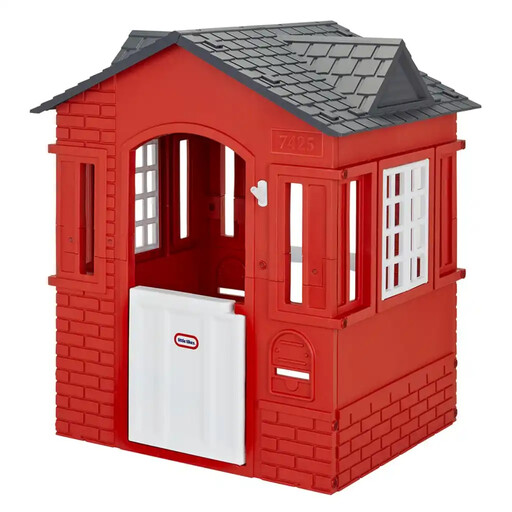
Why It Stands Out: This playhouse brings a classic American cottage design to life with a vibrant red colour. Its durable plastic construction and straightforward assembly make it a practical choice for busy families.
View the Little Tikes Cape Cottage Play House
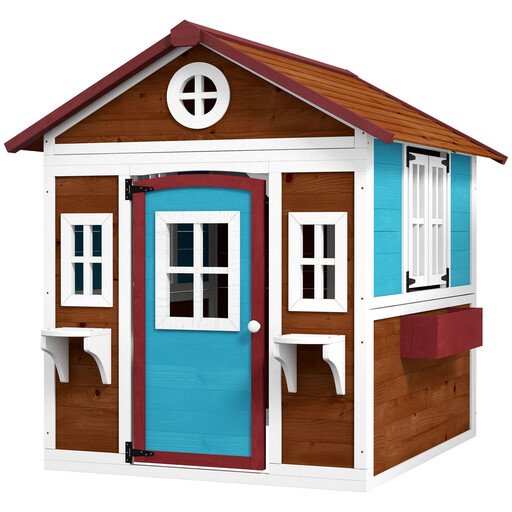
Why It Stands Out: This is a traditional wendy house crafted from solid fir wood, designed to be a charming feature in any garden. Details like the planter boxes, vintage-style windows and sloped roof give it an authentic, rustic feel.
Explore the Outsunny Wooden Playhouse
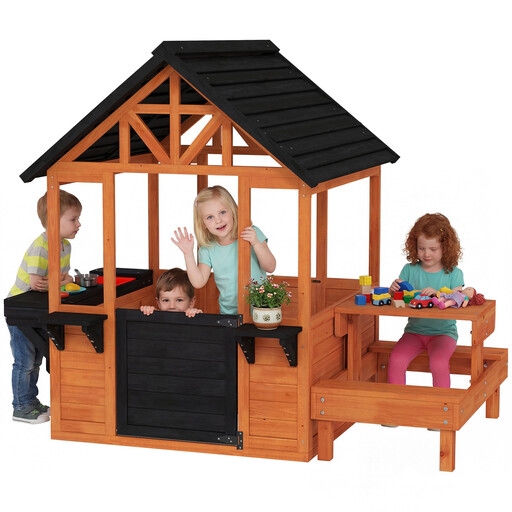
Why It Stands Out: More than just a house, this is a complete activity centre. It integrates a playhouse with a snack bar window, an attached table with benches and a sink, turning it into a hub for social play.
Discover the AIYAPLAY Activity Playhouse
These three models represent just a sample of the wide world of children's playhouses. If you are looking for a different size, style or set of features, there are many more designs to discover.
To see a wider variety of options, from simple pop-up tents to elaborate two-storey structures, feel free to browse our complete collection.
Explore our full range of Toy Playhouses
The terms are often used interchangeably in the UK. "Wendy house" is a traditional name, originating from the play Peter Pan, and usually refers to a small, cottage-style house for children. "Playhouse" is a more general term that encompasses all types of play structures, including modern designs, themed houses and larger activity centres.
A wooden playhouse should be placed on a flat, level surface to ensure it is stable and to help it last longer. A solid base—such as paving slabs, a concrete pad or a simple timber frame—is recommended. This elevates the wood from direct contact with damp ground, which helps prevent moisture damage and rot over time.
This depends entirely on the specific model. Simpler, smaller plastic playhouses are often designed for toddlers from the age of 2. Larger and more complex structures, particularly a wooden playhouse with more features, are typically recommended for children aged 3 to 8. Always check the manufacturer's specified age range to ensure the product is appropriate and safe for your child.