
24/7 Customer Support

Free returns

Same-day & Next-day Delivery

Quality Guaranteed

Unlock Your Welcome Offers: FREE Delivery | Up to 80% OFF | Free 30-day JoyPlus trial
Download the APP
Watching a child’s face light up as they receive their first set of wheels is a milestone moment. But the journey from browsing to buying can be confusing. The market for kids ride on toys is filled with options, from simple trikes to miniature electric cars and it's easy to make a purchase you later regret.
As the Joybuy Product Recommendation Officer, my role is to help you navigate the choices and focus on what truly matters. Before you add anything to your basket, let's look at a few common pitfalls that can lead to disappointment and wasted money.
kids electric car is exciting, but the practicalities can be frustrating. A common complaint is the battery life. An advertised 45-minute runtime might only be achievable on a perfectly flat, smooth surface. On a typical British lawn or slightly inclined pavement, this can drop significantly, leading to more time charging than riding.To ensure you choose a toy that is safe, durable and genuinely fun, focus on these core parameters rather than marketing slogans.
A manufacturer's age guide is just that—a guide. A child's height and inseam measurement are far more important for a safe and comfortable fit.
balance bike for toddlers or baby tricycle: The child should be able to sit on the seat with their feet flat on the floor. This is crucial for balance and control.toddler tricycle with pedals: They should be able to reach the pedals comfortably at the furthest point of their rotation without overstretching.Look for an adjustable seat with a specified height range, as this provides concrete evidence of its adaptability. Most importantly, always check for UK and EU safety compliance, indicated by standards like EN71-1-2-3 (for toy safety) and EN62115 (for electric toys).
The choice between manual and electric power depends on the developmental stage and the type of play you want to encourage.
toddler tricycle and the increasingly popular balance bike for toddlers. These are excellent as a first bike for a toddler as they help develop crucial motor skills, coordination and spatial awareness. They are simple, lightweight and ready to go at any moment.6V ride on car or a ride on quad bike offer a different kind of excitement. A 6V (6-volt) battery is the standard for toys aimed at the youngest riders (typically 18-36 months). It provides a gentle, manageable speed, usually around a walking pace (2-3 km/h), making it ideal for supervised play on flat surfaces like patios or driveways.The longevity of outdoor toys for children is determined by their materials.
Instead of a single "best" option, we match products to different needs and priorities. Here are a few selections based on common UK family profiles.
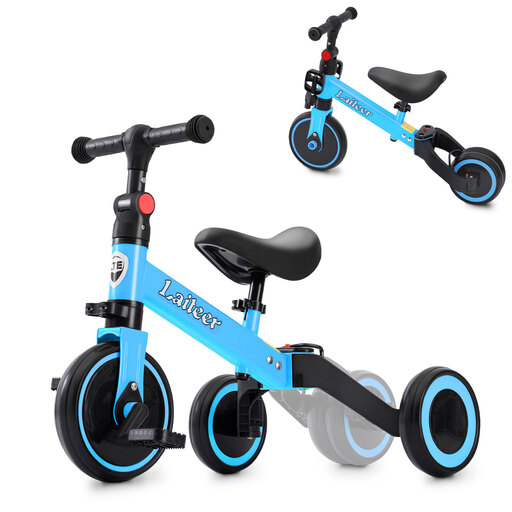
Why This Fits Their Persona: Ideal for parents who want a single, adaptable toy that supports key developmental milestones. It starts as a stable tricycle and converts into a balance bike, teaching balance before introducing pedalling.
This model's 3-in-1 folding design with removable pedals offers genuine, functional adaptation, avoiding the "one-size-fits-all" trap by transforming to suit different skill levels.
Versatility is its main strength. The tool-free conversion between tricycle and balance bike modes, plus an adjustable seat, provides real long-term value.
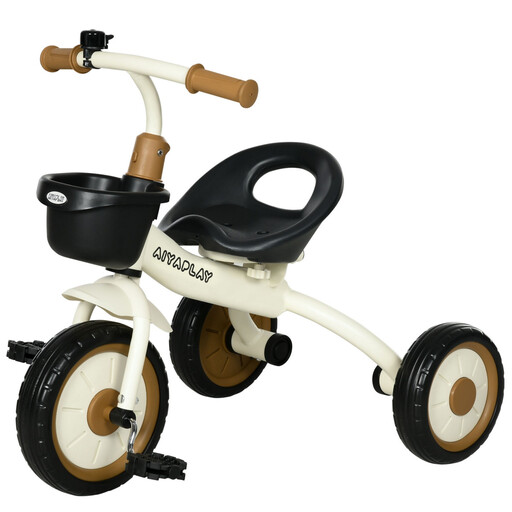
Why This Fits Their Persona: For the child who is ready to pedal and wants a classic, sturdy tricycle. It's a straightforward and reliable choice for garden and park adventures, complete with a basket for their treasures.
It features EVA wheels, which are a significant upgrade from cheap plastic, avoiding the pitfall of a poor-quality, bumpy ride. The metal frame also ensures better durability.
The robust metal frame provides stability and the 3cm seat adjustment offers a clear, defined way to accommodate growth. It's a durable, classic `adjustable kids trike`.
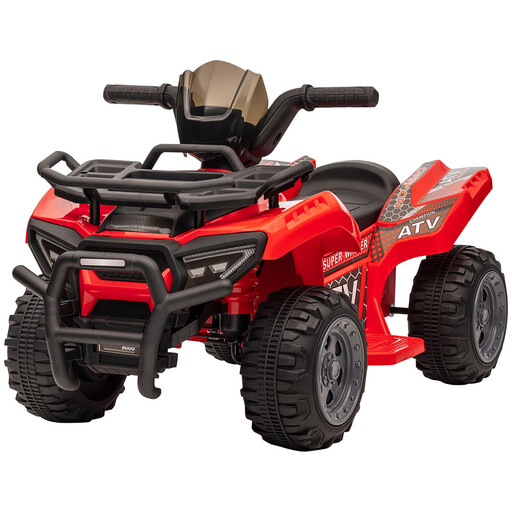
Why This Fits Their Persona: Perfect for parents wanting to introduce their toddler to an electric ride-on safely. The quad bike design is very stable and the simple push-button operation is easy for little hands to master.
It tackles the electric toy pitfalls head-on. The speed is capped at a very safe 2 km/h, and the product information clearly states the 45-minute runtime and 8-12 hour charge time, setting realistic expectations.
Safety-focused design. The low speed, wide four-wheel base and large seat make this `ride on quad bike` an excellent and secure first electric vehicle for toddlers.
We have compiled a complete, real-time list of products that fully satisfy these strict selection criteria and UK safety regulations.
A balance bike for toddlers is a two-wheeled bike with no pedals. Children push themselves along with their feet, learning to balance and steer intuitively. A toddler tricycle has three wheels and pedals, which provides stability while teaching the motion of pedalling. Many child development specialists suggest starting with a balance bike to master the hardest skill—balance—first.
For a 6V ride on car, a typical runtime is around 45 to 60 minutes of continuous use. However, this can be shorter depending on the surface (grass and inclines use more power than flat pavement) and the child's weight. The standard charge time is usually between 8 and 12 hours, so overnight charging is often the most practical approach.
Yes, as long as you select an appropriate model. Look for products specifically listed as ride on toys for 2 year olds. Key safety features to check for are a low centre of gravity for stability, a manageable speed (for electric models) and full compliance with EN71 safety standards. Always ensure the child can sit comfortably and that their feet can reach the ground or pedals and supervise their play, especially outdoors.