
24/7 Customer Support

Free returns

Same-day & Next-day Delivery

Quality Guaranteed

Unlock Your Welcome Offers: FREE Delivery | Up to 80% OFF | Free 30-day JoyPlus trial
Download the APP
Watching a child’s face light up as they climb onto their very first ride-on toy is a milestone moment. But the path to that moment is often cluttered with confusing options and marketing claims. Many parents in the UK find that a promising purchase ends up unused in the garage, outgrown in months, or simply not up to the task of navigating British pavements and parks.
As the Joybuy Product Recommendation Officer, my role is to help you see past the hype. Before you buy, let's look at the common issues that can turn a dream toy into a disappointment.
Navigating the market for children's toys can be tricky. Here are three frequent traps that lead to buyer's remorse, and how you can sidestep them.
Many ride-on toys are advertised as suitable for a wide age range, but their adjustability is often minimal. A seat that only moves an inch or non-adjustable handlebars means the toy can become uncomfortable, awkward or unsafe far sooner than expected. The child is left struggling to pedal or steer, and the toy is quickly abandoned.
The type of wheels and frame construction directly impacts the ride quality and durability. Flimsy plastic frames can feel unstable, while hard plastic wheels offer a jarring and noisy ride on anything but the smoothest indoor floors. They wear down quickly on tarmac and offer poor grip, which is a particular concern for outdoor play.
A kids electric car or ride on quad bike can seem like the ultimate gift, but the reality can be frustrating. Models with very short battery life (less than 30 minutes) can lead to meltdowns when the fun stops abruptly. Similarly, a speed that is too slow can be underwhelming for an adventurous child, while one that's too fast can be a worry for parents of younger toddlers.
To ensure you are getting a safe, durable and enjoyable toy, focus on these core parameters.
Always check for a safety certification. In the UK and Europe, the key standard is EN71. You will often see it listed as EN71-1-2-3. This isn't just jargon; it confirms the toy has been assessed for:
A steel or robust metal frame provides superior durability and stability compared to thin plastic. For wheels, EVA (Ethylene-vinyl acetate) is an excellent material. These are solid, airless tyres that are lightweight, puncture-proof and provide a much smoother and quieter ride on varied surfaces than hard plastic. They are a practical choice for the mix of indoor and outdoor use common in the UK.
Look for specific measurements. A good toddler tricycle or first bike for toddler should offer a seat height adjustment range of at least 3-5cm. This allows you to fine-tune the fit so your child's feet can comfortably reach the pedals or the ground, extending the toy's usable life from a few months to a year or more.
To help you match a toy to your child's needs, here are a few options that align with different developmental stages and family priorities.
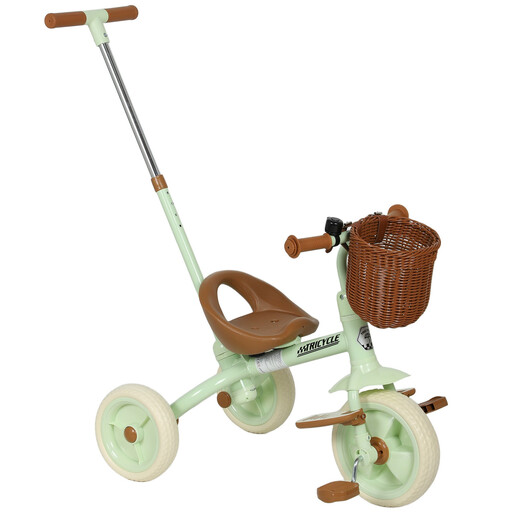
Why This Fits Their Persona: Ideal for parents who want to stay in control during walks to the park or shops. The kids trike with parent handle allows you to steer and push, providing security while your toddler gets used to the feeling of riding.
This model delivers on the "grows with your child" promise. It functions as a parent-controlled push trike and later converts to a standard toddler tricycle once your child is ready to pedal independently.
2-in-1 versatility for long-term use; adjustable 4-level parent handle for adult comfort; shock-absorbing EVA wheels for a smooth ride.
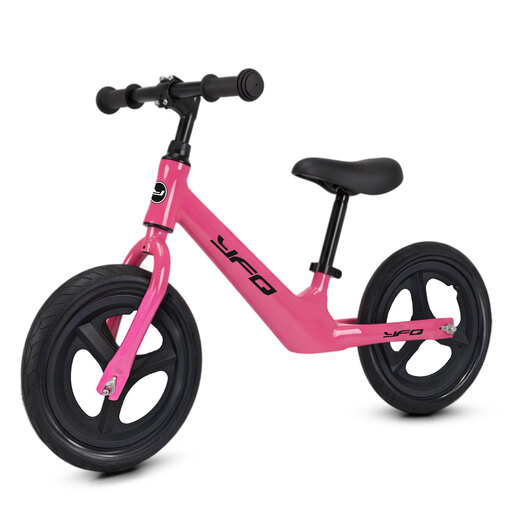
Why This Fits Their Persona: For the child who is eager for independence and ready to learn the fundamentals of cycling. A balance bike for toddlers is widely considered an effective way to teach the core skill of balancing before introducing pedals.
It avoids the cumbersome and often counter-productive stage of stabilisers. By focusing solely on balance, it simplifies the learning process, making the eventual transition to a pedal bike much smoother.
Lightweight frame is easy for a child to handle and pick up; adjustable seat accommodates growth; air-free tyres mean no punctures.
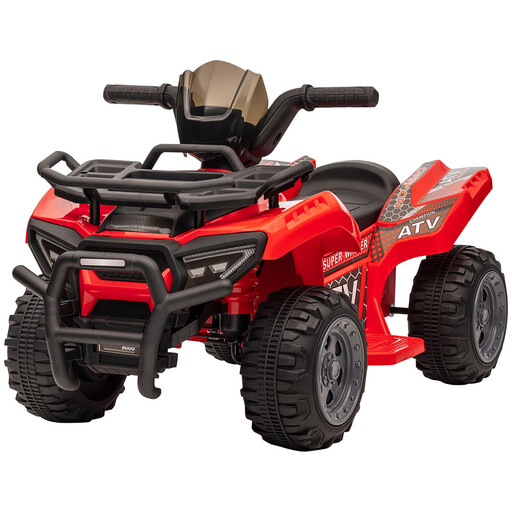
Why This Fits Their Persona: This is a great entry into powered ride on toys for 2 year olds. It offers the thrill of an electric vehicle but is designed with the safety of the youngest riders in mind, making it perfect for garden adventures.
It solves the power-versus-practicality problem. The top speed is capped at a gentle 2 km/h (a brisk walking pace), and the 45-minute runtime per charge is substantial for a toddler's attention span.
Safe low speed for toddlers; wide, stable four-wheel design; simple one-button forward motion.
We have compiled a complete, real-time list of products that fully satisfy these strict selection criteria and UK safety regulations.
The most reliable method is to measure your child's inside leg (inseam) from crotch to floor. Compare this to the toy's seat height. For a balance bike, the seat should be set 2-3cm below their inseam so they can sit with feet flat on the ground and knees slightly bent. For a tricycle, they should be able to comfortably reach the pedals at their lowest point.
They can be, provided you choose an age-appropriate model. Look for ride on toys for 2 year olds that have a low maximum speed (2-3 km/h), a stable design (like a quad bike), a secure seat and simple controls. Adult supervision is always essential. Always check for the EN71 and EN62115 (electric toy safety) standards.
This depends on the primary goal. A toddler tricycle is great for stability and introducing the concept of pedalling and steering simultaneously. A balance bike for toddlers isolates the skill of balancing, which can make the final step to a two-wheeled pedal bike much easier. Many parents find a tricycle is fun for younger toddlers (2-3), while a balance bike is an effective training tool for slightly older children (3-5).