
24/7 Customer Support

Free returns

Same-day & Next-day Delivery

Quality Guaranteed

Unlock Your Welcome Offers: FREE Delivery | Up to 80% OFF | Free 30-day JoyPlus trial
Download the APP
Watching a child’s face light up as they take control of their first set of wheels is a milestone moment. But choosing the right one from a sea of kids ride on toys can be a challenge. From flashy features to bold claims, it's easy to end up with a toy that disappoints after a few weeks.
As a Joybuy Product Recommendation Officer, my role is to help you navigate the market. We'll look past the marketing hype and focus on the practical details that ensure you're buying a toy that is safe, durable and, most importantly, fun for your child. Let's start by identifying a few common pitfalls that can lead to buyer's remorse.
To make a smart purchase, focus on a few key technical specifications. These details determine the toy's performance, safety and longevity far more than flashy stickers or sound effects.
The first decision is how the toy will be powered. This choice directly impacts the play experience and suitability for different age groups.
The type of wheels on outdoor toys for kids dictates where they can be used effectively and how much noise they will make.
Always check that the toy complies with UK safety standards. Look for markings like EN71 and EN62115 on the product information.
Instead of a generic list, we've matched a few standout options to specific family needs and user profiles.
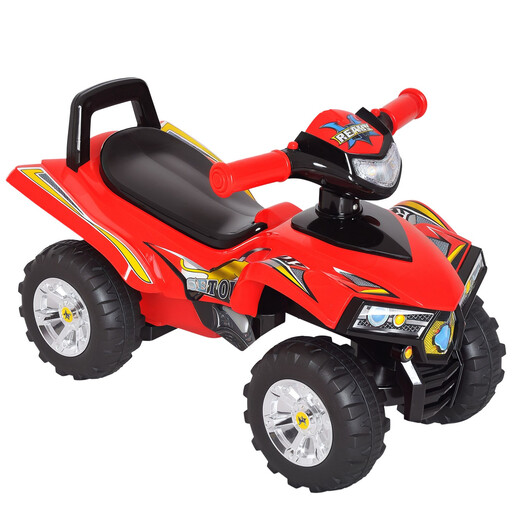
Why This Fits Their Persona: This foot-to-floor quad is perfect for toddlers from 12 months old. Its low, stable design and simple operation build confidence without overwhelming a young child. It's a straightforward first step into the world of ride on toys for toddlers.
It completely avoids the battery life pitfall as it's entirely kid-powered. Its simple, focused design for a young age group means it doesn't fall into the "grows with your child" trap of trying to be too many things at once.
Extremely lightweight (2.4kg), making it easy for parents to carry. It also includes a handy storage compartment under the seat for snacks or small toys.
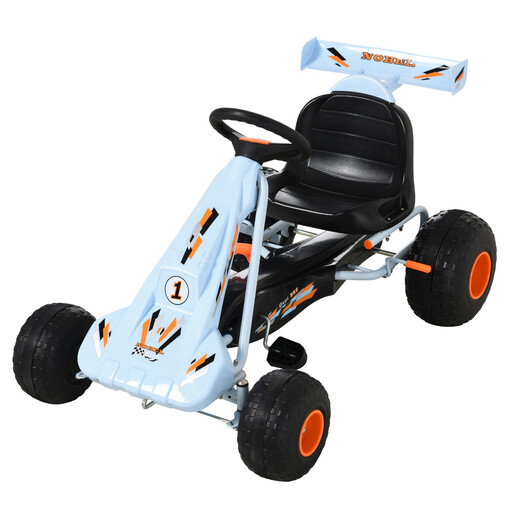
Why This Fits Their Persona: For families who value active, screen-free play, this children's go kart is an excellent choice. It's built for children aged 3-6 and provides a fun physical challenge, helping to develop coordination and stamina in the garden.
As a pedal-powered toy, there are no batteries to charge or run times to worry about. The sturdy metal and plastic frame is designed specifically for outdoor use, avoiding the indoor/outdoor compromise.
Features a manual hand brake for added safety and control, plus an adjustable seat to better fit your child as they grow within the recommended 3-6 year age range.
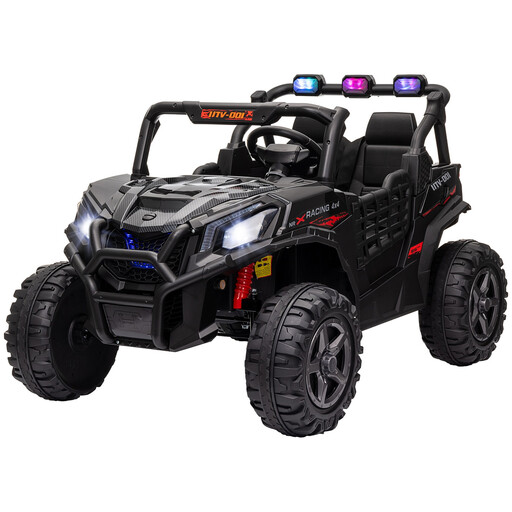
Why This Fits Their Persona: Ideal for siblings or for kids who love to share their adventures with a friend. This powerful 2 seater ride on car has a robust 24V battery system and is designed for children aged 3-8, offering more power and capability for varied garden terrain.
Its powerful 24V 7AH battery is appropriately sized for a dual-motor, two-seater vehicle, providing a realistic run time of around 45 minutes. The included parental remote with speed control also helps manage battery use and ensures safety.
Features rear-wheel spring suspension for a smoother ride on bumpy ground and a slow-start function to prevent sudden jolts. The kids electric car with remote control allows parents to take over steering and speed when needed.
We have compiled a complete, real-time list of products that fully satisfy these strict selection criteria and UK safety regulations.
The actual run time depends heavily on the child's weight, the terrain and the speed. A 12v ride on car might run for 45-60 minutes on a flat patio but could be closer to 30-40 minutes on a grassy, uneven garden. The battery's Amp-hour (Ah) rating is a good indicator; a higher number (e.g., 7Ah vs 4.5Ah) generally provides a longer run time.
A pedal go kart is powered entirely by the child, which is great for physical activity and means playtime is never cut short by a dead battery. An electric ride on car offers a powered driving simulation with features like lights, music and remote controls, but it requires regular charging and has a finite run time per charge. The choice depends on whether you want to prioritise active play or a more realistic driving experience.
Yes, provided you choose an age-appropriate model. For children aged 1-3, look for ride on toys for toddlers such as a stable toddler tricycle or a low-to-the-ground, foot-to-floor car. These have a low centre of gravity to prevent tipping. Always check for UK safety certifications like EN71 and ensure constant adult supervision during play.